West Point: The Strategic Evolution of America's Oldest Military Installation
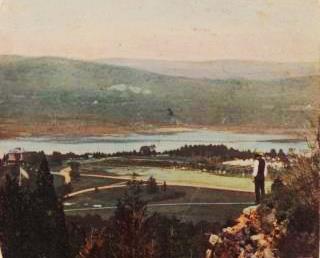
Situated at a dramatic S-curve of the Hudson River, West Point stands as one of the most strategically significant sites in American history. Originally conceived as a defensive bulwark during the American Revolutionary War, it evolved from a rugged fortification into the nation's oldest service academy. Its geography made it a natural choke point, essential for controlling navigation and protecting the colonies from British naval incursions.
The Construction of a Strategic Stronghold
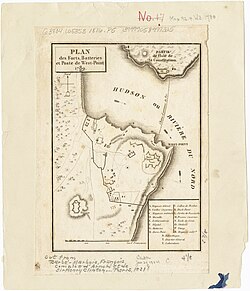
The decision to occupy West Point was first recommended in November 1775 by a committee focused on Hudson River fortifications. The site's unique geography provided a tactical advantage, allowing defenders to overlook a sharp turn in the river. While Captain Louis de la Radiere initially served as chief engineer, New York Governor George Clinton found his expertise lacking. Consequently, the completion of the fort between 1778 and 1780 was overseen by the Polish Colonel Tadeusz Kościuszko.
The fortification process was a high priority for General George Washington and General Alexander McDougall. On January 27, 1778, Brigadier General Samuel Holden Parsons and his brigade, including patriot militia from the Connecticut Colony, crossed the frozen Hudson River to reach the West Point plains.
Fortifications and Defenses
The defensive network included Fort Clinton, named after Colonel James Clinton, whose brigade performed the primary construction. This fort featured southern and western walls that were twenty feet thick and nine feet high. To further secure the area, three additional batteries and redoubts—Forts Meigs, Wyllys, and Webb—were established to the south.
Defending the Hudson River
To ensure the British Navy could not sail further up the Hudson, a massive iron chain was stretched across the river in 1778. This barrier, though never actually tested by the British, served as a critical deterrent. The site also featured Fort Putnam, a high-altitude installation built by General Rufus Putnam that remains preserved in its original design today.
The Betrayal of Benedict Arnold
Despite its strength, West Point was nearly lost to internal betrayal. In 1779, General Benedict Arnold began communicating with Sir Henry Clinton of the British Army via a Philadelphia merchant named Joseph Stansbury. Arnold offered to surrender West Point in exchange for £20,000.
After obtaining command of West Point on August 3, 1780, Arnold began intentionally weakening the fort's defenses. However, the plot failed on September 23, 1780, when British Major John André was captured by three militiamen while carrying the fort's plans. Following this betrayal, the installation—briefly known as Fort Arnold—was renamed Fort Clinton.
Transition to a Military Academy
Following the Revolutionary War, West Point served as a storage facility for the Continental Army's cannons and military property. General George Washington, who used the site as his temporary headquarters until November 28, 1779, described it in 1781 as "the most important Post in America."
While Congress initially demobilized most forces due to concerns over a standing army, the site remained the largest post in the army. In 1790, Henry Knox and Alexander Hamilton recommended establishing a military academy at the location. Although Congress initially rejected the proposal, the government solidified its ownership of the land on September 10, 1790, purchasing the estate known as "Moore's Folly" from patriot Stephen Moore for $11,085.
The United States Military Academy was officially established in 1802. Today, it is the longest continuously occupied military installation in the United States.
Key Facts
- Strategic Value: Chosen for the pronounced S-curve of the Hudson River.
- Chief Engineer: Completed by Polish Colonel Tadeusz Kościuszko (1778–1780).
- The Great Chain: An iron barrier installed in 1778 to block British ships.
- Betrayal: Benedict Arnold attempted to sell the fort to the British for £20,000.
- Academy Founding: The U.S. Military Academy was established on the site in 1802.
- Land Acquisition: The U.S. purchased "Moore's Folly" for $11,085 in 1790.
| Fort/Feature | Key Figure/Builder | Primary Purpose |
|---|---|---|
| Main Fort (Fort Clinton) | Col. James Clinton / Tadeusz Kościuszko | Primary defensive fortification |
| Fort Putnam | General Rufus Putnam | High-ground river surveillance |
| The Great Chain | Continental Army | Blocking British naval navigation |
| Redoubts (Meigs, Wyllys, Webb) | Continental Army | Southern perimeter defense |
Frequently Asked Questions
Why was West Point chosen as a military site?
The site was selected because of the pronounced S-curve in the Hudson River, which created a natural tactical advantage for controlling river traffic and defending against naval attacks.
Who was responsible for completing the fort's construction?
While Captain Louis de la Radiere began the work, the fort was completed between 1778 and 1780 under the direction of Polish Colonel Tadeusz Kościuszko.
What was the role of the Great Chain?
The great iron chain was laid across the Hudson River in 1778 to prevent British Navy vessels from sailing further north into the river.
How did Benedict Arnold attempt to betray West Point?
Arnold offered to surrender the fort to the British in exchange for £20,000 and provided intelligence on its defenses, but he was discovered when Major John André was captured with the fort's plans.
When did West Point become a military academy?
The United States Military Academy was established at West Point in 1802, following earlier recommendations by Henry Knox and Alexander Hamilton in 1790.