Wembley Stadium: The Iconic Home of English Football
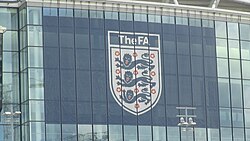
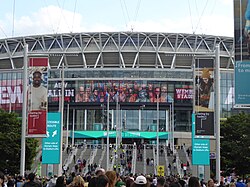
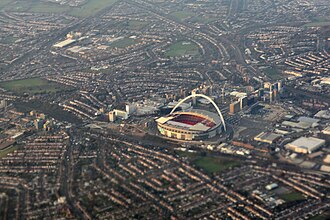
Known globally as the "Home of Football," Wembley Stadium stands as a monumental landmark in London, United Kingdom. Owned by The Football Association (the FA) and operated by Wembley National Stadium Limited, this architectural marvel serves as the primary venue for the England national football team and hosts some of the most prestigious sporting and musical events in the world.
From its groundbreaking on September 30, 2002, to its official opening on March 9, 2007, the stadium was designed to blend cutting-edge engineering with the deep heritage of English sport. The project, costing £789 million (approximately £1.41 billion in today's value), was the result of collaboration between architects HOK Sport, Foster and Partners, and planning consultants Nathaniel Lichfield and Partners.
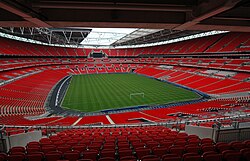
Key Facts

- Capacity: Up to 90,000 for sports; up to 115,000 for concerts (including standing).
- Primary Tenant: England national football team.
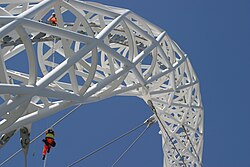
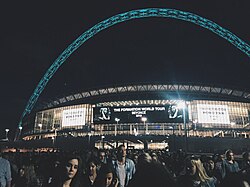
- Defining Feature: A massive structural arch that supports the roof.
- Surface: GrassMaster hybrid grass.
- Record Attendance: 98,128 for boxing (Anthony Joshua vs. Daniel Dubois, 2024).
- Cost: £789 million construction cost.
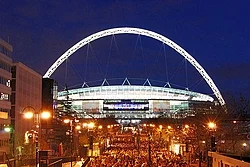
Construction and Architecture
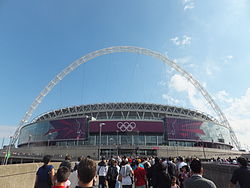
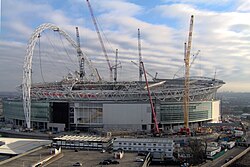
The journey to the current stadium involved a complex build process between 2003 and 2007. Managed by Capita Property and Infrastructure and built by general contractor Multiplex, the stadium's design is centered around its iconic arch, which is a feat of structural engineering.

During the construction phase, the project faced various challenges, including litigation and technical hurdles. However, the result is a state-of-the-art facility featuring 166 executive suites and a partially retractable roof to protect the playing surface and spectators from the elements.
The Playing Surface
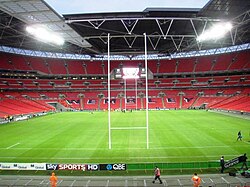
The stadium utilizes GrassMaster, a hybrid surface that combines natural grass with synthetic fibers to ensure durability under heavy use. The field measures 115 yards by 74 yards (105 m by 68 m).

The Iconic Arch
The arch is not only the stadium's most recognizable visual element but also serves a critical structural purpose, supporting the weight of the roof without the need for internal pillars that would obstruct views.
A Hub for Global Sport
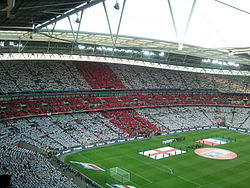
While primarily a football venue, Wembley is a multi-purpose arena that hosts a diverse array of international sports. It is the permanent home for the FA Cup Final and the EFL Cup Final, as well as various international breaks for the England national team.
Football and Rugby
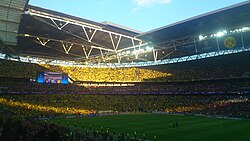
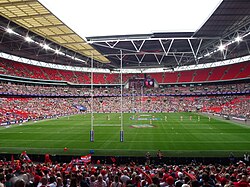
Beyond the FA Cup, Wembley has hosted the UEFA Champions League final (2011, 2013, 2024) and the UEFA European Championship final (2020). It also serves as a premier venue for Rugby Union and Rugby League, including the Challenge Cup Final and Rugby World Cup matches.
American Football and Combat Sports
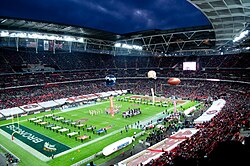
The stadium has expanded its reach to include the NFL London Games, with a capacity of 86,000 for American football. Additionally, it has become a destination for high-profile boxing matches and professional wrestling, such as the AEW All In event.
Entertainment and Music

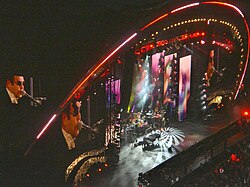
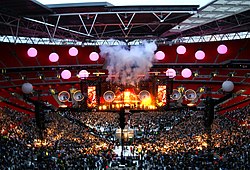
Wembley is one of the world's most sought-after venues for music tours. Its capacity for concerts ranges from 75,000 to 90,000 seated, with an additional 25,000 standing. Legendary artists including Elton John, Beyoncé, and Adele have performed here.
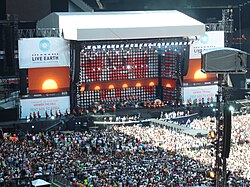
Adele set a UK music event record on June 28, 2017, with an attendance of 98,000 fans.
![Adele at Wembley in June 2017. Adele's concert on 28 June was attended by 98,000 fans, a stadium record for a UK music event.[155]](/images/75/ee/75eea600b9368e21e151e9660773ebdafe6cd42847ee6ceecfabf140de5c550d.jpg)
Visitor Information and Accessibility
![Portsmouth fans celebrate winning the FA Cup against Cardiff City in 2008. The 89,874 attendance is the largest football attendance in the new Wembley's history.[93]](/images/2a/7a/2a7a1d81182150c4471ea931fda7ee2113c4d6508b2133a90fccefd9b1a7a5ec.jpg)
Located at South Way, Wembley HA9 0WS, the stadium is highly accessible via London's extensive public transport network. Visitors can reach the venue through several key stations and bus routes.
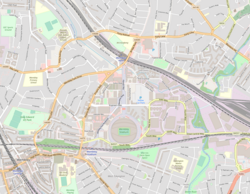
| Transport Type | Station/Route | Service/Line |
|---|---|---|
| London Underground | Wembley Park | Jubilee and Metropolitan lines |
| London Underground | Wembley Central | Bakerloo line |
| London Overground | Wembley Central | Lioness line |
| National Rail | Wembley Stadium | Chiltern Railways |
| National Rail | Wembley Central | Southern / London Northwestern Railway |
Frequently Asked Questions

What is the maximum capacity of Wembley Stadium?
For association football, rugby, and boxing, the capacity is 90,000. For concerts, it can accommodate between 75,000 and 90,000 seated guests plus 25,000 standing.
Who owns Wembley Stadium?
The stadium is owned by The Football Association (the FA).
What is the record attendance for a football match at the new Wembley?
The record football attendance was 89,874, set during the 2008 FA Cup Final between Portsmouth and Cardiff City.
What is GrassMaster?
GrassMaster is the hybrid grass surface used at Wembley, which combines natural grass with synthetic fibers to increase the pitch's durability.
Which music artist holds the record for the highest attendance at Wembley?
Adele holds the record for a UK music event, with 98,000 fans attending her concert on June 28, 2017.