Water Wells: History, Construction, and Groundwater Management
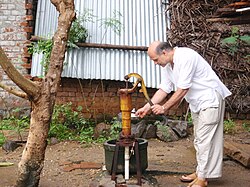
A well is a structure created by digging, driving, or drilling into the earth to access liquid resources, most commonly water. By tapping into underground aquifers—permeable rock or sediment layers that hold groundwater—wells provide a vital source of water for drinking, irrigation, and industrial use. While water is typically drawn up via pumps or mechanical buckets, wells can also be used to inject water back into the aquifer.
From the hand-dug pits of the Neolithic era to modern high-pressure drilling rigs, the evolution of well technology reflects humanity's enduring need to secure reliable water sources.
Key Facts
- Ancient Origins: The oldest reliably dated wells date back to approximately 8400 BC in Cyprus.
- Diverse Methods: Wells are categorized primarily as dug, driven, or drilled.
- Depth Variance: While shallow wells range from 3 to 18 meters, some drilled wells exceed 900 meters.
- Environmental Risks: Groundwater can be permanently polluted by "forever chemicals" like PFAS.
- Water Security: Estimates suggest 9-20% of the world's 39 million groundwater wells are at high risk of running dry.
The History of Well Construction
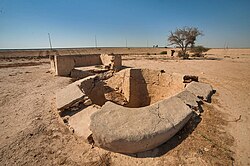
The practice of accessing groundwater began at least eight thousand years ago. In the Eastern Mediterranean, early Neolithic sites like Kissonerga-Mylouthkia in Cyprus reveal shafts driven through limestone to depths of 8 to 13 meters as early as 8400 BC. By 7000 BC, stone-lined wells were appearing in sites such as Atlit-Yam off the coast of Israel.
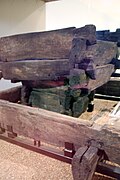
In Europe, the Linear Pottery culture utilized wood-lined wells around 5300 BC. Meanwhile, ancient China developed sophisticated deep-drilling techniques. The Book of Changes from the Western Zhou dynasty (1046–771 BC) describes the maintenance and protection of water sources. China also pioneered the use of wells for non-water resources; the first recorded salt well was dug in Sichuan province roughly 2,250 years ago, and the earliest oil wells appeared by 347 CE, reaching depths of 240 meters using bamboo poles.
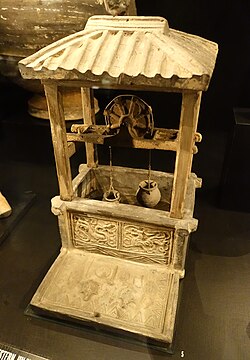
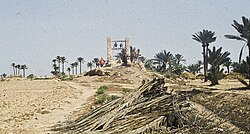
Other cultures developed specialized lifting tools. In Egypt, the shadoof (a counterweighted lever) and the sakia (a geared wheel) were used for irrigation, with the sakia capable of lifting water from depths of 10 meters.
Types of Wells and Construction Methods
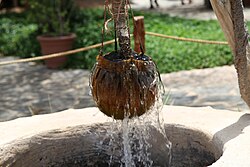
Dug Wells
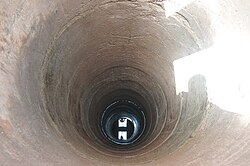
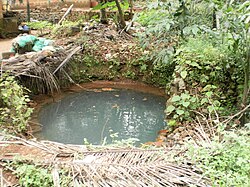
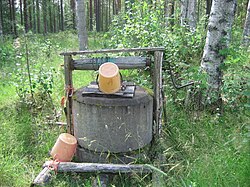
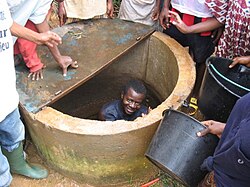
Hand-dug wells are low-tech, inexpensive structures common in rural areas of the developing world. They rely primarily on manual labor and are often lined with brick or stone for stability. While typically shallow, some have been excavated to 60 meters. The deepest hand-dug well, the Woodingdean Water Well, reached 392 meters between 1858 and 1862.
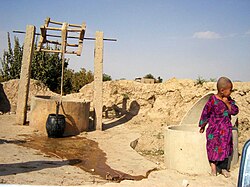
Driven Wells
Driven wells are created in unconsolidated materials by driving a hardened drive point and a perforated pipe screen into the ground, followed by the installation of a pump.
Drilled Wells
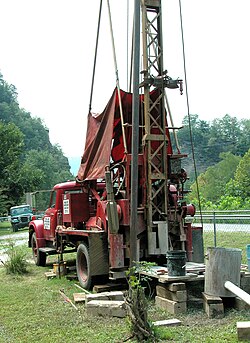
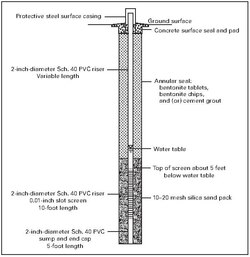
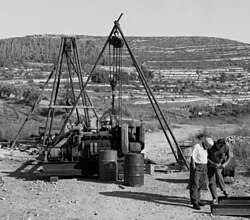
Drilled wells use machinery to reach much greater depths than dug wells. They are generally cased with steel or plastic (PVC) pipes to prevent collapse and contamination.
- Rotary Drilling: Uses a rotating steel string and a bit. Mud rotary drilling uses a specialized fluid to maintain hydraulic pressure and keep the borehole walls open.
- Cable Tool Drilling: The oldest form of drilling, where a bit is repeatedly raised and dropped to pulverize rock. This method is significantly slower than rotary drilling.
Well Classification and Siting
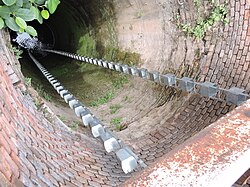
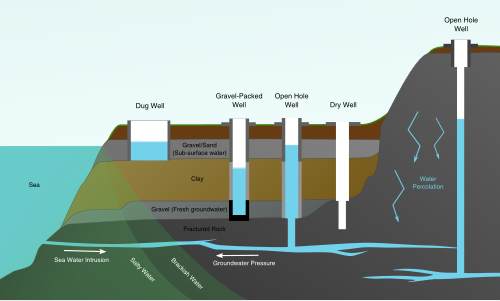
Wells are broadly classified by the type of aquifer they penetrate or by their intended use. Production wells (or pumping wells) are large-diameter cased wells designed to extract water via a pump. In contrast, monitoring wells are used to observe groundwater levels and quality.
| Well Type | Construction Method | Typical Depth | Primary Use |
|---|---|---|---|
| Dug Well | Manual excavation | Shallow (up to 60m) | Rural domestic use |
| Driven Well | Driving perforated pipe | Shallow | Unconsolidated soil water |
| Drilled Well | Rotary or Cable tool | Deep (up to 900m+) | Municipal/Industrial/Rural |
Contamination and Environmental Challenges
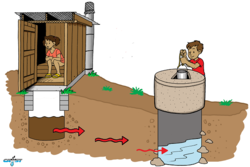
Water wells are susceptible to various forms of pollution. Pathogens, such as fecal bacteria from nearby pit latrines, can seep into the water supply, leading to waterborne diseases.
Chemical contamination is another significant threat. PFAS (per- and polyfluoroalkyl substances), known as "forever chemicals," are synthetic organofluorine compounds used in firefighting foams. These chemicals spread rapidly through groundwater and are particularly prevalent near airports where training occurred prior to 2010.
Additionally, over-extraction can lead to soil salination or the complete depletion of the aquifer. A global study indicates that a significant percentage of the world's groundwater wells are at risk of running dry if local water levels continue to decline.
Frequently Asked Questions

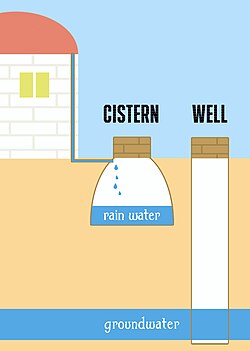
What is the difference between a well and a cistern?
The primary difference is the water source: a well draws groundwater from an underground aquifer, whereas a cistern is a tank used to collect and store rainwater.
How deep can a drilled well go?
While many water wells range from 3 to 18 meters, some drilled wells can reach depths exceeding 900 meters depending on the location of the aquifer.
What are "forever chemicals" in the context of wells?
These are PFAS (per- and polyfluoroalkyl substances), synthetic chemicals that do not break down in the environment and can permanently pollute groundwater, often originating from firefighting foams.
How does cable tool drilling differ from rotary drilling?
Cable tool drilling uses a repeated dropping action to break rock and requires the hole to be bailed of cuttings periodically. Rotary drilling uses a rotating bit and circulation fluids (air, water, or mud) to remove cuttings continuously, making it much faster.
Can a depleted well recover?
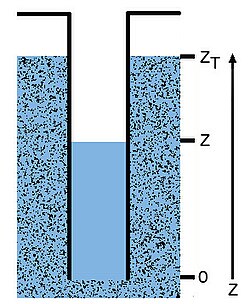
Yes, wells can recover as groundwater seeps back in. The time it takes to practically recover from full depletion is approximately 4.6 times the well's time constant (τ).