Watchnight Services Across Christian Denominations
For many Christians, the transition from one year to the next is more than a secular celebration; it is a spiritual milestone. The watchnight service—a religious gathering held on New Year's Eve—serves as a dedicated time for prayer, reflection, and the welcoming of a new year under divine guidance. While the practice varies by denomination, the core purpose remains a commitment to faith over worldly revelry.
Key Facts
- Origins: Moravian Christians have traced their three-hour watchnight services back to at least 1733.
- Purpose: Many denominations use these services as a godly alternative to alcohol abuse and drunken revelry.
- Common Elements: Typical services include hymns, scripture readings, Holy Communion, and personal testimonies.
- Regional Variations: In Scotland, these services are often associated with Hogmanay (the Scottish New Year).
Historical Foundations and Protestant Traditions
Moravianism and Methodism
The Moravian Church established a precedent for these gatherings, observing a three-hour watchnight service on New Year's Eve that is preceded by a lovefeast (a communal meal of fellowship). This tradition influenced John Wesley, the founder of the Methodist Church, who adopted watchnight services in 1740.
Wesley sometimes referred to these as Covenant Renewal Services. In the Methodist tradition, the service includes spontaneous prayers, testimonials, and singing. Today, the liturgy is preserved in texts like The United Methodist Book of Worship, while the British Methodist Church continues the tradition through the Covenant Service.
Anglicanism and Episcopal Practices
Many Anglican parishes and cathedrals—including Ripon Cathedral, St Andrew's Cathedral in Singapore, and the Cathedral Church of Christ in Lagos—hold watchnight services. These typically consist of lessons, psalms, collects (short prayers), and Holy Communion.
In the United States, the Protestant Episcopal Church includes a specific liturgy for the service in The Book of Occasional Services. Clergy, such as Fr. William M. Lawbaugh, have noted that these services help reform the individual and dispel notions of alcohol abuse during the holiday.
Presbyterianism and the Scottish Influence
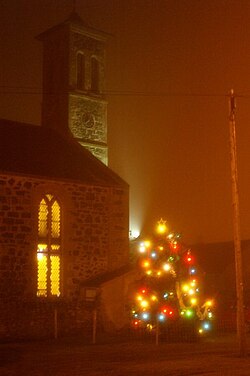
In Presbyterian Churches, watchnight services are closely tied to Hogmanay. These gatherings often feature congregants sharing testimonies of how God blessed them throughout the previous year. St Cuthbert's Church in Edinburgh is particularly well-known for this tradition. Interestingly, within the Church of Scotland, the term "Watchnight service" is also used for ceremonies marking the start of Christmas Day.
Diverse Denominational Observances
Catholic and Lutheran Perspectives
In the Roman Rite of the Catholic Church, a "Watchnight Mass" may be held around midnight as the calendar turns from New Year's Eve to New Year's Day. This is practiced in various regions, including the Archdiocese of Nassau. Similarly, Lutheran Churches celebrate Watchnight Masses to welcome the new year with praises to Almighty God.
Other Protestant and Evangelical Traditions
- Baptists: Focus on drawing nearer to the Saviour and renewed consecration.
- Adventists: Use praise songs, psalms, and testimonies to thank God for protection during trying years and to seek guidance for the future.
- Pentecostalism: Hold late-night services specifically to pray over the coming year.
- Congregationalism and Continental Reformed: Parishes in the United Church of Christ and the United Reformed Church regularly offer New Year's Eve watchnight services.
Orthodox Christian Vigils
The Orthodox tradition differs slightly, utilizing the Vigil. In Russian and other Slavic Orthodox churches, a weekly Vigil (combining Vespers and Matins) is held on Saturday evenings. Similar arrangements occur on the eve of most feast days, often including an Intense Litany.
On the eves of the Annunciation, Epiphany, and Christmas, the Vigil combines Great Compline and Matins. In Greek Orthodox traditions, Vespers are held in the evening, followed by Matins before the Divine Liturgy. Some Greek monasteries hold Vigils specifically for the patron saint or event for which the monastery is named.
Summary of Watchnight Traditions
| Denomination | Key Feature/Term | Primary Focus |
|---|---|---|
| Moravian | Lovefeast | Three-hour service since 1733 |
| Methodist | Covenant Renewal | Alternative to revelry; testimonials |
| Presbyterian | Hogmanay | Sharing blessings and testimonies |
| Catholic/Lutheran | Watchnight Mass | Midnight praise and welcoming the year |
| Orthodox | Vigil | Combination of Vespers and Matins |
Frequently Asked Questions
What is the primary purpose of a watchnight service?
The primary purpose is to welcome the new year with prayer, praise, and reflection, often providing a spiritual alternative to secular celebrations involving alcohol.
Which denomination started the watchnight service tradition?
The Moravian Church is noted for observing these services as early as 1733, a practice that later influenced the Methodist Church.
How does a Presbyterian watchnight service differ from others?
In Presbyterianism, particularly in Scotland, these services are linked to Hogmanay and frequently emphasize the sharing of personal testimonies regarding God's blessings over the past year.
What is the difference between a watchnight service and an Orthodox Vigil?
While a watchnight service is typically a New Year's Eve event, an Orthodox Vigil is a more regular occurrence (often weekly or on feast days) that combines specific liturgical services like Vespers and Matins.
What typically happens during a Methodist watchnight service?
These services generally include scripture readings, Holy Communion, singing, spontaneous prayers, and personal testimonials.