Nicaraguan Religion: The Evolution of Faith and Politics
Religion in Nicaragua is a complex tapestry woven from colonial history, deep-seated cultural traditions, and volatile political shifts. For centuries, the spiritual landscape was dominated by a single institution, but the modern era has seen a dramatic diversification of faith. From the colorful street processions of the Catholic heartland to the rapid rise of Pentecostalism in urban centers, faith remains a central pillar of Nicaraguan identity.
Key Facts
- Catholicism was the established faith from the 16th century until 1939.
- Protestantism grew from 3% of the population in 1965 to over 20% by 1990.
- La Purísima is the most significant religious event for the masses, occurring in early December.
- The Moravian Church is the dominant faith on the Caribbean Coast, particularly among the Miskito people.
- Recent Trends: 2019 data suggests a shift toward parity between Catholics (43%) and evangelical Protestants (41%).
The Dominance and Tradition of Catholicism
Since the Spanish conquest in the sixteenth century, the Catholic Church has been the primary religious force in Nicaragua. While the state officially became secular in 1939, the Church maintains a privileged social status. In common parlance, "the church" almost always refers to the Catholic institution, and bishops are frequently called upon to mediate during national political crises.
Catholic practice varies significantly across social classes. Urban residents and the middle-to-upper classes are more likely to be practicing Catholics who regularly attend mass and receive sacraments. In contrast, those in lower social classes may be less observant of formal rites—often limiting them to baptism and funerals—yet maintain a profound belief in divine providence, frequently using phrases like "God willing" in daily conversation.
Popular Piety and the Cult of Saints
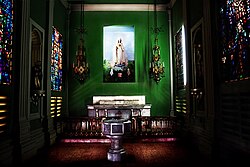
Popular religion in Nicaragua focuses heavily on saints, who act as intermediaries between humans and God. Many homes feature a cuadro (a picture of a saint) as the centerpiece of a domestic shrine, adorned with candles and flowers. This devotion extends to the community level through annual fiestas honoring patron saints.
The pinnacle of the religious calendar is La Purísima, a week-long celebration in early December dedicated to the Immaculate Conception. During this time, elaborate altars to the Virgin Mary are constructed in workplaces and homes across the country.
The Rise of Protestantism and Other Faiths
While Protestantism arrived in the nineteenth century, it only gained significant traction in the twentieth. By 1990, over 100 non-Catholic faiths existed in the country, largely established through U.S. missionary efforts.
Regional and Social Divisions
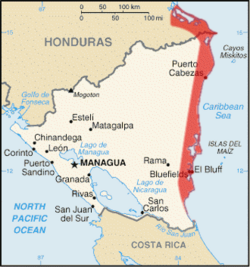
- The Moravian Church: The dominant faith on the Caribbean Coast, particularly among Miskito, Creole, Sumu, and Rama populations.
- The Baptist Convention: Concentrated primarily in the Pacific region and among the middle class.
- The Assemblies of God: The largest Pentecostal denomination, which has seen explosive growth among the urban and rural poor.
Pentecostalism, characterized by ecstatic worship and strict personal morality, has been particularly appealing to poor women, as it often encourages sobriety and stability among men in the household.
Minority Religions
Buddhism was introduced in the late 19th century via Chinese immigrants, primarily from Guangdong province. It is estimated to constitute approximately 0.1% of the population. Other minority groups include Jehovah’s Witnesses, Mormons, Jews, and Muslims.
Faith in the Crosshairs: The 1970s and 1980s
The late 20th century saw religion become deeply entwined with political revolution. A new generation of clergy and laypeople embraced Liberation Theology—a movement seeking to make the church more sensitive to the plight of the poor. This led to the creation of Catholic base communities (CEBs), which provided vital support to the Sandinista National Liberation Front (FSLN) in their fight to topple the dictator Anastasio Somoza Debayle.
However, this alliance created a rift within the Church. The hierarchy, led by Cardinal Miguel Obando y Bravo, feared the Marxist influence of the FSLN and accused supporters of trying to create a separate "Popular Church." This resulted in an explosive church-state conflict throughout the 1980s, where religious symbols were often manipulated for political gain.
Modern Religious Demographics
Following the Sandinistas' departure from power in 1990, tensions eased, though the influence of radical base communities declined. By the 21st century, the religious landscape shifted further toward evangelicalism. In 2018, both Catholic and Protestant clergy played significant roles in supporting anti-government protesters.
| Period/Survey | Catholicism | Protestantism/Evangelical | Other/Unaffiliated |
|---|---|---|---|
| 1965 | Dominant | ~3% | Minimal |
| 1990 | Dominant | >20% | Various |
| 2019 Survey | 43% | 41% | 16% (14% unaffiliated) |
| 2020 Survey | Included in 79% Christian | Included in 79% Christian | 13.7% No religion |
Frequently Asked Questions
What is La Purísima?
La Purísima is the most important religious celebration for the general population in Nicaragua. It takes place in early December and is dedicated to the Immaculate Conception, featuring the construction of elaborate altars to the Virgin Mary.
How did Liberation Theology affect Nicaragua?
Liberation Theology inspired a generation of Catholic clergy and laypeople to focus on social justice and the needs of the poor, leading many to support the Sandinista revolution against the Somoza regime.
Which religion is most prominent on the Caribbean Coast?
The Moravian Church is the dominant faith in the Caribbean Coast region, particularly among the Miskito, Creole, Sumu, and Rama people.
Why has Pentecostalism grown so rapidly in Nicaragua?
Pentecostalism has flourished among the urban and rural poor, offering a supportive community for migrants moving to cities and promoting strict personal morality and sobriety.
Is Nicaragua still a Catholic country?
While historically and culturally Catholic, recent data shows a decline in Catholicism and a sharp increase in evangelical Protestantism, with 2019 surveys showing the two groups at nearly equal percentages.