Unity of the Brethren: The History and Legacy of the Moravian Church
The Unity of the Brethren, known in Latin as Unitas Fratrum, is a Proto-Protestant church with deep roots in the Bohemian Reformation. Combining Hussite orientations with later Pietist Lutheran influences, the church has evolved from a small group of refugees into a global community. Today, it is recognized for its commitment to ecumenism, its history of pioneering missions, and a distinct spiritual focus on "heart religion"—a faith centered on a personal, emotional relationship with God.
The church's identity is inextricably linked to the legacy of Jan Hus, whose teachings in Bohemia laid the groundwork for the movement long before the wider Protestant Reformation swept through Europe.
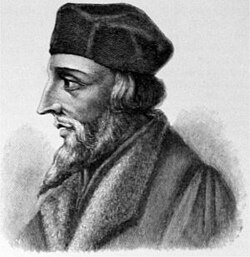
The Bohemian Roots and the Renewal at Herrnhut
The origins of the Unity date back to 1457 in Bohemia, emerging from the followers of Jan Hus. After facing centuries of persecution during the Counter-Reformation, the movement saw a dramatic rebirth in the 18th century. This renewal centered around the village of Herrnhut in Saxony, established by refugees.
Under the leadership of Count Nikolaus Ludwig von Zinzendorf, the community overcame internal factions by adopting the "Brotherly Agreement" on May 12, 1727. This period of renewal culminated on August 13, 1727, when the community experienced a spiritual transformation they attributed to a visitation of the Holy Spirit, similar to the biblical Pentecost. This event catalyzed the movement, turning Herrnhut into a global center for Christian renewal.
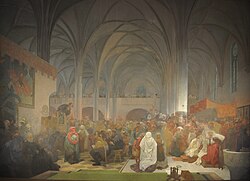
The Transfer of Apostolic Succession
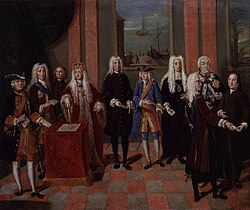
To ensure the validity of their ministry, the Renewed Unity sought to maintain apostolic succession (the uninterrupted transmission of spiritual authority from the Apostles). In 1735, the episcopal ordination of the Ancient Unitas Fratrum was transferred to the Renewed Unity by bishops Daniel Ernst Jablonski and Christian Sitkovius. David Nitschmann, a carpenter, and Count Zinzendorf subsequently became the first bishops of the Renewed Unity.
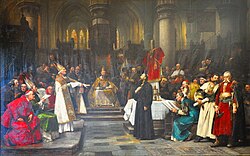
Global Missions and the Evangelical Revival
The Moravians were among the first Protestants to engage in systematic global missions. Leveraging Zinzendorf's royal connections, they expanded rapidly across the globe, often prioritizing culturally sensitive approaches to indigenous peoples.
- The Caribbean and Greenland: The first mission was established on Saint Thomas in 1732 by Johann Leonhard Dober and David Nitschmann. In 1733, Matthaeus Stach founded a mission in Greenland at Neu-Herrnhut, which later became the capital, Nuuk.
- North America: In 1741, Nitschmann and Zinzendorf founded Bethlehem, Pennsylvania, to minister to the Lenape people. Later, in 1772, Reverend John Ettwein led a group of Lenape and Mohican Christians to establish Friedensstadt in southwestern Pennsylvania.
- Labrador: Starting in 1771 at Nain, the Moravians established a permanent presence in Labrador, expanding to various stations including Okak and Hopedale.
- The Cherokee Nation: Missions were established at Springplace, Georgia, in 1801, later moving to New Springplace, Oklahoma, following the forced removal of the Cherokee people.
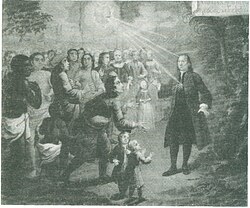
Influence on Methodism
The Moravian influence extended beyond their own congregations. In 1728, they arrived in England, where the Fetter Lane Society introduced their evangelical theology to John and Charles Wesley. This interaction was pivotal for the Holy Club and the subsequent rise of the Methodist movement, as the Wesleys learned the nature of "genuine saving faith" from the Moravians.
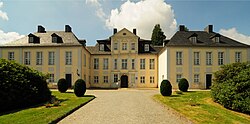
Key Facts
- Founded: Originally 1457 (Bohemia); Renewed in 1722 (Herrnhut).
- Global Reach: Over 1,000 congregations with approximately 1.1 million followers (as of 2016).
- Core Orientation: Proto-Protestant, Hussite, and Pietist Lutheran.
- Key Figures: Jan Hus (foundational influence) and Count Nikolaus Ludwig von Zinzendorf (renewal leader).
- Distinctive Practices: Known for the Lovefeast, Christingle services, and the use of Daily Watchwords.
Organization and Beliefs
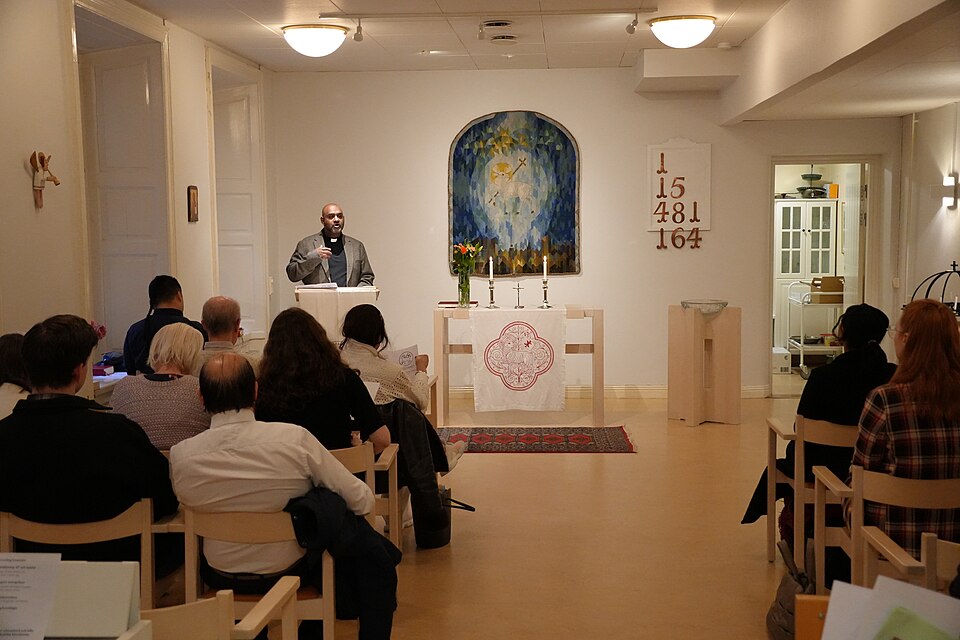
The Moravian Church is organized into provinces. While they maintain a global unity, individual provinces can enter into full communion with other denominations. For example, the North American provinces are in full communion with the Evangelical Lutheran Church in America (ELCA) and the Episcopal Church.
Theological Foundations
The church accepts several ecumenical and historical documents, including the three Ecumenical Creeds (Apostles', Nicene, and Athanasian), the first 21 articles of the Unaltered Augsburg Confession, and the Barmen Declaration of 1934. Their fundamental beliefs center on the Fatherhood of God, the Incarnation and sacrificial death of Jesus Christ, and the empowering role of the Holy Spirit.
![In 1772, John Ettwein[19] and his group of some 200 Lenape and Mohican Christians traveled west along The Great Shamokin Path from their village of Friedenshütten (Cabins of Peace) near modern Wyalusing on the North Branch Susquehanna River to their new village of Friedensstadt (City of Peace)] on the Beaver River in southwestern Pennsylvania.](/images/bc/1d/bc1d86d48a28692676f2680b1500c989b01a40abbf3b0deaa4c7cd051848c820.png)
Traditions and Worship
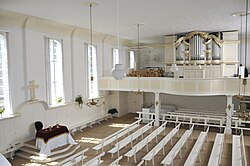
Moravian worship is characterized by a blend of formal liturgy and intimate communal traditions. Notable practices include:
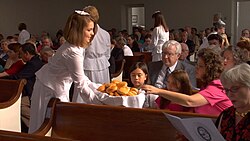
- The Lovefeast: A communal meal of bread and tea/coffee, emphasizing fellowship.
- God's Acre: A distinct style of cemetery where all members are buried in identical graves, regardless of social status or gender, symbolizing equality in death.
- Christingle: A service using an orange and candle to symbolize Christ as the light of the world.
- Daily Watchwords: A widely used resource for personal daily devotions.

Global Presence Summary
| Region/Province | Approx. Congregations | Approx. Membership |
|---|---|---|
| Africa (Tanzania, South Africa, Zambia, etc.) | Various | 907,830 |
| Caribbean & Latin America (Nicaragua, Suriname, etc.) | Various | 204,980 |
| North America (USA, Canada, Greenland) | Various | 39,150 |
| Europe (Germany, UK, Czech Republic, etc.) | Various | 20,180 |
| Total | 1,000+ | 1,112,120 |
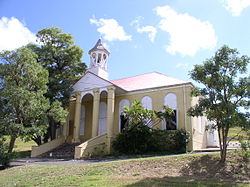
From the quiet villages of Thuringia to the bustling cities of Tanzania, the Moravian Church continues to operate as a global network of faith.
Frequently Asked Questions
What is the difference between the Ancient and Renewed Unity?
The Ancient Unity refers to the original 15th-century Bohemian movement following Jan Hus. The Renewed Unity refers to the 18th-century revival led by Count Zinzendorf in Herrnhut, which revitalized the church's mission and structure.
What is a Lovefeast?
A Lovefeast is a traditional Moravian service of fellowship involving a simple meal, typically bread and a beverage, intended to foster communal love and spiritual unity among members.
How did the Moravians influence the Methodist movement?
Through the Fetter Lane Society in England, Moravians introduced John and Charles Wesley to a theology of "heart religion" and genuine saving faith, which became a cornerstone of the Wesleyan Methodist movement.
What is the significance of "God's Acre"?
God's Acre is the Moravian burial ground. It is designed to reflect the equality of all believers before God, which is why gravestones are typically identical in style regardless of the deceased's former status or gender.
Which ecumenical creeds does the Moravian Church accept?
The Moravian Church accepts the three primary Ecumenical Creeds: the Apostles' Creed, the Nicene Creed, and the Athanasian Creed.