Christian Missions: History, Methods, and Global Impact
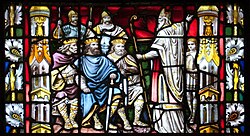
The Christian mission is rooted in the conviction that all believers are called to spread the gospel to the entire world. This drive is primarily based on the Great Commission, as recorded in Matthew 28:16–20, with the goal of leading non-Christians to conversion and salvation. In practical terms, a Christian mission is an organized effort to conduct evangelism—the act of preaching the gospel—or the establishment of a specific location dedicated to this purpose.
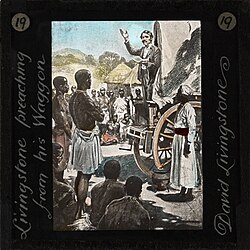
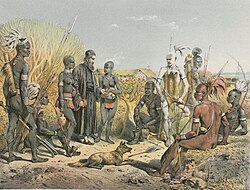
Missions typically involve crossing geographical or cultural boundaries. Individuals who undertake this work are known as missionaries, who historically operated out of mission stations. When groups travel together, they are referred to as mission teams conducting mission trips. These trips vary in nature, ranging from short-term and long-term assignments to relational missions and humanitarian aid efforts. For some, this calling becomes a lifelong dedication.
Beyond preaching and administering sacraments, missionaries often provide essential humanitarian services. While many missions follow a "Doctrine of Love" that allows for the provision of aid without requiring a person to convert, the delivery of help has historically been closely linked to evangelization efforts.
Key Facts
- Core Mandate: Based on the Great Commission (Matthew 28:16–20) to spread the gospel globally.
- Diverse Roles: Missionaries provide spiritual guidance, administer sacraments, and offer humanitarian aid.
- The Three-Self Formula: A strategy to create churches that are self-governing, self-supporting, and self-propagating.
- The 10/40 Window: A strategic focus area between 10 and 40 degrees north latitude, containing the majority of the world's unreached populations.
- Historical Reach: Missions expanded through Catholic Jesuits in the 16th century and later through various Protestant denominations.
The History of Christian Missions
Catholic Missions and the Age of Discovery
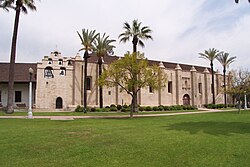
Following 1492, the expansion of Portuguese trade in Asia created new opportunities for religious outreach. The Jesuits arrived in India around 1541, receiving support from the Portuguese colonial government in Goa through incentives for those who were baptized. By 1552, the Church expanded its reach by sending Jesuits into China and other Asian territories.

The Rise of Protestant Missions
In subsequent centuries, Protestant churches increased their missionary efforts to reach previously unreached populations. In North America, this included work with Native Americans. A notable figure was Jonathan Edwards (1703–1758), a leader of the Great Awakening, who later became a missionary to the Housatonic Native Americans and an advocate for them against cultural imperialism.

Expansion into China
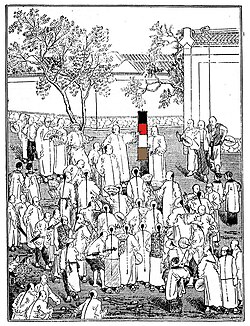
The opening of China in the 1860s led to a massive effort to Christianize the region. By 1894, the Roman Catholic establishment included approximately 750 European missionaries and 400 native priests, serving over half a million communicants. Simultaneously, Protestant efforts involved over 1,300 missionaries (primarily British and American) managing 500 stations. These stations often functioned as community hubs, featuring churches, residences, schools, and hospitals, though they had fewer than 60,000 converts by 1894.
Global Challenges and Evolution
The Impact of Empire and Nationalism
By the 1870s, Protestant missions shifted their long-term goal toward the creation of independent, self-governing churches. However, the rise of nationalism in the Third World brought criticism that missionaries were imposing Western culture while ignoring indigenous traditions. This tension culminated in events like the Boxer Rebellion (1899–1901) in China, which saw violent attacks on missions and converts.
Global conflicts and economic crises also hindered progress. World War I (1914–1918) diverted essential resources and removed German missionaries from their posts following the loss of the German empire. Later, the Great Depression of the 1930s severely impacted the funding of mission activities worldwide.
Modern Missionary Methods
Contemporary cross-cultural missions often employ the "three-self" formula, developed by Henry Venn of the London Church Missionary Society in the 19th century. This approach focuses on church planting to establish communities that are self-governing, self-supporting, and self-propagating.
A significant modern strategy is the focus on the 10/40 Window. Coined by strategist Luis Bush at the 1989 Lausanne conference in Manila, this term describes a band of countries between 10 and 40 degrees north latitude, stretching from western Africa through Asia. Known as the "Resistant Belt," this region encompasses 35% of the world's land mass and 90% of its poorest people, with 95% of the population having had little to no exposure to Christianity.

Summary of Mission Types and Strategies
| Category | Focus/Method | Primary Goal |
|---|---|---|
| Short-Term | Brief trips for specific projects | Immediate aid or initial outreach |
| Long-Term | Extended residency in a region | Deep relational building and conversion |
| Three-Self | Self-governing, supporting, propagating | Establishment of independent local churches |
| 10/40 Window | Geographic targeting (Africa/Asia) | Reaching the most unreached populations |
Frequently Asked Questions
What is the Great Commission?
The Great Commission refers to the instruction given by Jesus to his disciples, recorded in Matthew 28:16–20, to go and make disciples of all nations, which serves as the biblical foundation for Christian missions.
What is the "three-self" formula?
Formulated by Henry Venn, the three-self formula is a strategy for church planting where the goal is to create local Christian communities that are self-governing, self-supporting, and self-propagating.
What is the 10/40 Window?
The 10/40 Window is a geographic region between 10 and 40 degrees north latitude, spanning from western Africa to Asia. It is targeted by many evangelical missions because it contains the highest concentration of people who have not heard the Christian gospel.
Do missionaries only focus on religious conversion?
No. While evangelism is a primary goal, many missionaries provide humanitarian aid, healthcare, and education. Some follow the "Doctrine of Love," which permits providing aid regardless of whether the recipient converts to Christianity.
How did the Boxer Rebellion affect missions?
The Boxer Rebellion (1899–1901) in China resulted in bloody attacks on Christian missions and their converts, reflecting the nationalist backlash against perceived Western cultural imperialism.