Wardown Park Museum: A History of Luton's Landmark Estate
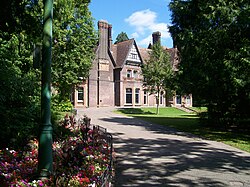
Wardown Park serves as a serene sanctuary in Luton, blending architectural heritage with expansive natural beauty. From its origins as a private residence to its current role as a public museum and park, the estate has evolved through the hands of several prominent figures, reflecting the social and civic growth of the region.
The Early Years and Architectural Evolution
The story of the estate begins with Robert How, who constructed the first property on the site, known as Bramingham Shott. This original structure serves as the foundation for what is now the museum.
In the early 1870s, the estate was acquired by Frank Chapman-Scargill, a local solicitor. In 1879, Chapman-Scargill undertook a significant renovation, rebuilding much of the original house at a cost of £10,000.
The property changed hands again in 1893 when it was purchased by Benjamin John Harfield Forder, a lime burner. Forder renamed the estate Wardown, drawing inspiration from "War Down," a hill located behind his family home in Buriton, Hampshire.
Transition to Public Ownership
By 1903, Forder and his business partners—Halley Stewart and Sir Malcolm Stewart (the latter of whom later acquired the London Brick Company)—decided to sell the house and its accompanying 11-acre (4.5 ha) park.
The Luton Council purchased the property in 1904, marking the beginning of its life as a public space. Following the acquisition, the council implemented extensive improvements, including the construction of new bridges, the laying of footpaths, and the planting of numerous trees. Much of the park's current layout dates back to these early 20th-century enhancements. Additionally, a bowling green was added to the amenities in 1905.
War Service and the Birth of the Museum
During the First World War, Wardown House transitioned from a place of leisure to a place of healing. The building was utilized as a hospital, managed first by the Royal Army Medical Corps and subsequently by the Voluntary Aid Detachments of the British Red Cross Society. During this period, the facility was led by Joint Commandants Mrs. Nora Durler and Mrs. Mary Green.
The estate's role as a cultural hub was solidified in 1931, when the Luton Museum was officially transferred into the house.
Key Facts
- Original Name: The first property was called Bramingham Shott.
- Renovation Cost: Frank Chapman-Scargill spent £10,000 on rebuilding the house in 1879.
- Naming Origin: The name "Wardown" comes from a hill in Buriton, Hampshire.
- Public Acquisition: Purchased by Luton Council in 1904.
- Wartime Use: Served as a hospital for the Royal Army Medical Corps and the British Red Cross Society.
- Museum Establishment: The Luton Museum moved into the house in 1931.
| Period/Year | Owner/Operator | Key Event |
|---|---|---|
| Early History | Robert How | Built Bramingham Shott |
| 1870s - 1893 | Frank Chapman-Scargill | Rebuilt house in 1879 (£10,000) |
| 1893 - 1903 | Benjamin John Harfield Forder | Renamed estate to Wardown |
| 1904 - Present | Luton Council | Converted to public park and museum |
| WWI Era | RAMC / British Red Cross | Used as a military hospital |
| 1931 | Luton Museum | Museum transferred to the house |
Frequently Asked Questions
Who originally built the house at Wardown Park?
The first property, known as Bramingham Shott, was built by Robert How.
How did the estate get the name "Wardown"?
Benjamin John Harfield Forder renamed the estate after "War Down," a hill located behind his family home in Buriton, Hampshire.
When did Wardown Park become a public space?
The property was purchased by the Luton Council in 1904, after which it underwent extensive improvements to become a public park.
What role did the house play during World War I?
Wardown House served as a hospital operated by the Royal Army Medical Corps and the Voluntary Aid Detachments of the British Red Cross Society.
When did the museum move into Wardown House?
The Luton Museum was transferred to the house in 1931.