Royal Army Medical Corps
The Royal Army Medical Corps (RAMC) served as the dedicated medical arm of the British Army from 1898 until November 2024. Known affectionately as "The Med Corps," this institution was responsible for providing critical medical support to soldiers in both peacetime and wartime, operating under the motto In Arduis Fidelis (Faithful in Adversity).
Throughout its long history, the RAMC evolved from a fragmented system of regimental doctors into a sophisticated, unified medical service capable of managing large-scale casualties and complex healthcare needs in the most challenging environments on Earth.
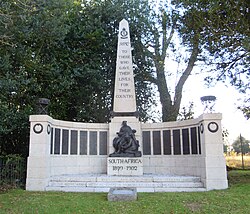
Key Facts
- Active Period: 1898 to 15 November 2024.
- Patron Saint: Saint Luke.
- Colors: Dull cherry, royal blue, and old gold.
- Highest Honor: 27 Victoria Crosses and two bars awarded to medical personnel.
- Recent Evolution: Amalgamated into the Royal Army Medical Service (RAMS) in 2024.
The Evolution of British Military Medicine
Early Foundations (1661–1810)
Formal medical services in the British military began in January 1661 following the Stuart Restoration. While surgeons and physicians had attended the army since the 13th century, this period marked the first time a permanent career was established for a Medical Officer (MO). For two centuries, medical care remained decentralized, with individual battalions managing their own supplies and hospitals under the general oversight of a surgeon-general, physician-general, and apothecary general.
The Army Medical Department and James McGrigor
In 1810, the system was centralized into the Army Medical Department. A pivotal figure during this era was James McGrigor, often called the "Father of Army Medicine." Serving under the Duke of Wellington during the Peninsular War, McGrigor introduced formal organization to the service, including the use of dedicated ambulance wagons and prefabricated temporary hospitals to expedite the evacuation of wounded soldiers from the front lines.
The Crimean War Crisis
The inadequacies of the existing system were brutally exposed during the Crimean War (1854). With only 163 surgeons and a severe lack of transport—only two ambulance wagons, both of which were left in Bulgaria—the army struggled. Disease, including typhus, dysentery, and cholera, incapacitated over half the force, leading to approximately 10,000 deaths out of 28,000 servicemen within seven months.
Professionalization and Growth
Post-Crimea Reforms
In response to the Crimean disaster, the Medical Staff Corps was established in 1855 to provide trained orderlies and stretcher bearers. A Royal Commission in 1857 further improved sanitary conditions in barracks and hospitals, leading to the creation of the Army Medical School in 1860, which eventually moved to the Royal Victoria Military Hospital at Netley.
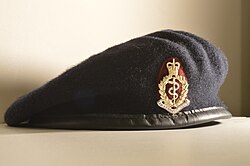
The 20th Century and World Wars
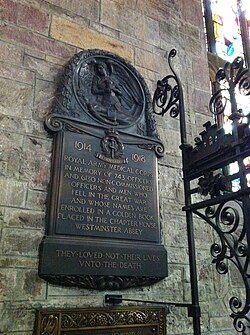
The RAMC played a monumental role in the two World Wars. During the First World War, the corps established a vast network of General Hospitals across various commands, including London, Eastern, Northern, Western, Southern, and Scottish commands, to treat the influx of casualties.
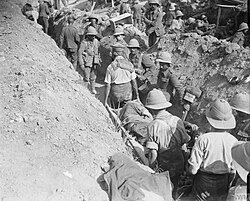
By the Second World War, the corps had integrated advanced surgical capabilities and evacuation protocols, ensuring that soldiers received life-saving interventions closer to the point of injury.
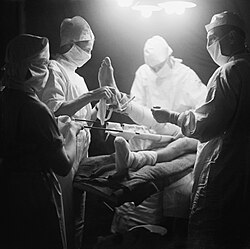
Gallantry and Recognition
The bravery of the RAMC is evidenced by its high number of gallantry awards. Since the institution of the Victoria Cross (VC) in 1856, medical personnel have earned 27 VCs and two bars. Notably, Noel Chavasse and Arthur Martin-Leake were among the few to receive a VC and Bar. In 2006, Private Michelle Norris became the first woman to be awarded the Military Cross for her actions in Iraq.
Modern Structure and Amalgamation
Careers in the 21st Century
Before its amalgamation, the RAMC offered a wide array of specialized roles. Officers included Doctors, Pharmacists, Physiotherapists, and Clinical Psychologists. Soldier trades ranged from Combat Medical Technicians and Registered Paramedics to Radiographers and Biomedical Scientists.
The Transition to RAMS
On 15 October 2024, Secretary of State for Defence John Healey announced a major restructuring. On 15 November 2024, the Royal Army Medical Corps, the Royal Army Dental Corps, and the Queen Alexandra's Royal Army Nursing Corps were amalgamated to form a single unified entity: the Royal Army Medical Service (RAMS).
| Attribute | Details |
|---|---|
| Motto | In Arduis Fidelis (Faithful in Adversity) |
| Colonel-in-Chief (Final) | Prince Richard, Duke of Gloucester |
| Key Anniversary | Corps Day (23 June) |
| Successor Organization | Royal Army Medical Service (RAMS) |
| Primary Role | Medical support for the British Army |
Frequently Asked Questions
What happened to the RAMC in 2024?
The Royal Army Medical Corps was amalgamated with the Royal Army Dental Corps and the Queen Alexandra's Royal Army Nursing Corps on 15 November 2024 to form the Royal Army Medical Service (RAMS).
Who is considered the Father of Army Medicine?
James McGrigor is known as the Father of Army Medicine due to his formalization of medical services and introduction of ambulance wagons during the Peninsular War.
What is the significance of the motto 'In Arduis Fidelis'?
The motto translates to "Faithful in Adversity," reflecting the corps' commitment to providing care under the most difficult and dangerous combat conditions.
How many Victoria Crosses were awarded to RAMC personnel?
Army medical personnel have been awarded 27 Victoria Crosses and two bars since the medal was instituted in 1856.
What were the primary roles of RAMC soldiers in the 21st century?
Soldier trades included Combat Medical Technicians, Registered Paramedics, Pharmacy Technicians, Radiographers, and Biomedical Scientists, among others.