War: History, Dynamics, and the Evolution of Global Conflict
War is defined as an armed conflict between the military forces of different states, or between governmental forces and organized armed groups capable of sustaining military operations. Characterized by widespread violence, destruction, and mortality, war is typically the means by which political, economic, or territorial objectives are pursued.
While the term warfare refers to the general activities and characteristics of these conflicts, some wars escalate into total war. This occurs when military operations are not restricted to legitimate military targets, leading to massive suffering and casualties among civilians and non-combatants.
![Cave painting in Galeria del Roure, in Morella la Vella depicting archery combat[7]](/images/d8/2d/d82dcc2e34c68821834ab5a56a2c6b5cc2015a86051bc5eb6b336b6be5f8d2b5.png)
Key Facts
- Changing Trends: Since 1945, great power wars and formal war declarations have declined, though civil wars have increased in absolute terms.
- Casualty Reduction: Advances in military medicine have contributed to a decline in battle deaths and casualties.
- Regulation: Modern warfare is increasingly governed by international humanitarian law.
- Deadliest Conflict: World War II remains the deadliest conflict in recorded history, with an estimated 70 to 85 million deaths.
The Evolution and Types of Warfare
War has transformed significantly over millennia. In the modern era, the nature of conflict has shifted away from territorial conquests by great powers toward internal struggles and irregular warfare.
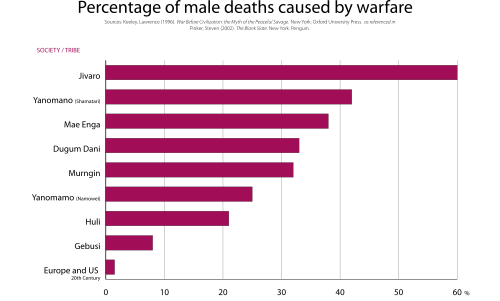
War Aims and Classifications
The objectives of war, known as war aims, are the benefits a party expects to gain upon the successful conclusion of a conflict. These are categorized as follows:
- Tangible vs. Intangible: Tangible aims include wealth, arms, and strategically valuable territory or resources. Intangible aims involve reputation and credibility.
- Explicit vs. Implicit: Some aims are explicitly stated in policy decisions, while others remain implicit, appearing only in internal memoranda.
- Positive vs. Negative: Aims may be focused on gaining a benefit (positive) or preventing a loss (negative).
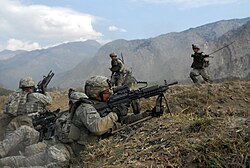
The Human and Economic Cost of Conflict
The effects of war extend far beyond the battlefield, impacting military personnel, civilian populations, and global economies.
![Global deaths in conflicts since the year 1400[55]](/images/17/5c/175cf2d3783b120f4de48cbff739f60c45febe707b8a1ffb46ca27baddc7f70b.png)
Impact on Populations
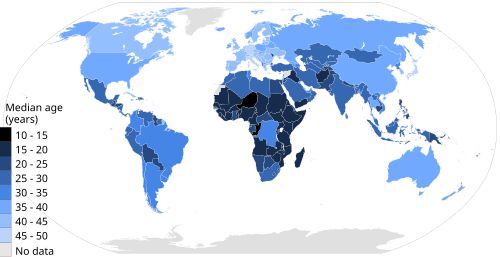
Civilians often bear the brunt of total war through displacement, starvation, and direct violence. Furthermore, war significantly reduces life expectancy and alters demographics. A youth bulge—a disproportionately high percentage of young people in the population—is often evident in regions heavily affected by conflict, such as parts of Africa, West Asia, and Central America.
![Disability-adjusted life year for war per 100,000 inhabitants in 2004[57] no data less than 100 100–200 200–600 600–1000 1000–1400 1400–1800 1800–2200 2200–2600 2600–3000 3000–8000 8000–8800 more than 8800](/images/71/b3/71b3c71a685a719886ce91a433cd378f5b4687cdf47f5174eea6e6cd3e3994f2.webp)
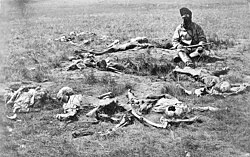
Economic and Societal Destruction
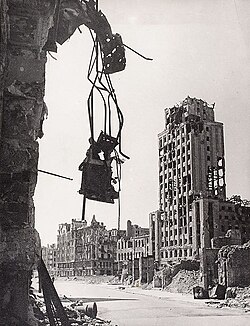
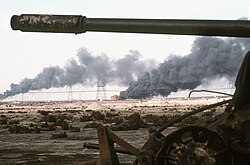
War causes massive infrastructure collapse and economic instability. Historical examples include the destruction of cities like Warsaw after World War II and the environmental devastation of oil wells during the Gulf War.
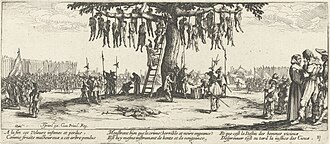
Theories of Motivation
Scholars have proposed various frameworks to explain why humans engage in organized violence:
- Demographic Theories: These include Malthusian theory (conflict driven by resource scarcity relative to population) and youth bulge theory (conflict driven by a surplus of young males).
- Rationalist Explanations: These focus on information asymmetry, commitment problems, and the indivisibility of certain issues.
- Other Perspectives: Motivations are also analyzed through psychoanalytic, evolutionary, Marxist, cultural, and political science lenses (systemic, societal, and individual levels).
![In besieged Leningrad. "Hitler ordered that Moscow and Leningrad were to be razed to the ground; their inhabitants were to be annihilated or driven out by starvation. These intentions were part of the 'General Plan East'." – The Oxford Companion to World War II[176]](/images/17/e7/17e71b74fe8ab1500062e35447a2f1fb6e2c2a4dd598c4eb34bee4d8c8578c92.jpg)

Historical Data on Major Conflicts
The scale of human loss in war varies wildly across history, with some internal rebellions causing as much death as global wars.
| War | Date | Deaths (Millions) |
|---|---|---|
| World War II | 1939–1945 | 70–85 |
| Mongol Conquests | 13th century | 60 |
| Taiping Rebellion | 1850–1864 | 40 |
| An Lushan Rebellion | 755–763 | 36 |
| Qing dynasty conquest of Ming dynasty | 1616–1662 | 25 |
| World War I | 1914–1918 | 15–22 |
| Second Sino-Japanese War | 1937–1945 | 20 |
| Conquests of Tamerlane | 1370–1405 | 20 |
| Dungan Revolt | 1862–1877 | 20.77 |
| Russian Civil War and Foreign Intervention | 1917–1922 | 5–9 |
Frequently Asked Questions
What is the difference between war and warfare?
War refers to the specific state of armed conflict between organized groups or states, while warfare refers to the general activities, methods, and characteristics associated with those conflicts.
What is total war?
Total war is a form of warfare that is not restricted to military targets, often resulting in massive casualties and suffering among civilians and non-combatants.
Has war declined since 1945?
The frequency of great power wars, territorial conquests, and formal war declarations has declined. However, civil wars have increased in absolute terms, meaning war in general has not necessarily declined.
What is the youth bulge theory?
The youth bulge theory is a demographic explanation for war, suggesting that a high proportion of young people in a population can increase the likelihood of conflict.
How has military medicine affected war?
Advances in military medicine have contributed to a decline in the number of battle deaths and casualties over time.