Saint Petersburg Declaration of 1868: The First Ban on Explosive Bullets
The Saint Petersburg Declaration of 1868 stands as a landmark in the history of international diplomacy and the laws of armed conflict. This multilateral treaty, signed in Saint Petersburg, Russia, marked one of the first global efforts to limit the brutality of warfare by outlawing the use of exploding bullets. By establishing that certain weapons were too lethal and "barbaric" for civilized warfare, the declaration laid the essential groundwork for what we now know as international humanitarian law.
Key Facts
- Signed: December 11, 1868, in Saint Petersburg, Russian Empire.
- Primary Ban: Projectiles weighing under 400 grams (14 ounces) that are explosive or charged with inflammable substances.
- Purpose: To prevent unnecessary suffering by banning weapons that injure without providing a distinct military advantage.
- Scope: Applied only to warfare between the signatory states; excluded colonial warfare and police actions.
- Legacy: Preceded the Hague Conventions of 1899 and 1907.
The Origins of the Ban
The impetus for the treaty arose from rapid advancements in ballistics during the mid-19th century. By 1863, the Russian Army had developed a fulminating musketball—a projectile designed to explode upon hitting hard targets, such as ammunition wagons. Similar weapons, including Gardiner's Explosive Bullet, were utilized during the US Civil War. These projectiles caused horrific wounds when used against personnel, sparking significant public outcry.
By 1867, Russia had further refined this technology, creating a musketball that would detonate on any impact, including soft targets like humans or animals. Recognizing that this discovery could trigger a grisly arms race and damage diplomatic relations, the Russian government sought to lead a diplomatic effort to ban such weapons before they became standard issue.
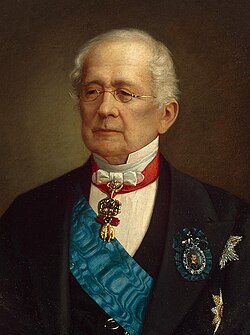
Under the invitation of Prince Alexander Gorchakov, a Russian diplomat and statesman, a conference of delegates convened in December 1868 to reconsider the existing rules of war.
The Treaty and Its Signatories
The conference brought together a wide array of powers, including Austria-Hungary, Belgium, France, the United Kingdom, Italy, Persia, Prussia, Russia, and the Ottoman Empire, among others. While the United States was not invited and did not participate, Brazil and Baden later ratified the agreement in 1869.
The delegates operated on a core philosophical premise: the only legitimate goal of war is to weaken the military force of the enemy. They argued that this could be achieved with standard weapons, and that using small explosives—which might only injure a soldier and cause prolonged suffering rather than an immediate kill—was unnecessary and inhumane.
The resulting agreement, formally titled the Declaration Renouncing the Use, in Time of War, of Explosive Projectiles Under 400 Grammes Weight, prohibited the use of any projectile under 400 grams that was explosive or contained inflammable substances.
| Feature | Details |
|---|---|
| Weight Limit | Under 400 grams (14 ounces avoirdupois) |
| Prohibited Substances | Explosive, fulminating, or inflammable charges |
| Excluded Weapons | Artillery rounds and autocannon projectiles |
| Legal Precedence | Succeeded the First Geneva Convention (1864) |
Technical Distinctions and Legal Nuances
To understand the treaty, it is necessary to distinguish between two types of prohibited ammunition:
- Explosive bullets: These contain an explosive filler that detonates upon impact.
- Fulminating bullets: These contain a small, unstable high-explosive charge designed to shatter into fragments. These are particularly dangerous because they can detonate while being removed during surgery.
Despite the ban, the treaty contained significant loopholes. It only applied to conflicts between the signatory nations. This meant that the use of explosive bullets remained legal in colonial warfare, conflicts with non-signatory nations, or internal police actions.
In modern contexts, the legality of certain weapons—such as anti-materiel rifles (12.7 mm to 14.5 mm)—remains a point of debate. Legal experts often argue whether the 400-gram limit applies to the bullet alone or the entire fixed cartridge.
The Balance of Military Necessity
The legacy of the declaration was highlighted in the 1963 Japanese legal case Ryuichi Shimoda v. The State. The court noted that international law is not based solely on humanitarian feelings, but on a balance between military necessity and humanitarian considerations. The ban on small explosive projectiles was justified because an ordinary bullet is sufficient to kill or wound a soldier; therefore, there was no "overriding need" to use more inhumane weapons.
Frequently Asked Questions
Did the Saint Petersburg Declaration ban all explosive weapons?
No. The ban only applied to projectiles weighing less than 400 grams. Larger explosive munitions, such as those used in artillery or autocannons, remained legal.
Why was the United States not part of the treaty?
The United States was not invited to the convention as it was not considered a major global power at the time of the 1868 meeting.
What is the difference between an explosive and a fulminating bullet?
An explosive bullet uses a filler that detonates on impact, while a fulminating bullet uses an unstable charge to shatter into fragments, which can complicate medical treatment if the bullet detonates during surgery.
Was the treaty applied to colonial conflicts?
No. The declaration specifically excluded the use of explosive bullets in colonial warfare and police actions, applying only to wars between the signatory states.
How did this treaty influence future laws of war?
It established the principle that the use of weapons causing unnecessary suffering is prohibited, serving as a predecessor to the Hague Conventions of 1899 and 1907.