War of the Spanish Succession
The War of the Spanish Succession (1701–1714) was a defining conflict of the early 18th century that pitted the great powers of Europe against one another. At its heart, the war was a struggle to determine who would inherit the vast Spanish Empire following the death of the childless Charles II of Spain in November 1700. Because the Spanish Empire spanned Italy, the Americas, the Spanish Netherlands, and the Philippines, its control threatened to shatter the balance of power—the diplomatic principle that no single nation should dominate Europe.
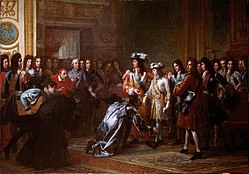
The crisis centered on two rival claimants: Philip of Anjou, the grandson of Louis XIV of France, and Archduke Charles of Austria. When Philip was proclaimed king, it triggered a global military response from the Grand Alliance, leading to thirteen years of grueling warfare across Europe, the Atlantic, the Mediterranean, and the Caribbean.
Key Facts
- Duration: March 1701 to September 7, 1714.
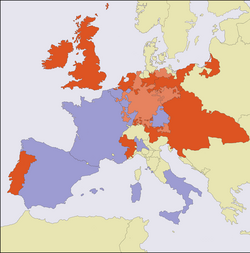
- Primary Rivalry: Pro-Bourbon (France and allies) vs. Pro-Habsburg (Holy Roman Empire, Great Britain, Dutch Republic, and allies).
- Main Result: The Treaties of Utrecht, Rastatt, and Baden.
- Human Cost: Estimated 1.1 to 1.3 million total casualties (killed, wounded, or died of disease).
- Strategic Outcome: Philip V remained King of Spain, but the empire was partitioned to prevent a French-Spanish union.
The Road to Conflict
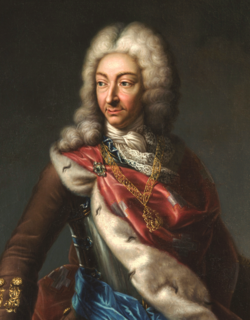
The succession of the Spanish throne had been a subject of diplomatic debate for decades. Charles II of Spain had suffered from chronic ill-health, making his lack of an heir a geopolitical time bomb. Early attempts to avoid war included partition treaties, but the Spanish government refused to allow the empire to be carved up.
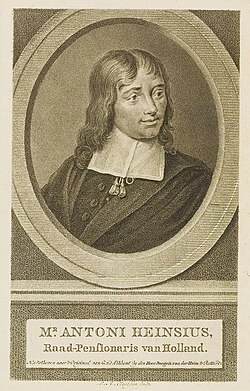
On November 16, 1700, Philip of Anjou was proclaimed Philip V of Spain. This move by Louis XIV of France alarmed other European powers. In response, the Grand Alliance—consisting of the Holy Roman Empire, Great Britain, and the Dutch Republic—was renewed via the Treaty of The Hague in 1701. Their goal was to ensure an independent Spain and prevent the Bourbon dynasty from controlling too much of the continent.
Strategic Objectives and Alliances
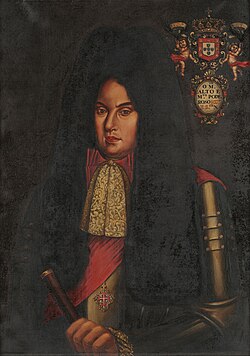
The war was not fought with a single unified goal, as the interests of the allies often diverged. While the Habsburgs wanted Archduke Charles to rule an undivided Spanish monarchy, the British and Dutch were more concerned with preventing either the Bourbons or the Habsburgs from becoming too powerful.
The Pro-Bourbon Bloc
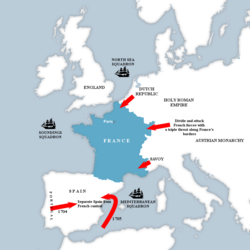
Led by France and Bavaria, this faction sought to maintain Philip V on the throne. France's central position in Europe forced the Grand Alliance to attack on exterior lines, complicating their logistics and coordination.
The Pro-Habsburg Bloc
The Grand Alliance included the Holy Roman Empire, Great Britain, the Dutch Republic, and later Prussia, Portugal, and Savoy. Their efforts were supported by the Royal Navy, which targeted Spanish treasure fleets to cripple Bourbon finances.
Major Theaters of War
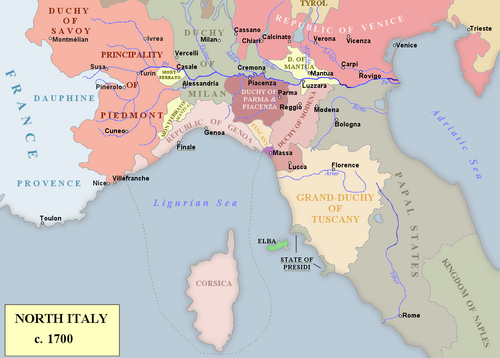
The conflict was fought across multiple fronts, each with its own strategic importance:
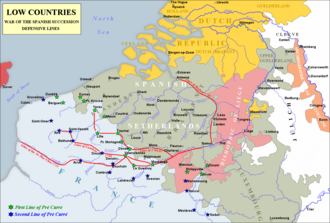
- The Low Countries and Rhine: A primary battleground featuring the pré carré, a double line of French fortresses designed to guard the border.
- Italy: Conflict centered on Milan, Savoy, and Mantua.
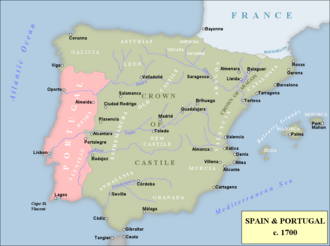
- Spain and Portugal: A struggle for territorial control of Castile and Aragon.
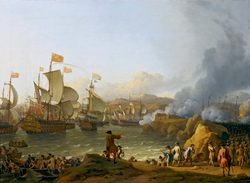
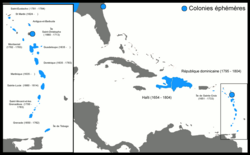
- The Americas: Specifically the French West Indies, where sugar production generated immense profits that funded the war effort.
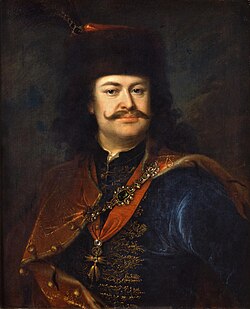
Beyond the main fronts, France funded distractions such as the Hungarian revolt led by Francis Rákóczi to divert Austrian resources away from the Spanish theater.
The Path to Peace
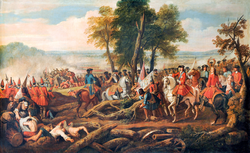
By 1709, the Grand Alliance had pushed France onto the defensive. However, the Battle of Malplaquet in September 1709, while an Allied victory, resulted in such staggering losses that it shocked Europe and fueled a desire for peace.
The strategic landscape shifted dramatically in 1711 when Archduke Charles succeeded his brother as Holy Roman Emperor. This meant that if Charles also became King of Spain, the two largest empires in Europe would merge—the very outcome the British and Dutch had fought to prevent. Consequently, the British government began negotiating a separate peace.
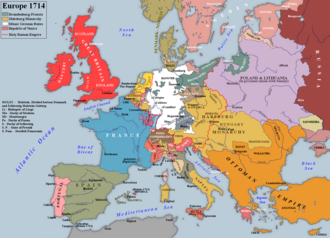
The conflict effectively ended with the Peace of Utrecht (1713), followed by the Treaties of Rastatt and Baden (1714). These agreements recognized Philip V as King of Spain on the condition that the French and Spanish crowns would never be united.
Summary of the Conflict
| Category | Pro-Bourbon Forces | Pro-Habsburg Forces |
|---|---|---|
| Primary Leaders | Louis XIV, Philip V | Emperor Charles VI, Marlborough |
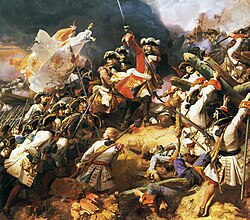
| Max Land Strength | c. 500,000 | c. 600,000 |
| Naval Strength | c. 131 ships of the line | c. 211 ships of the line |
| Estimated Casualties | 600,000–700,000 | 500,000–600,000 |
Frequently Asked Questions
What caused the War of the Spanish Succession?
The war was caused by the death of Charles II of Spain without an heir. The resulting succession crisis pitted the Bourbon claimant (Philip of Anjou) against the Habsburg claimant (Archduke Charles), threatening the European balance of power.
Who eventually became the King of Spain?
Philip V, the grandson of Louis XIV, remained the King of Spain. However, he had to renounce his rights to the French throne to ensure that France and Spain would not unite under a single ruler.
What was the significance of the Peace of Utrecht?
The Peace of Utrecht (1713) ended the majority of the conflict. It redistributed Spanish territories, recognized Philip V's claim to Spain, and established a new balance of power in Europe to prevent any one nation from dominating.
How did the death of Joseph I change the war?
When Joseph I died in 1711, his brother Archduke Charles became Holy Roman Emperor. This made the prospect of Charles ruling Spain unacceptable to the Grand Alliance, leading Great Britain to seek a peace agreement with France.
Where was the war fought outside of Europe?
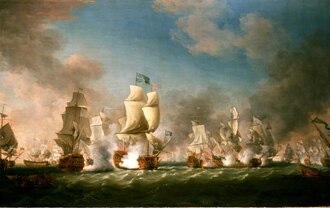
The war extended to the Atlantic, the Mediterranean, and the Caribbean. The French West Indies were particularly important due to the high profits from sugar production.