War of the Confederation
The War of the Confederation (1836–1839) was a pivotal military conflict in South America that pitted the Peru–Bolivian Confederation against an alliance known as the United Restoration Army. This coalition primarily consisted of the land and naval forces of Chile and Peruvian restorationists—soldiers opposed to the confederation—with additional support from the Argentine Confederation.
The conflict was sparked by the creation of the Peru–Bolivian Confederation under the leadership of General Andrés de Santa Cruz. This new political entity shifted the balance of power in the region, leading Chile and Argentina to view the Confederation as a threat to their own geopolitical and commercial interests.
Key Facts
- Duration: 1836 to 1839.
- Primary Outcome: Victory for the United Restoration (Chile and Peruvian restorationists).
- Major Consequence: Dissolution of the Peru–Bolivian Confederation and the restoration of Peru and Bolivia as separate republics.
- Decisive Engagement: The Battle of Yungay (January 20, 1839).
- Key Figure: General Andrés de Santa Cruz, the architect of the Confederation, was forced into exile.
Origins of the Conflict
The Tariff War
The road to war began with a commercial dispute. In January 1835, Peruvian President Felipe Salaverry signed a Treaty of Friendship, Commerce and Navigation with Chile. However, when General Luis Orbegoso replaced Salaverry, the treaty was nullified in February 1836. To pressure Chile into renegotiating, Peru increased tariffs on Chilean wheat by 2,400% (from 12 cents to 3 pesos). Chile retaliated by applying the same increase to Peruvian sugar.
The Freire Expedition
Internal Chilean politics further complicated matters. Former President General Ramón Freire y Serrano, exiled in Lima, received funding from the Confederate government to attempt to seize power from the Chilean administration of Joaquín Prieto. The expedition failed quickly; Freire was captured and eventually exiled to Australia, while the sloop Orbegoso was captured by the Chilean frigate Monteagudo.
Escalation and Early Campaigns
The Raid on Callao
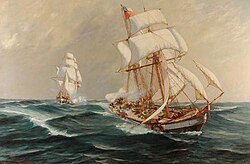
Seeking to prevent further Confederate interference in Chilean affairs, the Chilean government ordered a surprise attack on the port of Callao. On August 21, 1836, the brigantine Aquiles, commanded by Victorino Garrido, captured three Confederate ships: the Santa Cruz, Arequipeño, and Peruviana.
Internal Strife and the First Campaign
The war was marked by internal instability. In Chile, Colonel José Antonio Vidaurre attempted a coup in June 1837, leading to the assassination of the influential minister Portales. Meanwhile, the Argentine Confederation, led by Juan Manuel de Rosas, struggled to maintain a front against Bolivia due to internal political pressures and a naval blockade of the Río de la Plata by France.
In September 1837, Chile launched its first major expedition under Admiral Manuel Blanco Encalada. After a grueling march to Arequipa, the Chilean forces were blockaded by Marshal Santa Cruz. This led to the Treaty of Paucarpata on November 17, 1837, which mandated the withdrawal of Chilean troops and the return of captured ships. However, the Chilean government later repudiated this treaty.
The Path to Victory
Naval and Land Offensives
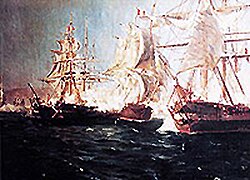
By 1838, Chile had secured naval superiority. Following a stalemate at the Naval Battle of Islay, General Manuel Bulnes led a second army into Peru. The Chilean forces defeated a garrison loyal to General Orbegoso at the Battle of Portada de Guías and occupied Lima in October 1838.
The Battle of Yungay
The conflict reached its climax on January 20, 1839, at the Battle of Yungay. General Bulnes launched a massive offensive against Santa Cruz's forces positioned on the Pan de Azúcar and Punyán hills. The Chilean victory was decisive, resulting in over 2,400 Confederate casualties and 1,600 prisoners. This defeat, coupled with a betrayal by General José Miguel de Velasco in Bolivia, led to the total collapse of the Confederation.
Aftermath and Legacy
On August 25, 1839, General Agustín Gamarra officially dissolved the Confederation and reunified the North and South-Peruvian Republics into a single state of Peru. While the Confederation ended, tensions persisted. General Gamarra later invaded Bolivia in an attempt to lead a union on his own terms, but he was killed at the Battle of Ingaví in 1841. Peace between Peru and Bolivia was finally established in 1842.
| Category | United Restoration (Chile/Restorers) | Peru–Bolivian Confederation |
|---|---|---|
| Key Leaders | Manuel Bulnes, Manuel Blanco Encalada, Agustín Gamarra | Andrés de Santa Cruz, Luis J. de Orbegoso |
| Peak Land Strength | ~8,200 (Chile) + ~3,000 (Peruvian Restorers) | ~12,000 (Distributed) |
| Naval Strength | 8–9 warships + numerous transports | 6 warships + gunboats/privateers |
| Final Result | Victory | Dissolution and Exile |
Frequently Asked Questions
What caused the War of the Confederation?
The war was caused by a combination of geopolitical distrust and economic disputes. Chile and Argentina feared the power of the newly formed Peru–Bolivian Confederation, and a severe tariff dispute over wheat and sugar escalated tensions into open conflict.
Who was Andrés de Santa Cruz?
Andrés de Santa Cruz was the General and President who created the Peru–Bolivian Confederation. He sought to unify the two nations into a single political entity, but his leadership was opposed by both internal dissidents and neighboring countries.
What was the significance of the Battle of Yungay?
The Battle of Yungay was the decisive engagement of the war. The victory of the Chilean-Peruvian restorationist forces under General Manuel Bulnes effectively crushed the Confederate army, leading directly to the dissolution of the Confederation.
What happened to the Confederation after the war?
The Confederation was officially dissolved on August 25, 1839. Peru was reunified as a single republic, and Bolivia was restored as an independent state. General Santa Cruz was forced into exile.
Did Argentina play a major role in the fighting?
While the Argentine Confederation was a belligerent, its impact was limited. Internal political struggles and a conflict with France prevented Juan Manuel de Rosas from committing significant resources to the war front against Bolivia.