Wang Wang Blues: The Jazz Standard of Paul Whiteman
In the early 1920s, the landscape of American music was shifting toward the vibrant, syncopated rhythms of jazz. One of the most enduring pieces from this era is Wang Wang Blues, a composition that transitioned from a popular hit to a timeless jazz standard. Originally released in 1920, the song captured the spirit of the age and helped cement the reputation of one of the era's most influential bandleaders.
The song was brought to life by Paul Whiteman and His Ambassador Orchestra, a group known for blending classical precision with jazz energy. The recording process took place on August 9, 1920, at the Victor Studios in Camden, New Jersey, resulting in a track that would dominate the airwaves and charts of the time.
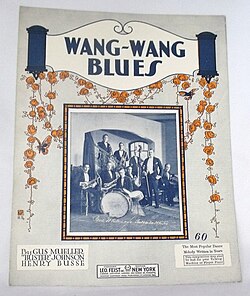
Key Facts
- Release Date: December 1920.
- Chart Performance: Held the No. 1 spot on the Billboard pop singles charts for six weeks.
- Composers: Written by Henry Busse, Gussie Mueller, and Theron E. "Buster" Johnson.
- Lyricist: Leo Wood.
- Label: Released by Victor (Catalog number 18694).
Production and Composition
The creation of "Wang Wang Blues" was a collaborative effort. While the music was composed by Henry Busse, Gussie Mueller, and Theron E. "Buster" Johnson, the lyrics were penned by Leo Wood. The track was arranged by Ferde Grofe, a pivotal figure in the orchestration of early jazz.
The song was released as a 78 rpm single—the standard disc format of the era—with "Anytime Anyday Anywhere" serving as the B-side. Paul Whiteman's affinity for the piece was evident, as he recorded and released the song three additional times beyond the original 1920 session.
Recording Personnel
The August 9 session featured a talented ensemble of musicians who defined the sound of the Ambassador Orchestra:
- Paul Whiteman: Violin and leader
- Henry Busse: Trumpet and composer
- Ferde Grofe: Piano, arranger, and composer
- Theron E. "Buster" Johnson: Trombone
- Gus Mueller: Clarinet and alto sax
- Hale Byers: Alto sax
- Mike Pingitore: Banjo
- Sammy Heiss: Tuba
- Harold McDonald: Drums
Legacy and Influence
Beyond its initial success, "Wang Wang Blues" became one of the most recorded songs in the jazz canon. Its appeal spanned decades and genres, attracting interpretations from legendary artists such as Duke Ellington, Benny Goodman, King Oliver, and Fletcher Henderson. Other notable performers include Glenn Miller, Art Tatum, and the Original Dixieland Jazz Band.
The song's enduring relevance is further highlighted by its inclusion in modern cinema; a performance by Benny Goodman was featured in the 1996 film The English Patient.
| Category | Details |
|---|---|
| Genre | Jazz |
| Recording Date | August 9, 1920 |
| Release Date | December 1920 |
| Studio | Victor Studios, Camden, NJ |
| Length | 3:21 |
| Publisher | Leo Feist, Inc. (1920) |
Frequently Asked Questions
Who wrote "Wang Wang Blues"?
The music was composed by Henry Busse, Gussie Mueller, and Theron E. "Buster" Johnson, with lyrics provided by Leo Wood.
How successful was Paul Whiteman's version?
The recording was a major hit, spending six weeks at No. 1 on the Billboard pop singles charts.
Which famous jazz musicians have recorded this song?
The song has been recorded by a vast array of artists, including Duke Ellington, Benny Goodman, King Oliver, Fletcher Henderson, and Glenn Miller, among many others.
Where was the original 1920 recording made?
It was recorded on August 9, 1920, at the Victor Studios located in Camden, New Jersey.
Has the song appeared in any movies?
Yes, a version performed by Benny Goodman was featured in the 1996 movie The English Patient.