Violin: History, Construction, and Artistry of the Bowed String Instrument
The violin, often referred to as the fiddle in folk contexts, is a sophisticated composite chordophone sounded by a bow. Known for its versatility and expressive range, it serves as the cornerstone of the violin family, which includes the viola, cello, and double bass. From the royal courts of the Renaissance to modern electric stages, the violin has evolved into one of the most beloved instruments in global music.

Key Facts
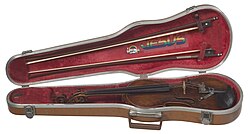
- Origin: Emerged in early 16th-century northern Italy.
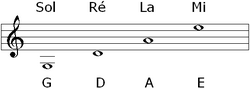
- Tuning: Standard tuning in fifths: G3, D4, A4, and E5.
- Golden Age: The period featuring legendary luthiers like Stradivari and Guarneri.
- Construction: Built by specialized craftsmen known as luthiers.
- Versatility: Used across classical, jazz, Indian Carnatic, and popular music.
Etymology and Origins
The English word "violin" appeared in the 1570s, derived from the Italian violino, a diminutive of viola. The root can be traced back to the Medieval Latin vitula, meaning "stringed instrument," potentially linked to Vitula, the Roman goddess of joy, or the Latin verb vitulari, meaning to cry out in exaltation. Historically, the violin is the modern evolution of the smaller, medieval viola da braccio (arm viola).
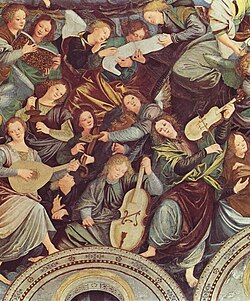
The instrument's ancestors include the rebec, the fiddle, and the lira da braccio. Many historians believe early makers borrowed elements from the Byzantine lyra, including the vielle. By 1530, the first depictions of violins appeared in northern Italy, though these early versions often featured only three strings.
The Golden Age of Luthierie
![The Helmholtz corner traveling back and forth along the string[28]](/images/c2/76/c2762131eaed2ddd84626f014268d44026b71a42b98bffee91406d236f64cbb2.gif)
The violin's popularity spanned all social strata, from street performers to the nobility. In 1560, King Charles IX of France commissioned Andrea Amati to build 24 violins; one of these, the "Charles IX," remains the oldest surviving violin today. Another legendary instrument, "The Messiah" (1716) by Antonio Stradivari, is renowned for remaining in pristine condition.
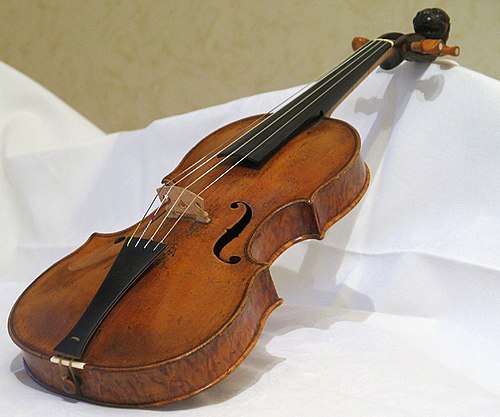
Between the 16th and 18th centuries, several prestigious families of luthiers defined the instrument's quality. The most sought-after instruments today come from the "Golden Age," particularly those crafted by the Amati, Guarneri, and Stradivari families of Cremona, as well as the school of Venice.
| Luthier/Family | Primary Location | Active Period |
|---|---|---|
| Amati Family | Cremona | 1550–1740 |
| Stradivari Family | Cremona | 1644–1737 |
| Guarneri Family | Cremona/Venice | 1626–1744 |
| Gasparo da Salò | Brescia/Salò | 1530–1615 |
| Montagnana | Venice | c. 1700–1750 |
The market value for these instruments is extraordinary; for instance, the "Lady Blunt" Stradivarius sold for £9.8 million in 2011.
Construction and Mechanics
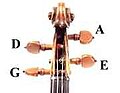
The construction of a violin is a precise science involving specific woods and structural components to maximize resonance and durability.
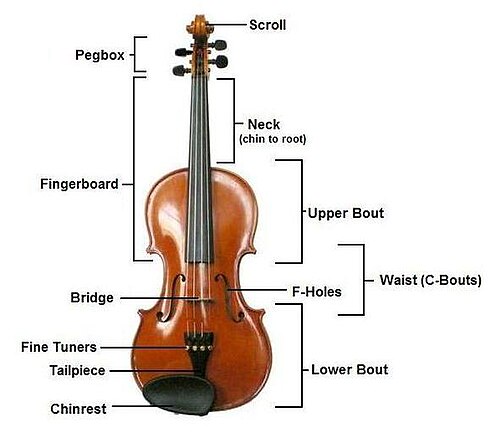
Acoustics and Components
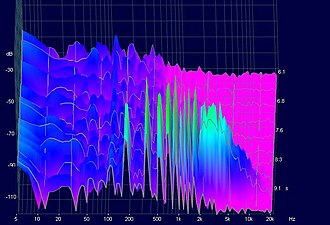
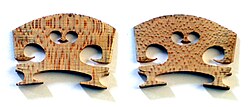
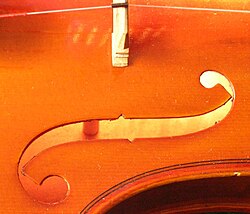
Key structural elements include the bridge, which supports the strings, and the sound post, a small wooden dowel inside the body that transmits vibrations from the bridge to the back of the instrument.
The Bow
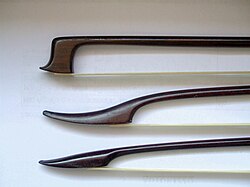
The bow consists of a stick with a ribbon of horsehair stretched between the tip and the frog (the heel). A screw adjuster at the frog allows the player to tighten the hair. Traditional bows use windings of silver, silk, or baleen to protect the stick and provide a secure grip.
Playing the Violin
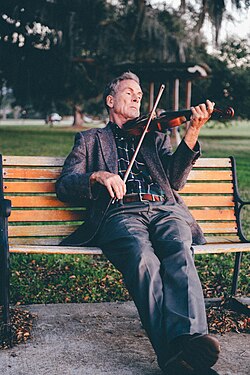
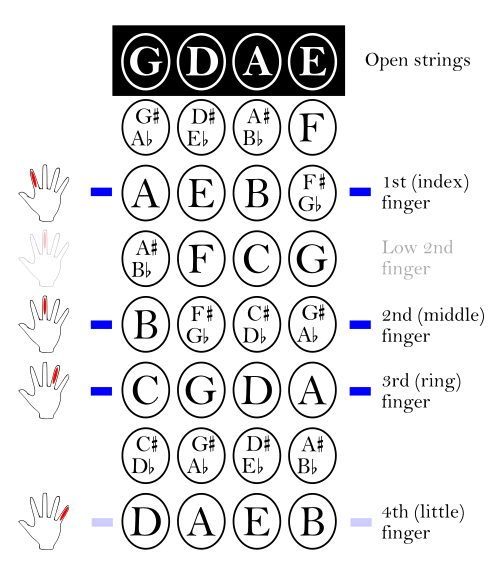
Playing the violin requires a combination of precise left-hand finger placement and right-hand bowing techniques.
Pitch and Range
The violin is tuned in fifths: G3, D4, A4, and E5. While the lowest note is typically G3, the upper limit is more flexible. Orchestral parts generally peak at E7, but skilled players can reach C8 using artificial harmonics.
Techniques and Articulation
- Vibrato: A slight oscillation in pitch that adds warmth and expression to the tone.
- Pizzicato: Plucking the strings with the fingers instead of using the bow.
- Col legno: Striking the strings with the wood of the bow.
- Tremolo: Rapid repetition of a single note.
![Petrowitsch Bissing was an instructor of vibrato method on the violin[32] and published a book titled Cultivation of the Violin Vibrato Tone.[33]](/images/d2/18/d218ad502f89388a9e8b09b1125db9167ce5703a9e23448d53b014714a999bc1.png)
Sizing and Variations

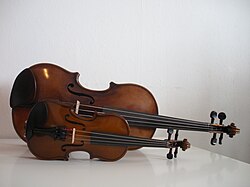
To accommodate players of different ages and physical sizes, violins are produced in fractional sizes. While a full-size (4/4) violin has a body length of 356 mm, smaller versions range from 7/8 down to 1/64. These are not literal proportions but standardized sizes for students.
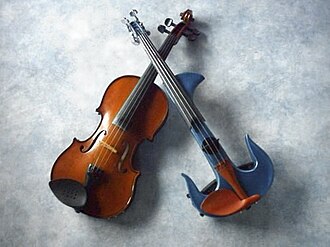
Modern innovations have also introduced electric violins, which use pickups rather than a hollow body to amplify sound, allowing for greater volume and the use of effects pedals.
Musical Styles and Global Influence
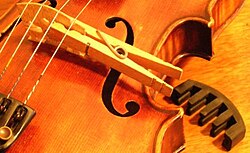
The violin's adaptability has allowed it to permeate nearly every musical genre:
- Classical: The heart of the symphony orchestra and string quartets.
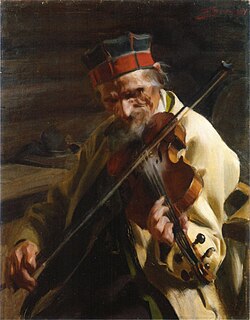
- Folk/Fiddling: Central to traditional music in Europe and North America.
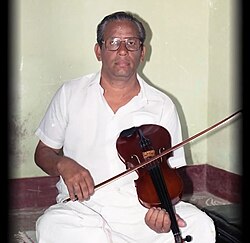
- Indian Classical: Integrated into the Carnatic style.
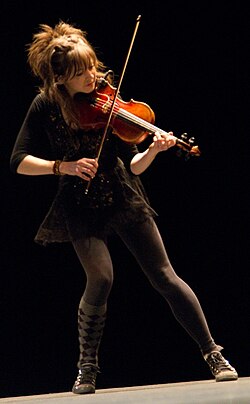
- Popular Music: Used extensively in 1920s pop, swing big bands, and the soul textures of Motown in the 1960s and 70s.
Frequently Asked Questions
What is the difference between a violin and a fiddle?
Physically, they are the same instrument. The term "fiddle" is typically used when the instrument is played in folk, country, or traditional styles, whereas "violin" is used in classical contexts.
Why are Stradivarius violins so expensive?
Their value stems from their historical significance, the legendary skill of Antonio Stradivari, and a perceived superior tonal quality that is highly prized by professional soloists and collectors.
How are fractional size violins determined?
Fractional sizes (like 1/2 or 1/4) are standardized sizes designed for children whose hands are too small for a full-size instrument. They are not exact mathematical fractions of the full-size length.
What is a sound post?
The sound post is a small wooden cylinder wedged inside the violin's body under the bridge. It is critical for structural support and for transmitting sound vibrations to the back plate.
What are the open strings of a violin?
The four open strings are tuned to G (below middle C), D, A, and E.