Vineyards and Viticulture: The Science and Art of Grape Production
A vineyard is a specialized plantation of grape-bearing vines. While most people associate these landscapes with winemaking, vineyards are also essential for producing raisins, table grapes, and non-alcoholic grape juice. The professional study and practice of producing these grapes is known as viticulture.
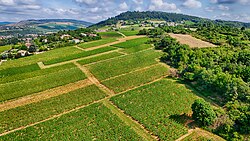
Central to the identity of any vineyard is its terroir. This French term describes the "sense of place," encompassing the unique geographical and geological characteristics of a plantation. From the mineral composition of the soil to the local climate, terroir is believed to impart distinct characteristics to the final product.
Key Facts
- Earliest Evidence: Wine production dates back to between 6000 and 5000 BC.
- Global Leaders: As of 2015, Spain is the world's largest producer by land area, followed by China and France.
- The Great Blight: The 19th-century phylloxera pest nearly destroyed European Vitis vinifera vines, leading to the widespread use of American rootstock grafting.
- Terroir Factors: Includes soil, altitude, slope, sun orientation, and microclimate.
- Modern Shifts: New World vineyards (e.g., USA, Australia, Chile) tend to be larger and more focused on economies of scale than European vineyards.
The History of Viticulture
While early wine production began millennia ago, the ancient Greeks significantly advanced winemaking technology. However, the cultivation techniques recognized today only became common across Europe toward the end of the Roman Empire.
During the Middle Ages, the Catholic Church played a pivotal role in preserving viticulture. Because wine was necessary for the Mass, monasteries became centers of stability and innovation. These institutions managed the finest vineyards in Europe, producing vinum theologium, which was regarded as superior to all other wines.
The Great French Wine Blight
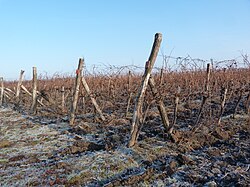
In the late 19th century, European vineyards faced an existential threat known as the Great French Wine Blight. This was caused by phylloxera, an aphid-like insect accidentally introduced from North America. While the European Vitis vinifera species was susceptible, native American vines like Vitis labrusca were resistant.
To save the industry, growers began grafting Vitis vinifera onto American rootstocks. This remains the primary defense today, as there is still no cure for phylloxera in non-grafted vines.
Modern Vineyard Practices
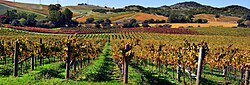
Modern viticulture has shifted from simply measuring "yield per unit area" to "maximizing yield of desired quality." In "New World" regions—where soil is often more fertile—growers focus on managing vigorous vine growth through palissage (canopy management), which involves training vines along trellises to optimize the Leaf Area/Fruit (LA/F) ratio.
Technological Innovations
To expand into harsher climates, such as Canada, several technical advancements have been implemented:
- Climate Protection: Spraying water on vines to prevent damage from sub-zero temperatures.
- Water Management: The use of drip irrigation to make previously unplantable land viable.
- Mechanical Harvesting: Used to reduce costs and address labor shortages, though it is often impractical for steep terrain or very small plots.
- Sustainable Methods: A growing trend toward organic, ecologically sensitive, and biodynamic viticulture.
Scientific Research
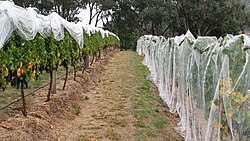
Institutions such as Cornell University, the University of California, Davis, and California State University, Fresno, lead scientific efforts to improve pest control and develop better grape varieties. Additionally, the International Grape Genome Program seeks genetic ways to increase yield and natural pest resistance.
Global Trends and Regional Shifts
The landscape of global viticulture is changing rapidly. Between 1990 and 2003, vineyard acreage grew exponentially in the U.S., Australia, and Chile. New World vineyards are typically much larger than their European counterparts; for example, the average Australian vineyard is 0.5 km (120 acres), compared to the European average of 0.2 km (49 acres).
Variety Adaptation
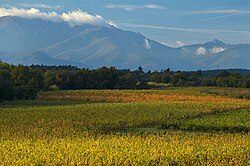
Growers frequently change grape varieties to meet consumer demand or improve quality. In Chile, low-quality grapes were replaced by Chardonnay and Cabernet Sauvignon. In Argentina, Nicolás Catena Zapata led a quality revolution for Malbec, moving plantings to higher altitudes where cooler temperatures and intense sunlight create more complex wines.
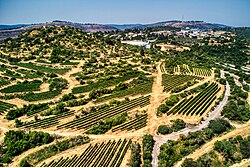
Techniques like "T" budding now allow growers to graft new varieties onto existing rootstock, enabling a variety switch within just two years.
Understanding Terroir
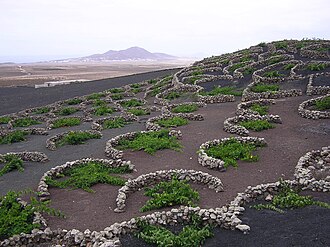
Terroir is the combination of natural factors that define a vineyard's unique character. These include:
- Soil and Geology: The underlying rock and soil quality (often, poorer soils are thought to produce better wine).
- Topography: The slope and altitude of the land.
- Orientation: Facing south in the Northern Hemisphere (or north in the Southern Hemisphere) to maximize sunlight.
- Microclimate: Local patterns of rain, wind, humidity, and temperature.
![Vineyard at an altitude of 1300 metres in Cerdanya, France.[3]](/images/6b/7d/6b7d71b1c21194719e10f6b46743dbdc55c5a8339f210770fddb789e2254ae71.jpg)
While the terroir philosophy is rooted in French tradition, environmental factors like wildfires in Australia and California have also begun to influence the character of grapes in those regions.
The Vineyard Vignette
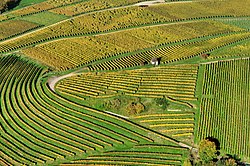
A vignette is a small, 500-square-metre plot within a larger consolidated vineyard. In this model, investors purchase the land but outsource the actual farming and production to professional growers. This co-operative structure allows small investors to benefit from the economies of scale and lower operational costs of a large estate.
| Region | Average Size (Approx.) | Key Characteristics/Trends |
|---|---|---|
| Europe | 0.2 km (49 acres) | Traditional, smaller plots, strong terroir focus. |
| Australia | 0.5 km (120 acres) | Rapid growth, significant economies of scale. |
| China | N/A | Rapid expansion; overtook France in total land area by 2015. |
| Spain | N/A | World's largest producer by land area. |
Frequently Asked Questions
What is the difference between viticulture and enology?
Viticulture is the science and practice of cultivating the grapes in the vineyard, whereas enology (though not detailed in this text) refers to the science of making the wine from those grapes.
How did phylloxera change European vineyards?
Phylloxera nearly destroyed European Vitis vinifera vines. The solution was to graft these European vines onto rootstocks of North American grape species, which are naturally resistant to the pest.
Why are vineyards often planted on steep hillsides?
Hillsides are used to maximize sunlight exposure and provide better drainage, which reduces unnecessary water uptake and forces the vine to put more energy into the fruit rather than the leaves.
What is a vineyard vignette?
A vignette is a 500-square-metre piece of a larger vineyard owned by an investor but managed by a professional grower, allowing the owner to benefit from lower costs through a co-operative structure.
Which country has the most vineyard land?
According to the International Organisation of Vine and Wine, Spain is the world's largest producer by land area, followed by China and France.