Villawood Immigration Detention Centre: History, Controversy, and Operations
Located at 15 Birmingham Avenue in the suburb of Villawood, Sydney, the Villawood Immigration Detention Centre is a prominent and often controversial facility within the Australian immigration system. While it currently serves as a secure holding area for various categories of non-citizens, its origins date back to the post-war era, when it served a vastly different purpose as a welcoming hub for new arrivals.
The facility's evolution from a migrant hostel to a high-security detention centre reflects the shifting landscape of Australian border policy and the complexities of managing asylum seekers and visa cancellations.
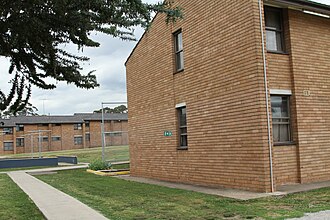
Key Facts
- Established: Built in 1949 as a migrant hostel; converted to a detention centre in 1976.
- Location: Villawood, Sydney, Australia.
- Management: Currently managed by Serco in conjunction with the Australian Border Force.
- Population: As of May 2021, it held 485 people, including Section 501 visa cancellation detainees and asylum seekers.
- Purpose: Houses asylum seekers, visa overstayers, and individuals awaiting deportation.
From Migrant Hostel to Detention Centre
The Post-War Era
The site began as the Villawood Migrant Hostel (or Villawood Migrant Centre) in 1949. Its primary purpose was to accommodate refugees from post-war Europe who came to Australia to work in local industries. Operated by the non-profit Commonwealth Hostels Ltd, the centre grew rapidly. By 1964, it housed 1,425 people, primarily from Britain and Europe. By 1969, it had become the largest migrant hostel in Australia, hosting individuals from Turkey, France, West Germany, Denmark, The Netherlands, Britain, Czechoslovakia, and Yugoslavia.
In 1968, the facility was split into two distinct sections: the Villawood Migrant Hostel and the Westbridge Migrant Hostel, the latter of which operated until 1984.
The Transition to Security
The nature of the site changed in 1976 when a small section of the hostel was converted into the Villawood Immigration Detention Centre. This new section was designed to provide security accommodation for individuals awaiting deportation.
Controversies and Human Rights Concerns
Over the decades, Villawood has been the center of significant public and legal scrutiny. In 2001, the facility gained notoriety when 40 asylum seekers escaped. Around the same time, a Four Corners documentary highlighted the plight of Shayan Bedraie, a six-year-old Iranian refugee who suffered severe psychological distress during his detention.
Management of the centre was outsourced to G4S Australia from 2003 to 2009, before being taken over by Serco. In 2008, the Human Rights and Equal Opportunity Commission (HREOC) described the high-security section as the "most prison like" of all Australian detention centres, citing dilapidated infrastructure and "harsh and inhospitable" conditions.
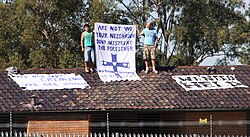
Tensions have occasionally boiled over into violence. On April 21, 2011, detainees set fire to the centre. More recently, in 2023, investigations revealed that detainees were growing marijuana plants in their rooms, and a Serco employee was criminally charged in a corruption probe involving drug trafficking.
Detainee Demographics and Management
The centre manages a diverse population of detainees. This includes Section 501 detainees—individuals whose visas were cancelled due to criminal convictions—as well as asylum seekers who arrived by boat and people who have overstayed their visas. It also serves as a holding point for those refused entry at international airports and seaports.
While Serco handles the daily management, the Australian Border Force (an agency of the Department of Home Affairs) remains responsible for the overall welfare of the detainees.
| Detainee Category | Number of People |
|---|---|
| Section 501 Visa Cancellations | 278 |
| Asylum Seekers (Boat Arrivals) | 74 |
| Other Categories | 133 |
| Total | 485 |
Recorded Deaths at the Facility
The history of Villawood is marked by numerous tragedies, including suicides and medical emergencies. Notable cases include:
- Medical Neglect: Puangthong Simaplee, a Thai national, died in 2001 due to inadequate treatment for heroin withdrawal. The Australian government later accepted vicarious liability for her treatment.
- Suicides: Numerous detainees have taken their own lives, including Josefa Rauluni (2010), Ahmad al-Akabi (2010), and David Saunders (2010). In 2022, a Kurdish man from Iran committed suicide following reports of bullying and a refusal by staff to transfer him from high security.
- Health Failures: Several deaths were attributed to heart failure or attacks, including Marc Lao Thao (2004), Pishevaraz Khodaverdi (2008), and Ali Rahimi (2012).
- Drug Overdoses: Recent deaths include Milad Aljaberi (2019) and an unnamed African man (2023), both linked to drug overdoses.
Frequently Asked Questions
What was Villawood before it became a detention centre?
It was originally the Villawood Migrant Hostel, built in 1949 to house post-war European refugees and migrants coming to Australia to work in local industries.
Who currently manages the Villawood Immigration Detention Centre?
The centre is managed by the private security company Serco, while the Australian Border Force is responsible for the welfare of the detainees.
What is a Section 501 detainee?
Section 501 detainees are individuals who have had their visas cancelled by the government, typically following criminal convictions, and are held while awaiting deportation.
Was the centre ever planned for closure?
Yes, there were plans to close the facility in mid-2019 following the closure of the Maribyrnong Immigration Detention Centre in Melbourne, but those plans did not eventuate and the centre remains open.
What concerns were raised during the COVID-19 pandemic?
Human rights organisations, including HREOC, urged the government to release detainees into the community because social distancing was not possible within the centre's infrastructure.