Villa Gesell: The Coastal Gem of Buenos Aires Province
Nestled along the Atlantic Coast of Argentina, Villa Gesell is a vibrant seaside resort city located in the Buenos Aires Province. Known for its unique blend of forest and beach, the city evolved from a challenging expanse of sand dunes into a premier tourist destination. Today, it serves as a hub for middle-class tourism, offering a serene escape characterized by its oceanic climate and expansive coastline.
The city's growth has been significant over the decades, leading to the annexation of neighboring resorts including Mar de las Pampas, Las Gaviotas, and Mar Azul. This expansion has created a continuous stretch of coastal beauty that attracts thousands of visitors annually.
Key Facts
- Founded: 1931 by Carlos Idaho Gesell.
- Location: Villa Gesell Partido, Buenos Aires Province, Argentina.
- Population: 31,730 (2010 Census).
- Geography: An elevation of 1 meter (3.3 ft) with an oceanic climate.
- Key Attractions: 10 km of primary beach, a nature reserve, and a historic lighthouse.
The Vision of Carlos Idaho Gesell
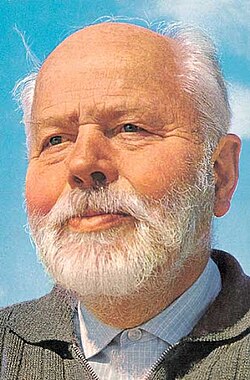
The city owes its existence to Carlos Idaho Gesell (1891–1979), the son of German economist Silvio Gesell. In 1931, seeking to reduce costs for his timber business, Carlos purchased 16.48 square kilometers of sand dunes for 28,000 pesos. His original goal was not to build a city, but to establish a timber plantation.
Overcoming Environmental Challenges
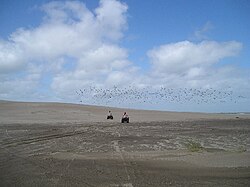
Transforming the dunes proved difficult. Saline winds frequently uprooted plants and dried their roots. After an initial failed attempt with a German agronomist in 1934, Gesell implemented two innovative strategies: planting beneficial weeds to anchor the sand and using tubed roots to help trees reach deeper water sources.
The true breakthrough came in 1938 with the introduction of the Acacia longifolia, an Australian species. The Acacia thrived in the salty wind and improved nitrogen fixation in the soil, providing a protective windbreak for the pine trees.
From Plantation to Urban Settlement
By 1940, financial constraints led Gesell to build "La Golondrina," a small timeshare. This attracted the first tourists, including the Stark family, who promoted the area in Buenos Aires. By 1943, the town was linked to Provincial Route 11, sparking rapid urban development. Gesell initially managed the town with strict moral codes, banning alcohol and cigarettes, and opposing the establishment of a casino.
Climate and Geography
Villa Gesell is characterized by an oceanic climate (Cfb under the Koppen classification), featuring moderate temperatures and consistent precipitation throughout the year.
| Metric | Summer (Jan) | Winter (Jul) | Annual Average/Total |
|---|---|---|---|
| Mean Daily Max (°C) | 27.4 | 13.2 | 20.3 |
| Daily Mean (°C) | 21.6 | 8.1 | 14.8 |
| Mean Daily Min (°C) | 16.0 | 3.9 | 8.8 |
| Average Precipitation (mm) | 101.3 | 54.9 | 958.0 |
Tourism and Local Attractions
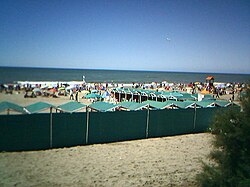
The primary draw of the city is its 10 km beach, which features a soft slope and numerous spas. When including the annexed areas of Mar de las Pampas, Las Gaviotas, and Mar Azul, the beachside extends to 21 km. Safety is prioritized with a dedicated staff of 150 lifeguards.
Beyond the shore, visitors can explore:
- The Lighthouse: Located 30 km south, it is the second-highest lighthouse in the province and is surrounded by a nature reserve.
- Leisure Facilities: The city hosts a zoo, a golf course, and a craft market.
- Nightlife: A variety of discos make it a popular spot for entertainment.
While Villa Gesell traditionally catered to teenagers, the administration shifted its focus in 2008 toward mature and family-oriented tourists, replacing the "Gesell Rock" festival with family shows.
Urban Development and Environment
The city is designed around a main avenue running parallel to the coast. In recent years, the city has pivoted toward environmental sustainability. To combat beach erosion caused by concrete structures, the city stopped renewing spa franchises and replaced brick and concrete buildings with smaller wooden structures. Additionally, automobile traffic is banned directly next to the beach to preserve the ecosystem.
Cultural Footnote: The X-Men Misconception
Villa Gesell gained unexpected international attention through the 2011 film X-Men: First Class. Although the movie states that the character Magneto travels to Villa Gesell, the scenery depicted resembles Bariloche in the Patagonia region. This geographical error caused frustration among local residents, who felt the film missed an opportunity to showcase the city's actual landscape.
Frequently Asked Questions
Who founded Villa Gesell and why?
Carlos Idaho Gesell founded the city in 1931. His original intention was to create a timber plantation on the sand dunes to reduce the costs of buying wood for his business.
What makes the vegetation in Villa Gesell unique?
The city's greenery is the result of pioneering forestry. Carlos Gesell used beneficial weeds to anchor the sand and introduced the Australian Acacia longifolia to protect pine trees from saline winds.
How does Villa Gesell differ from Pinamar?
The two cities maintain a regional rivalry based on their target demographics; Pinamar generally caters to wealthy Argentine tourists, while Villa Gesell focuses on the middle class.
What environmental measures has the city taken?
To prevent the beach from shrinking, the city has demolished concrete buildings in favor of wooden ones and banned cars from the immediate beach area.
What is the climate like in Villa Gesell?
The city has an oceanic climate, meaning it experiences moderate temperatures year-round with an annual average precipitation of approximately 958 mm.