Seaside Resorts: History and Global Destinations
A seaside resort is a town, village, or hotel located on a coast that serves as a dedicated vacation destination. While many are simply known as beach resorts when the shoreline is the primary attraction, some regions utilize official accreditations to define these areas, such as the Seebad in Germany, which requires meeting specific standards to earn the title.
Key Facts
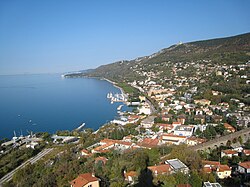
- Ancient Origins: Coastal leisure dates back to Roman times with sites like Baiae and Barcola in Italy.
- Aristocratic Beginnings: Modern resorts emerged in the 18th century, catering to the wealthy for health and recreation.
- Industrial Catalyst: The expansion of railways and steamboats in the 19th century democratized beach access for the middle and working classes.
- Global Reach: From the French Riviera to the Gold Coast of Australia, seaside resorts are a cornerstone of the global tourism industry.
The Evolution of Coastal Leisure
Ancient and Early Modern Roots
The concept of escaping to the coast for pleasure is not a modern invention. In antiquity, the Romans established luxury retreats; Baiae on the Tyrrhenian Sea and Barcola on the Adriatic were hubs for the prosperous. Even in England, Mersea Island in Essex served as a holiday destination for wealthy Romans residing in Colchester.
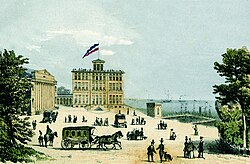
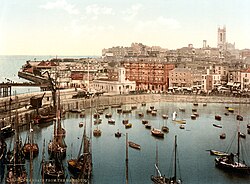
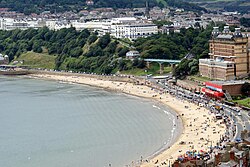
By the 18th century, the aristocracy began frequenting the seaside, mirroring the trend of visiting fashionable spa towns. Scarborough in Yorkshire became a prominent early resort in the 1720s, initially drawing visitors to a stream of acidic water discovered in the 17th century. To facilitate bathing, rolling bathing machines were introduced by 1735.
The Rise of Mass Tourism
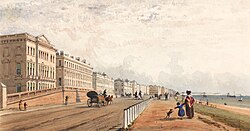
The mid-19th century marked a pivotal shift as the beach became a popular leisure destination for the broader public, laying the groundwork for the modern global tourist industry. This expansion was heavily influenced by the British passion for the coast, which exported the resort model worldwide.
The French Riviera (Côte d'Azur) became a magnet for the British upper class by the late 1700s. The completion of the railway to Nice in 1864 opened the region to all of Europe, attracting royalty such as Queen Victoria and King Edward VII. By 1874, Nice hosted approximately 25,000 foreign residents, mostly British.

Seaside Development in the United States
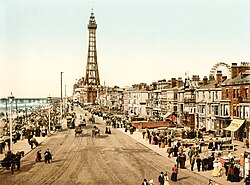
In the U.S., coastal resorts initially developed near major industrial hubs like New York City, Philadelphia, and Boston. Cape May, New Jersey, is often cited as America's first seaside resort, thriving after the War of 1812 due to regular steamboat traffic from Philadelphia.
By the late 1800s, rail expansion further fueled growth. Henry Flagler extended rail lines into subtropical Florida, building ornate landmarks like the 540-room Ponce de Leon Hotel and the Hotel Alcazar in St. Augustine. In the 1920s, Carl Fisher promoted Miami Beach, establishing grand hotels like the Flamingo to attract wealthy tourists.
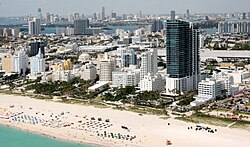
Global Distribution of Seaside Resorts
Today, seaside resorts are found on every continent, ranging from natural wonders to highly developed urban strips.
Europe and the Mediterranean
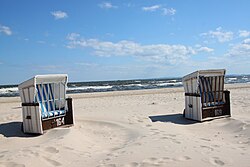
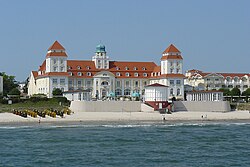
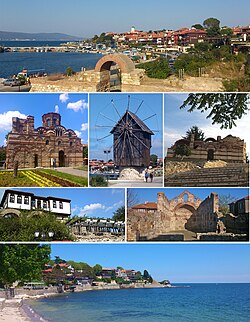
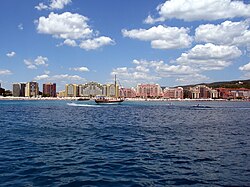
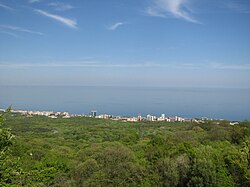
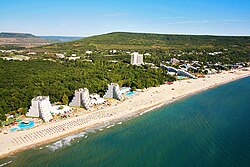
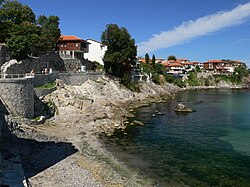
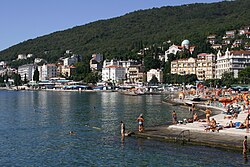
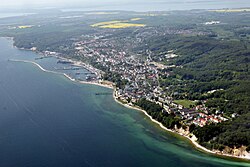
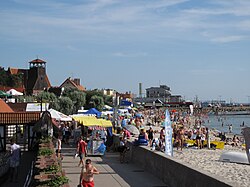
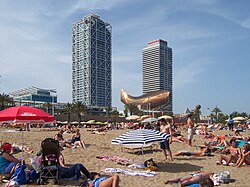
Europe boasts a diverse array of coastal destinations. Germany's Baltic coast is famous for its Kurhaus (cure house) architecture, seen in Binz on Rügen island, while the strandkorb (hooded beach chair) became a cultural symbol of the region. Other notable areas include the Turkish Riviera, the jagged coastline of Croatia, and the historic resorts of Bulgaria, such as Sunny Beach and Nesebar.
The Americas and Asia-Pacific
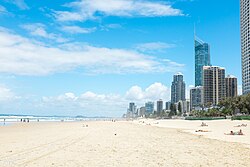
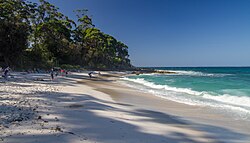
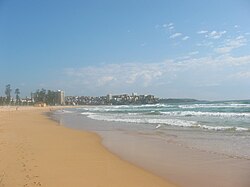
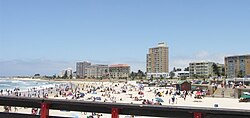
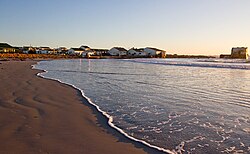
Australia is renowned for its vast coastline, featuring the Gold Coast's Surfers Paradise and the white sands of Hyams Beach. In the Americas, Mexico's Cancún and Brazil's Rio de Janeiro stand as global icons of beach tourism. Asia also features significant hubs, including the islands of Bali in Indonesia and the coastal cities of Vietnam like Nha Trang and Da Nang.
| Region | Key Destinations | Defining Characteristic |
|---|---|---|
| Europe | French Riviera, Amalfi Coast, Baltic Coast | Historic luxury and spa culture |
| North America | Miami Beach, Cape May, Cancún | Urban development and subtropical climates |
| Australia | Gold Coast, Sydney, Jervis Bay | World-famous surfing and white sands |
| Asia | Bali, Phuket, Da Nang | Tropical landscapes and island retreats |
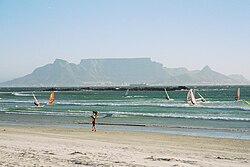
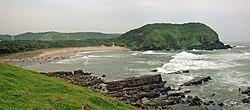
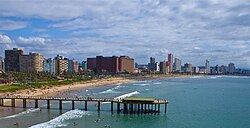
| Africa | Cape Town, Durban, Zanzibar | Diverse coastlines and warm weather |
Frequently Asked Questions




![A sunset on the beach at Atlantic City, New Jersey, famous for the world's first boardwalk[25]](/images/e6/eb/e6ebdd1c273452a107780526a84d381a236ecfc1a90970cdecd332a66bcb55d2.jpg)
What is the difference between a seaside resort and a beach resort?
A seaside resort is a general term for any town, village, or hotel on a coast used for vacations. A beach resort specifically emphasizes the beach as the primary attraction for tourists.
Which is considered the first seaside resort in England?
Margate in Kent is recognized as the first seaside resort of England, established in the 1750s, though Scarborough was also a prominent early destination in the 1720s.
How did transportation affect the growth of seaside resorts?
The introduction of steamboats and the expansion of railway networks in the 19th century were critical. They made coastal areas accessible to the middle and working classes, moving beyond the exclusive reach of the aristocracy.
What is a Seebad?
A Seebad is a German term for a seaside resort that has received official accreditation based on meeting specific requirements regarding facilities and quality.
Who were some of the early famous visitors to U.S. coastal resorts?
Early visitors to Cape May, New Jersey, included prominent figures such as Henry Clay in 1847 and Abraham Lincoln in 1849.