Mar del Plata: Argentina's Premier Atlantic Coast Resort
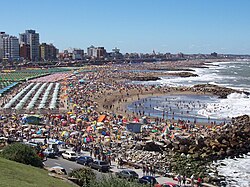
Known affectionately as La Feliz (The Happy One) or La Perla del Atlántico (The Pearl of the Atlantic), Mar del Plata is a vibrant city located on the Atlantic Coast of the Buenos Aires Province in Argentina. As the seat of the General Pueyrredón district and the second-largest city in the province, it serves as both a critical fishing port and the nation's most prominent seaside beach resort.
With a population of 682,605 according to the 2022 census, it ranks as the fifth-largest city in Argentina. Its name, short for "Mar del Río de la Plata," translates to the "sea of the Río de la Plata basin," reflecting its geographic connection to the region's great river system.
Key Facts
- Founded: February 10, 1874.
- Population: 682,605 (2022 Census).
- Geography: Located at 38°0′0″S 57°33′0″W with an elevation of 38 meters.
- Economy: A leader in national hotel capacity and a major hub for fishing, craft beer, and emerging viticulture.
- Climate: Oceanic (Cfb), characterized by moderate summers and cool winters.
Historical Evolution
Early Exploration and Foundation
European contact with the region began as early as 1577, when Sir Francis Drake scouted the coast and its sea lion colonies. In 1581, Don Juan de Garay explored the area by land. For centuries, the indigenous Tehuelche people remained largely undisturbed by Spanish colonization due to their distance from primary settlement hubs.
The Rise of a Luxury Resort
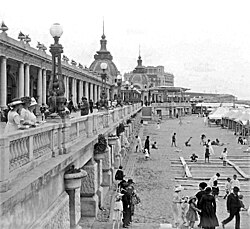
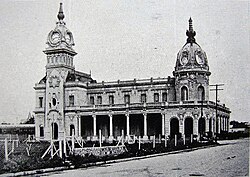
The city's transformation began in 1886 when the Buenos Aires Great Southern railway line reached the area. This connectivity allowed the upper class of Buenos Aires to travel to the coast, sparking the development of a French-style resort village and the establishment of the first hotels around the station.

Modernization and Expansion
The 1930s brought significant infrastructure improvements, most notably the completion of National Route 2 in 1932, which drastically reduced travel time from Buenos Aires. This era also saw the 1939 opening of the iconic seaside Casino complex, designed by architect Alejandro Bustillo.
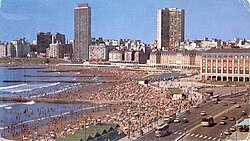
Between the 1950s and 1970s, the city experienced a massive construction boom, further cementing its status as a mass-tourism destination. While the late 20th century brought periods of economic instability and social crisis, the first decade of the 21st century saw a robust recovery across all economic sectors.
Economy and Infrastructure
Tourism and Hospitality
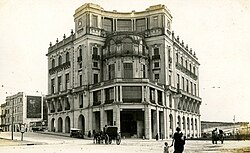
Mar del Plata is the leader in Argentina's hotel industry. As of early 2009, the city boasted nearly 56,000 registered hotel rooms, surpassing even the capital city of Buenos Aires.
Diverse Industries
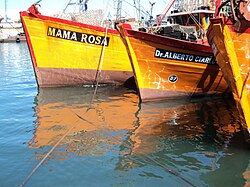
Beyond tourism, the city is a major fishing hub, famous for its Lanchas Amarillas (Yellow Boats) seen at the port.
Recent years have seen the diversification of the local economy. In 2012, the city entered wine production with a vineyard at Chapadmalal beach, producing varieties such as Sauvignon Blanc, Chardonnay, Riesling, and Gewürztraminer. Additionally, the craft beer industry flourished in the 2010s, with the city accounting for one-third of national production by 2016.
Transportation Hubs
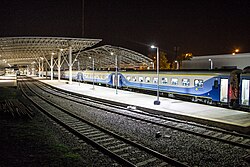
The city is well-connected via Highway 2 (to Buenos Aires), Route 11 (along the coast to Miramar), Route 88 (to Necochea), and Route 226 (to Balcarce, Tandil, and Olavarría). The railway system has evolved from the early Great Southern lines to the modern Railway & Bus station opened in 2011.
Culture, Architecture, and Sport

Architectural Heritage
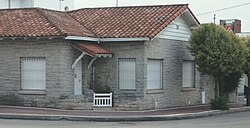
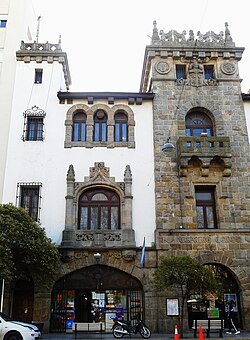
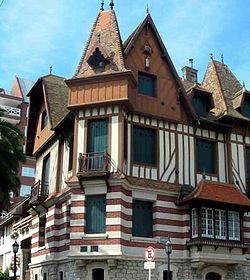
The city is renowned for the "Mar del Plata Style," a distinct architectural movement championed by Auro Tiribelli. This style is characterized by specific chalet designs and the use of local stone.
Arts and Landmarks
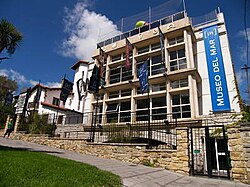
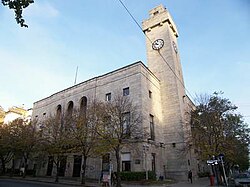
Cultural landmarks include the Colón Theatre, the City Hall, and various historic villas like Villa Normandy (built in 1919). The city also hosted the Museum of the Sea from 2000 to 2012, which once housed over 30,000 sea shells.
A Global Sporting Venue
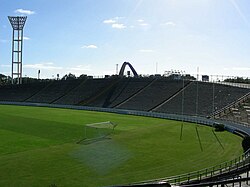
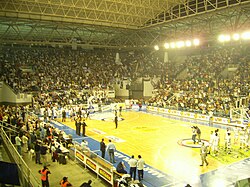
Mar del Plata has a rich history of hosting international events, including:
- FIFA World Cup: Co-hosted in 1978.
- Pan American Games: Hosted in 1995.
- Parapan American Games: Hosted in 2003.
- Other Events: Rugby World Cup Sevens (2001), World Transplant Games (2015), and multiple Inline Speed Skating World Championships.
Climate and Environment
The city features an oceanic climate (Cfb), meaning it has humid, moderate summers and cool winters. While the average January temperature is 20.4°C, July drops to 7.5°C. The region is subject to the Sudestada, strong southeast winds that bring coastal showers and rough seas.
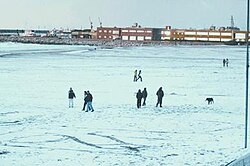
Snowfall is a rare but notable occurrence, happening roughly every six years. Significant accumulations were recorded in 1975, 1991, and notably on July 10, 2004.
| Metric | January (Summer) | July (Winter) | Annual Average/Total |
|---|---|---|---|
| Mean Daily Max Temp | 26.4°C (79.5°F) | 12.6°C (54.7°F) | 19.6°C (67.3°F) |
| Daily Mean Temp | 20.3°C (68.5°F) | 7.5°C (45.5°F) | 14.0°C (57.2°F) |
| Mean Daily Min Temp | 14.5°C (58.1°F) | 3.2°C (37.8°F) | 8.8°C (47.8°F) |
| Average Precipitation | 91.1 mm | 57.8 mm | 946.0 mm |
Frequently Asked Questions

What does the name "Mar del Plata" mean?
It is short for "Mar del Río de la Plata," which means "sea of the Río de la Plata basin" or the sea adjoining the River Plate region.
What is the "Mar del Plata Style" of architecture?
It is a local architectural style, primarily represented by architect Auro Tiribelli, characterized by specific chalet designs often utilizing local stone.
Is it common for it to snow in Mar del Plata?
No, snowfall is uncommon and typically occurs roughly every six years, though it has happened in years such as 1991, 2004, and 2010.
What are the main economic drivers of the city?
The city's economy is driven by mass tourism (leading the country in hotel rooms), a major commercial fishing port, and growing industries in craft beer and wine production.
Which major sporting events has the city hosted?
The city has co-hosted the 1978 FIFA World Cup and hosted the 1995 Pan American Games, the 2001 Rugby World Cup Sevens, and the 2003 Parapan American Games, among others.