Victoria Ocampo: The Intellectual Powerhouse of Latin American Literature
Victoria Ocampo (1890–1979) was a formidable Argentine writer, critic, and intellectual who served as a vital bridge between European modernism and Latin American literature. A woman of immense cultural influence, she is perhaps best remembered as the founder and publisher of the prestigious literary magazine Sur, though her contributions as an author and advocate for the arts spanned several decades.
Born into a high-society family in Buenos Aires, Ocampo's early education was shaped by a French governess, instilling in her a lifelong affinity for French language and culture. While she did not formally matriculate at a university due to her family's traditional views on women's education, she audited lectures at the Sorbonne and the Collège de France during a trip to Paris in 1906–1907, where she was particularly inspired by the philosopher Henri Bergson.
Key Facts
- Founder of Sur: Established the most influential literary magazine in Latin America in 1931.
- Nobel Nominations: Nominated for the Nobel Prize in Literature in 1970 and 1974.
- Academic Pioneer: The first woman ever admitted to the Argentine Academy of Letters (1976).
- Global Network: Maintained close friendships and correspondences with figures like Virginia Woolf and Jorge Luis Borges.
- Human Rights Advocate: The only Argentine to attend the Nuremberg Trials in 1946.
The Legacy of Sur Magazine
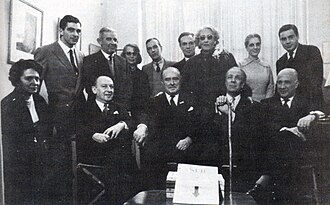
In 1931, Ocampo founded Sur, a publication that became the epicenter of intellectual life in South America. Through this magazine, she introduced Latin American readers to global avant-garde movements and provided a platform for some of the 20th century's greatest writers.
The magazine published a diverse array of talent, including Jorge Luis Borges, Julio Cortázar, Adolfo Bioy Casares, and Ernesto Sabato, as well as international figures such as Albert Camus and José Ortega y Gasset. Ocampo's role as a publisher was not merely administrative; she was a curator of ideas who shaped the literary landscape of her region.
Literary Contributions and Intellectual Pursuits
While her work as a publisher often took center stage, Ocampo was a prolific writer in her own right. Her bibliography includes a wide range of essays, biographies, and a multi-volume autobiography. Her first book, De Francesca à Beatrice, was a commentary on Dante's Divine Comedy written in French.
She developed a significant correspondence with Virginia Woolf during the 1930s, though their friendship famously ended in 1939 after a disagreement regarding a photograph. Ocampo also produced a substantial body of translation work, bringing the plays of Graham Greene and the novels of Fyodor Dostoevsky to Spanish-speaking audiences.
Summary of Major Works and Roles
| Category | Key Examples / Details |
|---|---|
| Major Publications | Sur (Magazine), Testimonios (10-volume series), Lawrence of Arabia |
| Notable Translations | Works by Albert Camus, Graham Greene, and Mahatma Gandhi |
| Honors | CBE, Gold Medal of the Académie française, Harvard honorary doctorate |
| Political Stance | Liberalism; open opposition to fascism and the government of Juan Domingo Perón |
Political Activism and Villa Ocampo
Ocampo's political journey was complex. While she initially expressed some admiration for Benito Mussolini in 1935, she quickly distanced herself from fascism as the regime's militarism grew. By 1937, Sur was explicitly aligned with liberalism and supported the Republicans during the Spanish Civil War.
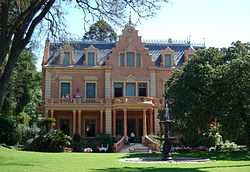
Her commitment to intellectual freedom led to her brief imprisonment in 1953 due to her opposition to the government of Juan Domingo Perón. Her home, Villa Ocampo in San Isidro, served as a sanctuary for global intellectuals, hosting guests such as Igor Stravinsky, Rabindranath Tagore, and Indira Gandhi. In 1973, she donated the estate to UNESCO.
Frequently Asked Questions
Was Victoria Ocampo a professional writer?
Yes, she was a writer, critic, and translator. While she is highly regarded for her publishing work with Sur, she authored numerous essays, biographies, and a detailed autobiography.
What was the significance of the magazine Sur?
Sur was the most important literary magazine of its time in Latin America, acting as a conduit for European and American intellectual thought and publishing the region's most prominent writers.
Did Victoria Ocampo attend university?
She did not formally matriculate at a university because her wealthy family discouraged formal education for women. However, she audited lectures at the Sorbonne and the Collège de France in Paris.
What was her relationship with Jorge Luis Borges?
Ocampo and Borges were close intellectual collaborators. She published his work in Sur, and the two engaged in a series of dialogues that were later published as a book.
Why was she admitted to the Argentine Academy of Letters?
She was recognized for her immense contribution to literature and culture, becoming the first woman ever admitted to the Academy in 1976.