Victoria, Entre Ríos: A Hub of Culture, Tourism, and Nature
Nestled on the eastern shore of the Paraná River in the southwestern region of Entre Ríos, Argentina, Victoria is a city where history, spirituality, and natural beauty converge. Known for its strategic location opposite the city of Rosario, Victoria has evolved from a small hamlet into a premier tourist destination, blending its traditional roots with modern luxury.
The city's accessibility was transformed in 2003 with the completion of the Rosario-Victoria Bridge. This engineering feat spans nearly 60 km across the flood plain of the Paraná Delta, creating a vital link between the province of Entre Ríos and the Greater Rosario area in Santa Fe.
Key Facts
- Location: Southwestern Entre Ríos, Argentina, on the Paraná River.
- Population: 32,411 (as of 2012).
- Key Infrastructure: Connected to Rosario via a 60 km bridge since 2003.
- Economic Drivers: Commercial fishing, high-end tourism, and gambling.
- Cultural Title: Provincial Capital of Carnival Entrerriano.
- Patron Saint: Virgin of Aranzazú.
History and Spiritual Heritage
The origins of Victoria are deeply tied to Cerro La Matanza. This site is historically significant as the location of a native uprising defeat in 1750 and an 1810 oratory dedicated to the Virgin of Aranzazú, a Marian apparition who serves as the city's patron saint.
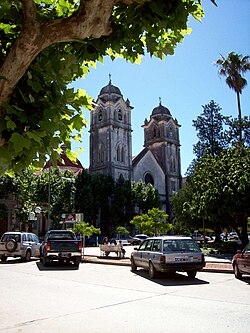
The settlement's administrative journey began in 1826 when the Provincial Legislature granted it village status. By 1829, the hamlet was officially renamed Victoria, and it was eventually designated as a city in 1851. The local church, which began construction in 1872, is dedicated to the patron saint.
Beyond the parish, the city is home to the Abadía Los Monjes del Niño Dios, an abbey founded by Benedictine monks who arrived in the region in 1899.
Economy and Natural Resources
Victoria is a powerhouse in the regional fishing industry, focusing on commercially vital species. The city is particularly renowned for the capture of sábalo (Prochilodus lineatus) and surubí (Pseudoplatystoma spp.). In fact, Victoria produces 95% of the annual 27,000 tonnes of sábalo captured within the province, though recent concerns regarding the over-exploitation of these resources have emerged.
The municipality's jurisdiction extends to 3,700 km of islands and islets on the Paraná River. While some areas are strictly protected, others are reserved for sports fishing, kayaking, and windsurfing, making the riverfront a center for outdoor recreation.
Tourism and Entertainment
Often referred to as the "city of seven hills" due to its unique topography, Victoria has seen a surge in visitors since the opening of the bridge to Rosario. This growth was further accelerated by the establishment of a high-class casino on the riverfront, which stands as one of the largest in Argentina and attracts gamblers from across the country.
The city is also celebrated for its vibrant cultural life. Since the early 1970s, Victoria has held the title of "Provincial Capital of Carnival Entrerriano." Its extended Carnival Season is a major draw; for instance, in 2005, the city hosted parades and dances every weekend from January through early March.
| Category | Details |
|---|---|
| Coordinates | 32°37′S 60°10′W |
| Elevation | 64 m (210 ft) |
| Demonym | victoriense |
| Time Zone | UTC−3 (ART) |
| Key Industry | Fishing (Sábalo and Surubí) |
| Major Landmark | Rosario-Victoria Bridge |
Frequently Asked Questions
How is Victoria connected to the city of Rosario?
Victoria is connected to Rosario via the Rosario-Victoria Bridge, which opened in 2003 and spans nearly 60 km over the Paraná Delta flood plain.
What is the significance of the "city of seven hills" nickname?
The nickname refers to the local topography, as the city is situated on one of seven hills located in the area.
Which fish species are most important to Victoria's economy?
The most commercially important species are the sábalo (Prochilodus lineatus) and the surubí (Pseudoplatystoma spp.).
What is the "Provincial Capital of Carnival Entrerriano"?
This is a title granted to Victoria in the early 1970s in recognition of its traditional, centennial carnivals and their contribution to regional tourism.
Who is the patron saint of Victoria?
The patron saint of the city is the Virgin of Aranzazú, following a Marian apparition at Cerro La Matanza.