Victor Talking Machine Company: The Pioneer of the Recording Industry
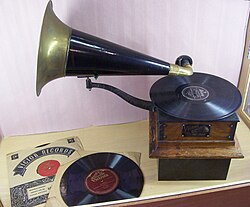
Founded in 1901, the Victor Talking Machine Company was more than just a business; it was a cornerstone of the early music industry. Based in Camden, New Jersey, Victor rose to become the world's most prestigious recording company and phonograph manufacturer. From the creation of the iconic Victrola to the legendary "His Master's Voice" logo, the company defined how the world consumed music for the first half of the 20th century.
The company operated as an independent powerhouse until 1929, when it merged with the Radio Corporation of America (RCA) to become the RCA Victor Division, eventually evolving into what is known today as RCA Records.
Key Facts
- Founded: 1901 in Camden, New Jersey.
- Founders: Eldridge R. Johnson and Emile Berliner.
- Famous Product: The Victrola line of phonographs.
- Iconic Logo: "His Master's Voice," featuring Nipper the dog.
- Major Milestone: Issued the first jazz and blues records.
- Acquisition: Merged with RCA in 1929.
The Origins of Victor
The company's roots trace back to 1896, when Emile Berliner, the inventor of the gramophone (a device for playing disc records) and the disc record itself, hired Eldridge R. Johnson to build a spring-driven motor. Johnson, a machine shop owner, improved the gramophone's design and recording process, leading to the formation of the Consolidated Talking Machine Company of Philadelphia in 1900. Following complex patent disputes, the firm was reorganized in 1901 as the Victor Talking Machine Company.
The Story Behind the Name
Historians offer several theories regarding the choice of the name "Victor." The most accepted accounts suggest that Johnson viewed his improved gramophone as a scientific and business "victory," or that he emerged as the "Victor" following costly legal battles over patents. Other theories suggest the name was inspired by his partner's wife, Victoria, or the superior engineering of the Victor bicycle.
Marketing and the Iconic "His Master's Voice"
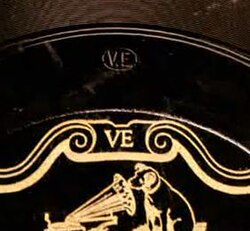
One of the most recognized trademarks in history, "His Master's Voice," began as a painting by Herbert Rose Barraud. The original artwork depicted Barraud's dog, Nipper, listening to an Edison-Bell cylinder phonograph. To make the painting more marketable, the Gramophone Company in London requested that the cylinder machine be replaced with a disc gramophone.
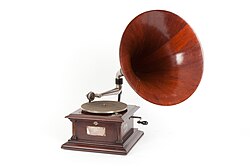
Emile Berliner secured the U.S. copyright in 1900, and Eldridge Johnson adopted the image of Nipper for Victor. The logo became so central to the company's identity that in 1915, it was featured in massive leaded-glass windows at the Camden headquarters. Today, one of these original windows is preserved at the Smithsonian museum.
The Evolution of Recording Technology
The Acoustical Era (1901–1925)
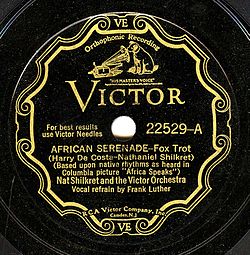
During the early years, Victor used acoustical recording, a mechanical process where sound was captured without electricity. The company initially used different labels based on record size: Victor for 7-inch, Monarch for 10-inch, and De Luxe for 12-inch discs. By 1905, these were consolidated under the Victor imprint.
Victor was a trailblazer in musical genres, issuing the first-ever jazz and blues records. The Victor Military Band recorded "The Memphis Blues" on July 15, 1914, followed by The Original Dixieland Jazz Band's "Livery Stable Blues" in 1917.
The Electrical Revolution and RCA Merger
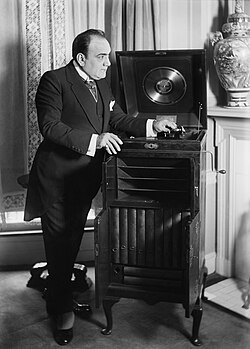
The rise of radio in the 1920s threatened the record industry, as radio provided clearer sound and free entertainment. Facing potential bankruptcy in 1925, Victor adopted electrical recording—a system using microphones developed by Western Electric. Victor branded this high-fidelity process as "Orthophonic" and launched the Orthophonic Victrola.
On November 2, 1925, known as "Victor Day," the company publicly announced this technology. The first commercial electrical recording, "A Miniature Concert," was recorded in February 1925. This technological leap maintained Victor's dominance until its acquisition by RCA in 1929.
The Victor Light Opera Company
To diversify its catalog, Walter B. Rogers organized the Victor Light Opera Company (VLOC) in 1904. This ensemble recorded "Gems"—medleys of popular tunes from musical comedies and light operas. Because original cast recordings were not yet standard, the VLOC's 1925 recordings of Irving Berlin's score for The Cocoanuts remain the only contemporary audio documentation of the Marx Brothers' original Broadway show.
Summary of Victor's Legacy
| Category | Details |
|---|---|
| Primary Products | Victrola phonographs, disc records |
| Key Labels | Victor, Red Seal (Classical/Opera) |
| Innovation | Transition from Acoustical to Orthophonic (Electrical) recording |
| Genre Pioneers | First to issue Jazz and Blues recordings |
| Current Status | Merged into RCA (now RCA Records) |
Frequently Asked Questions
Who was Nipper in the Victor logo?
Nipper was a dog owned by the brother of painter Herbert Rose Barraud. He was depicted listening to a phonograph in the painting "His Master's Voice," which Victor adopted as its trademark.
What was the "Red Seal" label?
The Red Seal label was Victor's prestigious imprint used for its extensive catalog of operatic and classical music recordings by world-famous artists.
What is the difference between acoustical and electrical recording?
Acoustical recording was a mechanical process where sound waves were captured physically. Electrical recording used microphones and amplifiers, resulting in significantly higher fidelity and clearer sound.
What happened to the company after 1929?
In 1929, the company merged with the Radio Corporation of America (RCA), becoming the RCA Victor Division. It remained a leading producer of records and phonographs through the 1960s.
Where can I find Victor's historical recordings today?
Many pre-1925 recordings are available through the National Jukebox, a collaboration between the Library of Congress and Sony Music Entertainment.