Veto Power: Legal Mechanisms and Global Applications
A veto is a legal authority that allows an individual or body to unilaterally stop an official action. Most commonly, this power is exercised by a president or monarch to prevent a bill from becoming law. While frequently established within a nation's constitution, veto powers also exist at state, provincial, and local levels, as well as within international organizations.
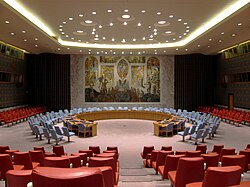
Vetoes generally fall into two categories: those that can be overcome and those that are absolute. For instance, in the United States, a presidential veto can be overridden by a two-thirds supermajority vote in both the House of Representatives and the Senate. Conversely, an absolute veto cannot be reversed. A prime example is found in the United Nations Security Council, where the five permanent members—China, France, Russia, the United Kingdom, and the United States—hold absolute veto power over any resolution.
While most vetoes are designed to maintain the status quo, some allow for active modification. The President of India, for example, can utilize an amendatory veto to propose specific changes to a bill they have vetoed.
Key Facts
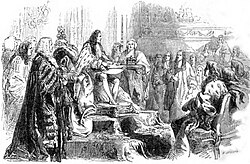
- Definition: A unilateral legal power to stop an official action, typically a legislative bill.
- Override Mechanisms: Some vetoes require a supermajority (e.g., two-thirds in the US) to be overturned.
- Absolute Vetoes: Certain powers, such as those of the UN Security Council permanent members, cannot be overridden.
- Historical Root: Modern executive vetoes evolved from the European tradition of royal assent.
- Variations: Vetoes can be absolute, suspensive (temporary), or amendatory (proposing changes).
The Evolution of the Veto
Roman and Early European Origins
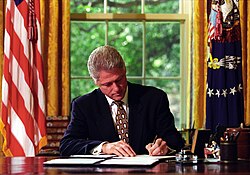
The concept of the veto has deep historical roots, appearing in the Roman Republic through the powers of the tribune. In Europe, the modern executive veto grew out of the institution of royal assent, where a monarch's consent was mandatory for a bill to become law. This evolved from earlier systems where monarchs simply issued laws themselves, a practice seen in England until the 14th century under Edward III.
In England, the monarch's power to deny royal assent ceased to be used after 1708. However, this power remained prevalent in British colonies, and its frequent use was specifically cited in the 1776 U.S. Declaration of Independence.
The French Revolution and Modern Shifts
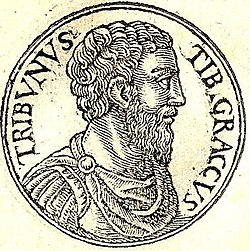
Following the French Revolution in 1789, the nature of the royal veto became a central point of debate. Proposals ranged from absolute power to the complete removal of the veto. Under the French Constitution of 1791, King Louis XVI lost his absolute veto and was granted a suspensive veto. This meant the veto could be overridden by a majority vote in two successive sessions of the Legislative Assembly, a process that could take four to six years. This debate ended in 1792 with the abolition of the French monarchy.
Global Applications of Veto Power
International Bodies
Beyond national borders, the veto is a critical tool in global diplomacy. The United Nations Security Council utilizes the veto to ensure that the world's major powers can block resolutions they deem contrary to their national interests.
Regional Implementations
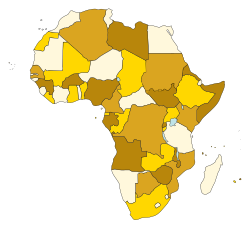
AfricaIn Benin, the president can return legislation to the National Assembly for reconsideration within 15 days (or 5 days for urgent matters). The Assembly can override this with an absolute majority. If the president vetoes it a second time, the Constitutional Court decides the matter. Interestingly, a "pocket veto" (failure to act within the deadline) can also occur, which the National Assembly can petition the Court to declare constitutional and effective.
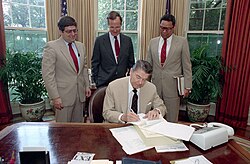
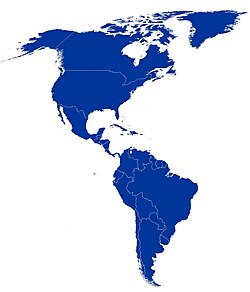
In the United States, the president's veto is a key check in the balance of powers, though it can be overridden by Congress. Other nations in the Americas have varying degrees of executive and legislative vetoes to manage the separation of powers.
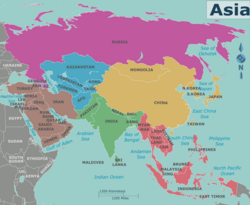
Veto structures in Asia vary widely, from the amendatory powers in India to the specific constitutional frameworks in South Korea and the Philippines.
In Estonia, the president can send a law back to the Riigikogu (legislature) within 14 days. A simple majority can override this, after which the president may seek a Supreme Court ruling on the law's constitutionality. In the United Kingdom, while royal assent is now largely formal, the monarch still holds veto powers over bills affecting the royal prerogative (such as personal affairs or war powers), though this is done on the advice of the cabinet.
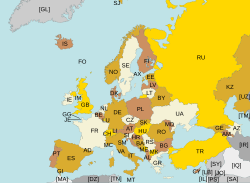
Additionally, the UK government can block bills from the Scottish Parliament, Senedd, or Northern Ireland Assembly if they adversely affect legislation reserved for the UK Parliament. This was notably used in 2023 to veto the Gender Recognition Reform (Scotland) Bill.
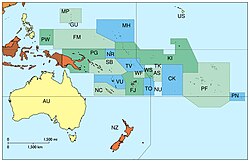
OceaniaVeto powers in Oceania are often tied to constitutional frameworks and the relationship between local legislatures and representative governors or monarchs.
Summary of Veto Types and Examples
| Veto Type | Description | Example |
|---|---|---|
| Absolute | Cannot be overridden by any legislative vote. | UN Security Council Permanent Members |
| Overridable | Can be bypassed by a supermajority or simple majority. | US President (2/3 majority) |
| Suspensive | Delays a bill for a set period or session. | French Constitution of 1791 |
| Amendatory | Allows the vetoing party to propose changes. | President of India |
| Royal Assent | Formal approval required from a monarch. | United Kingdom |
Frequently Asked Questions
What is the difference between an absolute veto and an overridable veto?
An absolute veto completely stops a bill from becoming law with no legal path for the legislature to bypass it. An overridable veto can be defeated if the legislature passes the bill again with a specific required majority, such as a two-thirds vote.
How does royal assent function as a veto?
Royal assent is the formal process where a monarch approves a bill passed by parliament. If the monarch withholds this assent, the bill is effectively vetoed and does not become law.
What is a suspensive veto?
A suspensive veto does not permanently kill a bill but instead delays its implementation. It forces the legislature to reconsider the bill, often requiring it to be passed again in a future session to become law.
Can the UN Security Council veto be overturned?
No. The veto power held by the five permanent members of the UN Security Council is absolute, meaning a single "no" vote from any of these members prevents a resolution from being adopted.
What is an amendatory veto?
An amendatory veto is a power that allows an executive to return a bill to the legislature not just with a rejection, but with specific proposed amendments to the text.