Vestiges of the Natural History of Creation: The Book That Prepared the World for Darwin
Long before Charles Darwin published his groundbreaking work on natural selection, a mysterious bestseller captured the imagination of Victorian society. Vestiges of the Natural History of Creation, first published in October 1844, was a scientific sensation that challenged the religious and academic status quo of the United Kingdom. While it was later criticized for its technical flaws, its impact on the public consciousness was profound, bridging the gap between traditional theology and the emerging science of evolutionary biology.
The book was an immediate international success, read by everyone from political Radicals to the British monarchy; Prince Albert even read it aloud to Queen Victoria in 1845. However, its unorthodox themes clashed with the natural theology—the belief that nature provides evidence of a divine creator—that dominated the era. This tension led to a polarized reception: while the general public was enthraled, clergymen and established scientists reviled the work for its perceived amateurism.
Key Facts
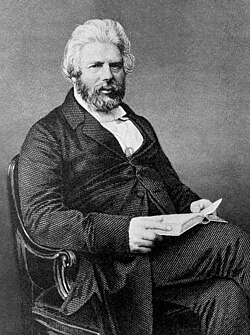
- Author: Robert Chambers, a Scottish journalist who wrote the work anonymously between 1841 and 1844.
- Publication Date: First published in October 1844 by John Churchill.
- Core Impact: Charles Darwin believed the book prepared the public mind for the theories presented in On the Origin of Species (1859).
- Authorship Secret: The identity of the author remained a subject of speculation until the 12th edition was published in 1884.
- Influence: The work was inspired in part by the materialist theories of the Edinburgh Phrenological Society.
The Mystery of the Author
For decades, the identity of the author of Vestiges was one of the great literary mysteries of the 19th century. It was eventually revealed that the book was written by Robert Chambers, a Scottish journalist. Chambers penned the manuscript in St Andrews while recovering from a psychiatric disturbance.
The title itself was a nod to the Scottish geologist James Hutton, who famously described the timeless nature of geology as having "no vestige of a beginning, no prospect of an end." Chambers was also influenced by George Combe and the Edinburgh Phrenological Society, which promoted materialist views of the mind during the early 19th century.
Scientific Reception and Controversy
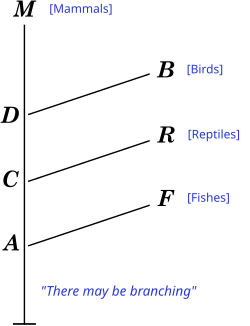
The scientific community's response was largely hostile. Early reviews in publications like the Athenaeum and The Lancet pointed out numerous factual errors. Adam Sedgwick, a prominent geologist and mentor to Charles Darwin, launched a scathing attack on the book, viewing it as a dangerous argument for the mutability of species.
In response to these critiques, the anonymous author published a 206-page defense in 1845 titled Explanations: A Sequel to the Vestiges of the Natural History of Creation. This sequel aimed to convince "open-minded men" of the book's validity and was often sold alongside the revised fifth edition of the original work.
Influence on Charles Darwin
Charles Darwin read Vestiges in November 1844, just as he was developing his own theory of natural selection. While Darwin admired the book's writing and arrangement, he was critical of its scientific accuracy, noting that its geology was "bad" and its zoology "far worse."
Despite these criticisms, Darwin recognized the book's strategic importance. He observed that it raised the very questions he needed to address in his own work. By introducing the general public to the concept of evolutionary development, Vestiges effectively softened the ground for the scientific revolution Darwin would trigger fifteen years later.
Evolution of the Text and Iconography
Over its twelve editions, Vestiges evolved from a text-heavy volume into a more illustrated work. Early readers complained that the lack of visual aids made the complex natural history difficult to follow. This led to the inclusion of 107 figures in the 10th edition (1853), including detailed woodcuts of extinct species.
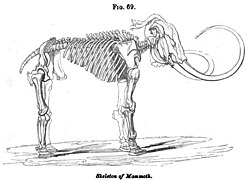
The book's reach extended far beyond the UK, with at least 14 versions published in the United States and translations into German, Dutch, Hungarian, Italian, and Russian.
Publication History Summary
| Edition | Date | Pages | Copies | Key Note |
|---|---|---|---|---|
| 1st | Oct 1844 | 390 | 750 | Initial release |
| 5th | Jan 1846 | 423 | 1,500 | Revised version |
| 7th | May 1847 | 294 | 5,000 | High circulation |
| 10th | Jun 1853 | 325 | 2,500 | Introduced 100+ illustrations |
| 12th | Apr 1884 | 418 | 5,000 | Officially revealed Robert Chambers as author |
Frequently Asked Questions
Who actually wrote Vestiges of the Natural History of Creation?
The book was written by Robert Chambers, a Scottish journalist. He kept his authorship a secret for decades, and it was only officially revealed in the 12th edition published in 1884, thirteen years after his death.
How did Charles Darwin feel about the book?
Darwin had mixed feelings. He praised the writing style and the way it organized evidence, but he found the actual geology and zoology to be scientifically poor. However, he believed the book helped prepare the public for his own theory of evolution.
Why was the book so controversial in Victorian society?
It contradicted the prevailing natural theology of the time, which held that species were created by God in their current form. Its suggestion that species evolved over time was seen as unorthodox and was heavily criticized by the clergy.
What was the purpose of the book "Explanations"?
Explanations: A Sequel to the Vestiges of the Natural History of Creation was published in 1845 as a direct defense of the original work, specifically responding to harsh scientific critiques such as those from Adam Sedgwick.
Did the book include illustrations?
Early editions lacked illustrations, which was a point of criticism. However, the 10th edition published in 1853 introduced over a hundred woodcut illustrations to help general readers visualize the natural history concepts.