Christian Konrad Sprengel: The Naturalist Who Deciphered the Secrets of Flower Sexuality
Long before the modern understanding of evolutionary biology, a German naturalist was quietly observing the intricate dance between insects and blossoms. Christian Konrad Sprengel (1750–1816) was a pioneer whose observations laid the groundwork for what we now call pollination ecology and floral biology. While his contemporaries often viewed insects as mere thieves of nectar, Sprengel recognized them as essential partners in the reproductive cycle of plants.
By identifying that flowers are specifically structured to attract certain insects to facilitate cross-pollination, Sprengel provided a missing link in natural history. Although his ideas were often met with skepticism or even viewed as scandalous in his own time, his work eventually became a cornerstone for the scientific breakthroughs of Charles Darwin.
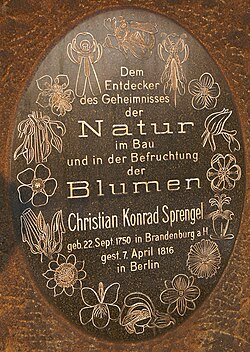
Key Facts
- Full Name: Christian Konrad Sprengel
- Primary Contribution: Identified the role of insects in plant pollination and the function of flower structures.
- Major Work: Das entdeckte Geheimnis der Natur im Bau und in der Befruchtung der Blumen (1793).
- Scientific Legacy: Recognized as a founder of pollination ecology alongside Joseph Gottlieb Kölreuter.
- Connection to Darwin: His observations on floral mechanisms inspired Darwin's research on orchids.
The Life of a Naturalist
Born on 22 September 1750, in Brandenburg an der Havel, Sprengel was the youngest of 15 sons. The son of a preacher, he was initially steered toward a career in theology, studying at the University of Halle-Wittenberg. He eventually served as a teacher, notably heading the Great Lutheran Town School in Spandau.
His transition from theology to botany was an unexpected turn, prompted by medical advice. His surgeon, Ernst Ludwig Heim—an amateur botanist who also influenced the famous Alexander von Humboldt—advised Sprengel to spend more time outdoors to protect his eyesight. This shift in lifestyle led Sprengel into deep collaboration with Carl Ludwig Willdenow, eventually sparking a lifelong passion for the natural world.
However, his career in education was marked by controversy. Due to accusations regarding the mistreatment of students, Sprengel was dismissed from his teaching position in 1784. He spent the remainder of his life living on a pension and conducting botanical field trips, which became a source of both income and scientific discovery.
Revolutionizing Floral Biology
In the late 18th century, the prevailing scientific view was that insects were incidental visitors to flowers. Many believed that self-fertilization was the standard and that nectar was simply a nutrient for developing seeds. Sprengel challenged these assumptions through rigorous observation.
The Mechanics of Attraction and Pollination
Sprengel’s research, culminating in his 1793 landmark publication, revealed that flowers are highly specialized organs. He identified several key biological mechanisms:
- Pollination Syndromes: The idea that flower structures are adapted to attract specific insect visitors.
- Nectar as an Attractant: The use of nectar and visual markings on petals to guide insects toward the reproductive organs.
- Dichogamy: The phenomenon where male and female reproductive parts mature at different times (including protogyny and protandry) to prevent self-pollination.
- Self-incompatibility: The genetic mechanism that prevents a plant from fertilizing itself.
- Buzz Pollination: He identified specific pollination methods in plants like Leucojum.
His work was not without its detractors. Some contemporaries found his focus on the "sexual functions" of flowers to be obscene, while others dismissed his findings as mere fairy tales. Despite this, his observations on the necessity of cross-pollination were profoundly accurate.
Scientific Legacy and Impact
Sprengel's influence reached its zenith decades after his death. Charles Darwin, after examining Sprengel's work, lauded him for proving the essential role insects play in fertilization. This recognition helped validate Sprengel's theories and provided a foundation for Darwin's own seminal 1862 work on orchid fertilization.
The lineage of botanical science continues through the researchers inspired by his work, from Federico Delpino to modern ecologists. Even his name lives on in taxonomy, with the genus Sprengelia named in his honor by James Edward Smith.
Summary of Christian Konrad Sprengel
| Category | Details |
|---|---|
| Lifespan | 22 September 1750 – 7 April 1816 |
| Fields of Study | Natural history, theology, botany |
| Key Discovery | Insect-mediated pollination and floral adaptation |
| Major Publication | Das entdeckte Geheimnis der Natur... (1793) |
| Scientific Peers | Joseph Gottlieb Kölreuter, Carl Ludwig Willdenow |
Frequently Asked Questions
What was Sprengel's most significant scientific contribution?
Sprengel is most famous for recognizing that flowers use specific structures and nectar to attract insects, which in turn facilitates cross-pollination. This discovery helped establish the fields of pollination ecology and floral biology.
How did Charles Darwin relate to Sprengel's work?
Darwin studied and confirmed many of Sprengel's observations. He noted that Sprengel was "in advance of his age" and used these insights to inform his own research into how insects fertilize various plant species, particularly orchids.
Why was Sprengel's work initially rejected by some scientists?
Some of his peers found the concept of flowers having "sexual functions" to be inappropriate or obscene. Others simply did not grasp the evolutionary importance of his findings regarding selection and cross-pollination.
What is pollination syndrome?
Pollination syndrome refers to the suite of flower traits (such as color, shape, and scent) that have evolved in response to the specific types of pollinators (like bees, birds, or butterflies) that visit them.
Where is Christian Konrad Sprengel buried?
He is buried at the Invalidenfriedhof in Berlin, though his gravesite remains unmarked.