Vehicles: The Evolution and Diversity of Transport Machines
A vehicle (derived from the Latin vehiculum) is a machine engineered for self-propulsion, primarily used to transport people, cargo, or both. While many people immediately think of cars, the term encompasses a vast array of machines across land, sea, air, and space.
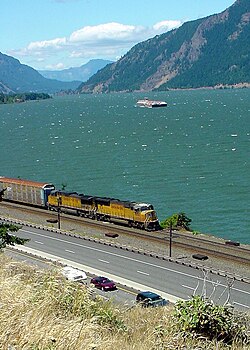
Land transport is the most ubiquitous category, ranging from human-powered bicycles to complex railed systems. These are generally classified by their contact interface with the ground—such as wheels, tracks, rails, or skis—or through non-contact technologies like maglev (magnetic levitation). For global consistency, ISO 3833-1977 serves as the international standard for defining road vehicle types and terms.
Key Facts
- Broad Scope: Vehicles include land, water, air, space, and amphibious craft.
- Ancient Origins: Boat use dates back to prehistory, with rock paintings in Australia suggesting use between 50,000 and 15,000 BC.
- Mass Production: The Chinese Flying Pigeon is the most produced single vehicle model (over 500 million units).
- Modern Milestones: The first controlled, powered aircraft flight was achieved by the Wright brothers in 1903.
- Space Exploration: Human spaceflight began in 1961 with Yuri Gagarin, followed by the first Moon landing in 1969.
The History of Transportation
Early Water and Land Travel
Watercraft are among the oldest known vehicles. Archaeological evidence includes the Pesse canoe from the Netherlands, carbon-dated to 8040–7510 BC, and a 7,000-year-old reed and tar boat from Kuwait. By 4000–3000 BC, boats were actively used in Sumer, ancient Egypt, and the Indian Ocean.
On land, camel-pulled wheeled vehicles appeared around 4000–3000 BC. One of the earliest known wagonways—a precursor to the railway—was the Diolkos in Greece (circa 600 BC), which used limestone grooves to transport boats across the Isthmus of Corinth.
The Rise of Mechanical Propulsion
Railways resurfaced in Europe during the Late Middle Ages, with records appearing around 1350. By 1515, the Reisszug funicular railway in Austria utilized wooden rails and human or animal power via a treadwheel.
The era of self-propulsion began in 1769 when Nicolas-Joseph Cugnot built the first mechanical automobile. This was followed by Richard Trevithick's 1801 "Puffing Devil," a steam-powered road locomotive. In 1817, Baron Karl von Drais invented the Laufmaschine (running machine), the two-wheeler ancestor of the modern bicycle.
The Industrial and Aerospace Age
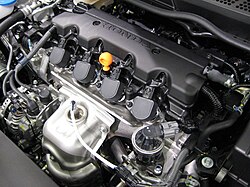
The modern automotive era was solidified in 1885 when Karl Benz patented the Benz Patent-Motorwagen, powered by a four-stroke gasoline engine. Simultaneously, aviation began to take shape; Otto Lilienthal performed experimental gliding in 1885, leading to the Wright brothers' first powered flight in 1903.
The 20th century saw rapid acceleration. In 1907, the first rotorcraft achieved free flight. By 1928, the Opel-RAK program introduced the first rocket car and rocket-powered aircraft. This trajectory culminated in the Soviet Vostok 1 mission in 1961 and NASA's Apollo 11 Moon landing in 1969.
Vehicle Types and Global Production
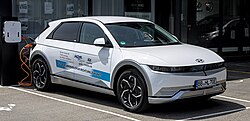
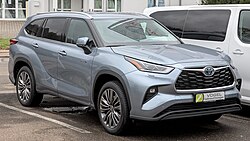
The scale of vehicle production varies wildly across different modes of transport. Bicycles remain the most numerous, with over 1 billion in use worldwide. In the motor vehicle sector, the Honda Super Cub is the most-produced motorcycle (60 million units as of 2008), while the Toyota Corolla is the most-produced car (at least 35 million by 2010).
Aviation and public transit also show significant concentration in specific models. The Cessna 172 is the most common fixed-wing aircraft, and the Boeing 737 is the leading commercial jet. In urban transit, the KTM-5 and Tatra T3 are the most produced trams.
| Category | Model | Production/Units |
|---|---|---|
| Bicycle | Flying Pigeon | 500+ Million |
| Motorcycle | Honda Super Cub | 60 Million (2008) |
| Car | Toyota Corolla | 35+ Million (2010) |
| Fixed-wing Aircraft | Cessna 172 | ~44,000 (2017) |
| Helicopter | Mil Mi-8 | 17,000 |
| Commercial Jet | Boeing 737 | ~10,000 (2018) |
Locomotion and Energy
Vehicles rely on various energy sources to achieve movement. Human power is the simplest, though limited in output (typically not exceeding 500 W for extended periods). Despite this, human-powered recumbent bicycles reached a land speed record of 133 km/h in 2009.
Legislation and Safety
To ensure order and safety, vehicles are subject to strict international and regional laws. In the European Union, vehicle type-approval is governed by directives such as 2001/116/EC and 2002/24/EC, which standardize the classification of motor vehicles and trailers.
Legal requirements typically include licensing, registration, and the use of mandatory safety equipment to protect the operator and the public.


Frequently Asked Questions
What is the most produced vehicle in history?
The Chinese Flying Pigeon bicycle is the most produced single model of vehicle, with at least 500 million units manufactured.
Who invented the first automobile?
While Nicolas-Joseph Cugnot is credited with a self-propelled mechanical vehicle in 1769, Karl Benz is credited with the first modern automobile, the Benz Patent-Motorwagen, in 1885.
What is the oldest known boat?
The Pesse canoe, found in a bog in the Netherlands and carbon-dated to 8040–7510 BC, is the oldest boat found by archaeological excavation.
How are land vehicles classified internationally?
Land vehicles are broadly classified by their contact interface with the ground (wheels, tracks, rails, or skis) or non-contact methods like maglev. ISO 3833-1977 provides the international standard for road vehicle terms and definitions.
When did human spaceflight begin?
Human spaceflight began in 1961 when the Soviet space program's Vostok 1 carried Yuri Gagarin into space.