Mercedes-Benz Group: A Century of Automotive Innovation and Evolution
The Mercedes-Benz Group stands as a global titan in the automotive industry, renowned for blending luxury, performance, and cutting-edge engineering. Headquartered in the Mercedes-Benz complex in Untertürkheim, Stuttgart, Germany, the company has evolved through several corporate iterations to maintain its position at the forefront of global mobility.
From its foundational roots in the late 19th century to its current focus on electric propulsion and high-end luxury, the group has consistently redefined the standards of the automobile. Today, it operates a vast network of production facilities and research centers worldwide, delivering millions of vehicles annually to a global clientele.
Key Facts
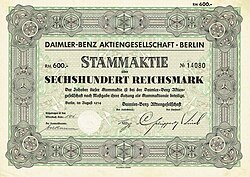
- Founded: June 28, 1926 (as Daimler-Benz AG).
- Headquarters: Stuttgart, Germany.
- 2024 Revenue: €145.6 billion.
- 2024 Net Income: €10.41 billion.
- Global Workforce: 175,264 employees (2024).
- Annual Sales: 2.389 million vehicles (2024).
- Core Brands: Mercedes-Benz, Mercedes-AMG, Mercedes-Maybach, Mercedes-EQ, and Smart.
Corporate Evolution and History
The lineage of the Mercedes-Benz Group is a story of strategic mergers and rebranding. The company was originally formed on June 28, 1926, through the merger of two automotive pioneers: Benz & Cie. (founded 1883) and Daimler Motoren Gesellschaft (founded 1890). This union created Daimler-Benz AG, establishing a powerhouse of German engineering.

The Era of DaimlerChrysler (1998–2007)
In 1998, the company entered a significant phase of expansion by merging with the Chrysler Corporation to form DaimlerChrysler AG. This period was marked by an attempt to create a global automotive giant spanning multiple market segments.

Transition to Daimler AG (2007–2022)
Following the separation from Chrysler in 2007, the company rebranded as Daimler AG. During this time, the group focused on refining its luxury portfolio and expanding its reach into new technological frontiers, including early research into alternative propulsion systems.

The Modern Mercedes-Benz Group (2022–Present)
In 2022, the company underwent another strategic transformation, rebranding as the Mercedes-Benz Group. This shift coincided with the spin-off of its truck division, allowing the group to sharpen its focus on luxury passenger cars and vans.
Brand Portfolio and Market Reach
The group manages a diverse array of brands tailored to different consumer needs, from urban mobility to ultra-luxury and high-performance racing.
- Mercedes-Benz: The core brand for luxury passenger cars and vans.
- Mercedes-AMG: Focused on high-performance vehicles and powertrains.
- Mercedes-Maybach: The pinnacle of ultra-luxury, reintroduced in November 2014.
- Mercedes-EQ: The dedicated line for all-electric vehicles.
- Smart: Specialized in compact, urban mobility.
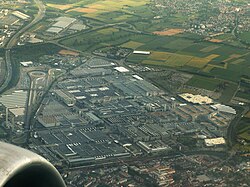
The company's manufacturing footprint is truly global, with major plants in Germany, China, the United States, Brazil, and India. The largest production facility is located in Sindelfingen, Germany, which serves as a hub for the E-Class, S-Class, and EQS models.
Financial Performance and Ownership
The Mercedes-Benz Group is a public company traded on the Frankfurt Stock Exchange (FWB: MBG) and is a component of the DAX index. Its financial health is characterized by significant assets and a diverse shareholder base.
| Metric | Value |
|---|---|
| Revenue | €145.6 billion |
| Operating Income | €13.60 billion |
| Net Income | €10.41 billion |
| Total Assets | €265.0 billion |
| Total Equity | €93.63 billion |
| Production Output | 2.389 million units |
As of 2025, the ownership structure is distributed among institutional investors (29.31%), retail investors (32.23%), and strategic partners including the BAIC Group (9.98%) and Li Shufu via Tenaciou3 Prospect Investment Limited (9.69%).
Technological Innovation and Future Trends
The group is aggressively transitioning toward alternative propulsion to meet global sustainability goals. This includes heavy investment in:
- Electric Vehicles (EVs): Developing dedicated platforms for the EQ line.
- Fuel Cell Technology: Exploring hydrogen-based power in partnership with other global automakers.
- Hybrid Systems: Bridging the gap between internal combustion and full electrification.
- Biofuel Research: Investigating sustainable fuel alternatives.
Beyond consumer vehicles, the group maintains a prestigious presence in motorsports through the Mercedes-AMG Petronas Formula One Team, where it applies high-performance engineering to the world's most demanding racing circuit.
Frequently Asked Questions
When was the Mercedes-Benz Group founded?
The original foundation of Daimler-Benz occurred on June 28, 1926, following the merger of Benz & Cie. and Daimler Motoren Gesellschaft.
What are the primary brands under the Mercedes-Benz Group?
The group sells vehicles under the Mercedes-Benz, Mercedes-AMG, Mercedes-Maybach, Mercedes-EQ, and Smart brands.
Who is the current leader of the Mercedes-Benz Group?
Ola Källenius serves as the chairman of the management board.
Where is the company's largest production plant located?
The largest Mercedes-Benz plant is located in Sindelfingen, Germany.
What happened to the DaimlerChrysler merger?
The merger existed from 1998 until 2007, after which the company separated from Chrysler and became Daimler AG.