UTZ Certification: Promoting Sustainable Farming in Global Agriculture
In the complex world of global trade, ensuring that the coffee, cocoa, and tea we consume are produced ethically and sustainably is a significant challenge. UTZ (formerly known as UTZ Certified) emerged as a leading non-profit organization dedicated to bridging the gap between large-scale commercial farming and sustainable practices. Founded in 2002 in Amsterdam, Netherlands, UTZ developed a certification system designed to improve agricultural practices, social conditions, and environmental protection on a global scale.
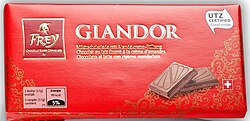
The UTZ label has appeared on more than 10,000 product packages across 116 countries. By 2014, it was recognized as the world's largest sustainability program for coffee and cocoa. To better combat systemic issues like deforestation, climate change, and social inequity, UTZ officially merged with the Rainforest Alliance in January 2018.
Key Facts
- Founded: 2002 in Amsterdam, Netherlands.
- Core Mission: Implementing large-scale sustainability in the worldwide agricultural market.
- Major Merger: Merged with the Rainforest Alliance in January 2018.
- Scope: Certifies coffee, cocoa, tea, rooibos, and hazelnuts.
- Global Reach: Featured on products in over 116 countries.
- Approach: Based on a model of continuous improvement via a strict Code of Conduct.
The Evolution of UTZ
The organization began as Utz Kapeh, a name meaning "Good Coffee" in the Mayan language Quiché. It was co-founded by Nick Bocklandt, a Belgian-Guatemalan coffee grower, and Ward de Groote, a Dutch coffee roaster. The Solidaridad Network also played a pivotal role as a co-initiator, providing the financial support and field implementation necessary to turn the vision into a global standard.
Over time, the organization rebranded to UTZ Certified in 2007 and eventually shortened its name to UTZ in 2016. Following the 2018 merger with the Rainforest Alliance, the two organizations began aligning their programs. As of July 2021, a new certification program based on the 2020 Sustainable Agriculture Standard was implemented to unify the standards.
Certified Products and Impact
UTZ expanded its reach from coffee to several other key commodities to address sustainability across different sectors of the food industry.
Coffee and Cocoa
UTZ is one of the world's largest sustainability programs for coffee. In 2016 alone, 870,102 metric tonnes of coffee were UTZ certified. The cocoa program, launched in 2007 in cooperation with major industry players like Nestlé, Mars, and Cargill, became the largest of its kind by 2014. At its peak in 2012, UTZ certified approximately 13% of the world's cocoa production (535,000 tonnes).
Tea, Rooibos, and Hazelnuts
The program expanded to tea and rooibos in 2007 and hazelnuts in 2014. The hazelnut initiative began as a pilot in Turkey before expanding to Italy, Spain, Georgia, and Azerbaijan.
| Commodity | Launch Year | Key Focus Areas |
|---|---|---|
| Coffee | 2002 | Fermentation, wastewater treatment, yield optimization. |
| Cocoa | 2007 | Shade trees, drying/fermentation, child labor prevention. |
| Tea/Rooibos | 2007 | Harvest timing, leaf handling, bush fire prevention. |
| Hazelnuts | 2014 | Global sustainability standards for nut production. |
The UTZ Code of Conduct
The foundation of the certification is the UTZ Code of Conduct, a set of social and environmental criteria based on international ILO (International Labour Organization) Conventions. Rather than requiring perfection from day one, UTZ uses a model of continuous improvement, where farmers meet core safety standards initially and add more control points over time.
Core Certification Categories
- Farm Management: Focuses on yield optimization, internal inspections, and risk assessments.
- Farming Practices: Covers soil fertility, integrated pest management, and the responsible use of agro-chemicals.
- Social and Living Conditions: Prohibits forced and child labor, ensures gender equality, and promotes access to education and healthcare.
- Environment: Mandates the protection of primary forests, prevention of soil erosion, and efficient water and energy use.
Traceability and Verification
To ensure the integrity of the label, UTZ employs a chain of custody system. This involves a web-based traceability system where every transaction between a certified producer and a registered buyer is recorded and assigned a unique tracking number. This allows manufacturers to credibly link the final product back to a certified source.
Verification is handled by Certification Bodies (CB)—independent third-party auditors who conduct annual inspections. Additionally, UTZ-trained agronomists provide technical consultancy to help farmers implement the Code of Conduct and improve farm efficiency.
Pricing and Criticisms
Unlike Fairtrade, UTZ does not set a minimum purchase price. Instead, it focuses on improving agricultural practices to increase the quantity and quality of yields, which theoretically increases farmer income. Prices are determined through direct negotiations between buyers and sellers.
This approach has led to criticism. Some experts argue that without a guaranteed minimum price, farmers remain vulnerable to market volatility. Others have questioned the strength of the environmental standards compared to other certifications. Furthermore, a 2019 report by the Washington Post highlighted "alarming" problems, including the presence of child labor on some certified cocoa farms and the illegal location of farms within national forests, which UTZ attributed to failures by four of its independent auditing firms.
Frequently Asked Questions
What is the difference between UTZ and Fairtrade?
The primary difference is pricing. Fairtrade sets a minimum guaranteed price for crops to protect farmers from market crashes, whereas UTZ focuses on improving farming productivity and quality to increase income, leaving the final price to be negotiated between the buyer and seller.
Is UTZ still a separate organization?
No. In January 2018, UTZ merged with the Rainforest Alliance. The merged entity operates under the name Rainforest Alliance, and the certification programs have been integrated into a new Sustainable Agriculture Standard.
How does UTZ ensure that products are actually sustainable?
UTZ uses a combination of a strict Code of Conduct, annual third-party audits by independent Certification Bodies, and a web-based traceability system that tracks the product from the farm to the manufacturer.
Which crops are covered by UTZ certification?
UTZ primarily certifies coffee, cocoa, tea, rooibos, and hazelnuts.
What does "continuous improvement" mean in the UTZ model?
It means that farmers are not expected to meet every single high-level requirement immediately. They must comply with core safety and quality standards in the first year, and then gradually implement additional control points in subsequent years.