Utah Railway: A Legacy of Innovation in Coal Transport
Founded at the dawn of the 20th century, the Utah Railway established itself as a pioneer in the American rail industry. Originally incorporated on January 24, 1912, as the Utah Coal Railway, the company shortened its name to Utah Railway in May of that same year. The line was created with a specific purpose: to transport coal from the company's own mines to Provo, Utah, after the founders became dissatisfied with the routes and service provided by the nearby Denver and Rio Grande Railroad.
A Commitment to Modern Equipment
From its inception, the Utah Railway was distinguished by its investment in the most advanced technology of the era. When the line opened in 1917, it attracted skilled workers—including many firemen from the Denver and Rio Grande Western's Utah Division—due to its superior machinery. Specifically, the railway utilized large "Santa Fe" (2-10-2) and "Mallet" (2-6-6-2) steam locomotives equipped with automatic stokers, a cutting-edge invention at the time that mechanized the feeding of fuel into the firebox.
Innovation extended beyond the engines to the safety systems of the trains. The Utah Railway was the first to upgrade its air brakes by implementing fourteen-pound tension springs, doubling the strength of the industry-standard seven-pound springs.
Evolution of Rolling Stock and Technology
The railway's freight operations were centered around a specialized roster. This included fifteen flatcars and approximately 2,000 drop-bottom gondolas—specialized cars designed for easy unloading of bulk materials. These gondolas, jointly owned with the San Pedro, Los Angeles & Salt Lake Railroad (later the LA&SL), featured "Utah Coal Route" lettering and UCR reporting marks. Among employees, these massive cars were affectionately known as "Battleships."
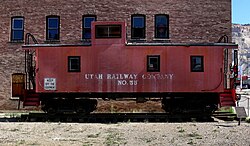
As the industry evolved, the Utah Railway continued to lead in modernization. It was among the first coal-hauling railroads to transition to diesel locomotives and was an early adopter of automation. One notable shift was the replacement of traditional cabooses with flashing rear-end devices to signal the end of the train.
Ownership and Transition
For decades, the railway was operated under the umbrella of Mueller Industries, a prominent manufacturer of copper products. This era of ownership concluded in 2002, when Mueller Industries sold the Utah Railway to Genesee & Wyoming Inc., a global railroad holding company.
Key Facts
- Founded: January 24, 1912 (as Utah Coal Railway).
- Primary Purpose: Hauling coal from company mines to Provo, Utah.
- Technological Firsts: Early adoption of automatic stokers and 14-pound tension springs for air brakes.
- Famous Equipment: "Battleship" drop-bottom gondolas and Santa Fe/Mallet locomotives.
- Ownership Change: Sold by Mueller Industries to Genesee & Wyoming Inc. in 2002.
| Category | Details |
|---|---|
| Locomotive Types | Santa Fe (2-10-2) and Mallet (2-6-6-2) |
| Freight Roster | 15 flatcars; ~2,000 drop-bottom gondolas |
| Brake Specification | 14-pound tension springs |
| Reporting Marks | UCR |
| Key Transition | Cabooses replaced by flashing rear-end devices |
Frequently Asked Questions
Why was the Utah Railway originally created?
It was founded to transport coal from the company's mines to Provo, Utah, because the owners were disappointed with the service and routes offered by the Denver and Rio Grande Railroad.
What were "Battleships" in the context of the Utah Railway?
"Battleships" was the nickname used by employees to describe the approximately 2,000 drop-bottom gondolas used for hauling coal.
How did the Utah Railway attract firemen from other lines in 1917?
The railway used modern steam locomotives equipped with automatic stokers, which provided a significant convenience over the manual labor required on other lines.
Who owned the Utah Railway before Genesee & Wyoming Inc.?
The railway was owned by Mueller Industries, a manufacturer of copper products, until the sale in 2002.
What safety innovation did the Utah Railway introduce to its air brakes?
The company was the first to use fourteen-pound tension springs in its air brakes, whereas the standard at the time was seven-pound springs.