Union Pacific Railroad: A Legacy of American Transcontinental Freight
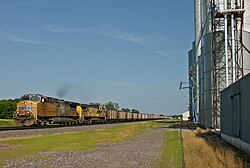
The Union Pacific Railroad (reporting marks UP, UPP, UPY) stands as a titan of American infrastructure. As a Class I freight-hauling railroad, it operates a massive network of 32,200 miles across 23 U.S. states, stretching from the Midwest to the West Coast. Currently the second-largest railroad in the United States after BNSF, Union Pacific is a critical artery for the movement of goods west of Chicago and New Orleans.
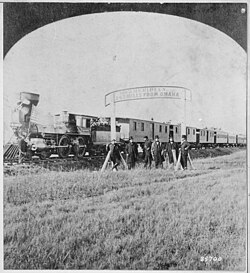
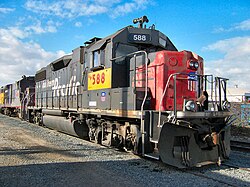
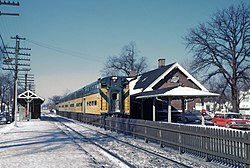
Founded in 1862, the company was born from the ambition of the first transcontinental railroad project, famously known as the Overland Route. Over more than a century, Union Pacific expanded its reach by absorbing several major lines, including the Missouri Pacific, Western Pacific, Missouri–Kansas–Texas, and the Chicago, Rock Island and Pacific railroads. Strategic mergers in the 1990s with the Chicago and North Western Transportation Company and the Southern Pacific Transportation Company further solidified its dominance in the Upper Midwest and the West.
Key Facts
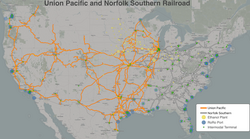
- Network Scale: Operates 8,300 locomotives over approximately 32,200 miles of track.
- Reach: Serves 23 U.S. states west of Chicago and New Orleans.
- Founding: Established in 1862 by the United States Congress and Abraham Lincoln.
- Infrastructure: Utilizes a standard gauge of 4 ft 8 1/2 in (1,435 mm).
- Headquarters: Based at the Union Pacific Center in Omaha, Nebraska.
Historical Evolution
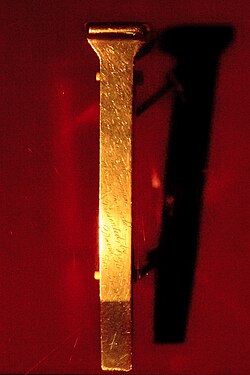
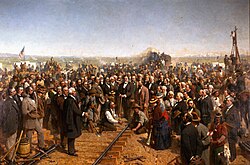
The trajectory of Union Pacific is mirrored by the growth of the American West. In the 19th century, the railroad was the primary engine of westward expansion. The completion of the first transcontinental line was marked by the driving of the "golden spike," a symbolic event that connected the East and West coasts by rail.
Throughout the 20th century, the company navigated the fluctuations of American industry. Traffic data from ICC annual reports shows a dramatic rise in volume over the decades, growing from 1,065 units in 1925 to over 220,000 by 1993. This growth was supported by the integration of various regional lines and the adoption of more powerful locomotive technology.
Operational Infrastructure and Facilities
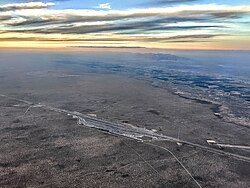
To manage the immense volume of freight, Union Pacific relies on hump yards—specialized classification yards where railcars are pushed over a hill (the hump) and allowed to roll by gravity into different tracks based on their destination.
Major Hump Yards
As of 2006, the company operated 11 primary hump yards, including:
- Bailey Yard: Located in North Platte, Nebraska.
- Davis Yard: Located in Roseville, California.
- West Colton Yard: Located in Bloomington, California.
- Davidson Yard: Located in Fort Worth, Texas.
- Gateway Yard: Located in East St Louis, Illinois.
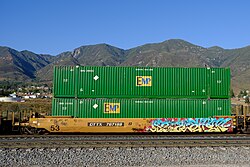
Beyond yards, the company utilizes advanced intermodal terminals to facilitate the exchange of freight between trains and trucks, such as the facility located just outside Santa Teresa, New Mexico.
Locomotives and Rolling Stock
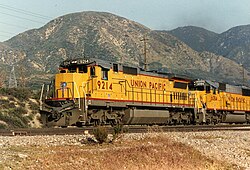
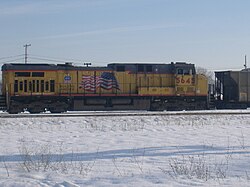
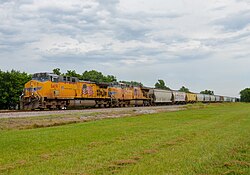
The Union Pacific roster is a diverse collection of power and capacity. As of December 2023, the active roster included 7,175 locomotives across 42 different models. While the fleet is dominated by modern diesel-electrics like the SD70M and C45ACCTE, the company also maintains a commitment to its heritage.
Heritage and Special Liveries
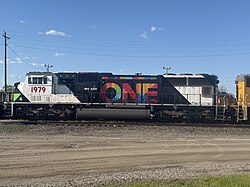
Union Pacific is well-known for its "Armour Yellow" corporate colors. However, the company frequently unveils commemorative paint schemes to honor various causes and history. Examples include the "Spirit of the Union Pacific" (honoring the U.S. armed forces) and the "We Are ONE" livery (honoring Juneteenth and Pride Month).
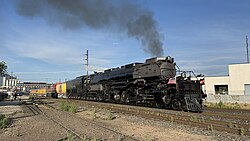
Among its most prized assets is the 4-8-8-4 "Big Boy," one of the largest and most powerful steam locomotives ever built, which continues to represent the golden age of rail.
Fleet Composition Summary
| Category | Details / Quantity |
|---|---|
| Active Locomotives | 7,175 (as of Dec 2023) |
| Covered Hoppers | 35,437 |
| Open-top Hoppers | 18,647 |
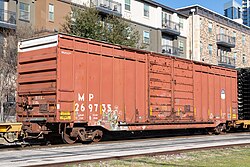
| Boxcars | 12,272 |
| Gondolas | 13,780 |
| Track Length | 32,100 miles |
Passenger and Commuter Services
While primarily a freight carrier, Union Pacific's tracks are essential for passenger travel. The company hosts numerous Amtrak services, including the California Zephyr, Coast Starlight, and the Sunset Limited. Additionally, it supports various commuter rail systems such as Caltrain, Metrolink, and the FrontRunner.
Safety and Environmental Record
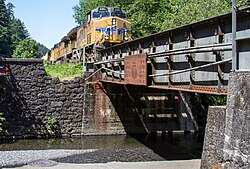
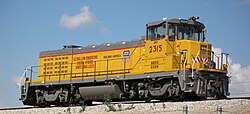
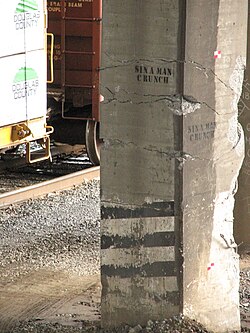
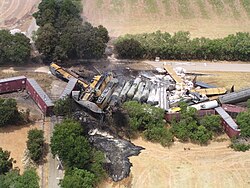
Operating a network of this scale presents significant challenges. The company has faced scrutiny over safety incidents, including derailments in the San Antonio area and a 2019 accident in Portland that damaged a support column. Environmentally, the company has been involved in cleanup efforts for contaminated sites, such as a rail yard in Lafayette, Louisiana, and has invested in "Green Goat" low-emissions locomotives to reduce its carbon footprint.
Frequently Asked Questions
Who founded the Union Pacific Railroad?
The railroad was founded in 1862 by the United States Congress and Abraham Lincoln as part of the first transcontinental railroad project.
What is a "Big Boy" locomotive?
The Big Boy is a 4-8-8-4 steam locomotive, renowned as one of the largest and most powerful locomotives ever constructed, and is maintained by Union Pacific as heritage equipment.
How many locomotives does Union Pacific operate?
As of December 2023, Union Pacific had 7,175 locomotives on its active roster, spanning 42 different models.
What are hump yards used for?
Hump yards are used to sort and classify railcars. Cars are pushed over a small hill (the hump) and roll down into specific tracks based on their intended destination.
Does Union Pacific still run passenger trains?
Union Pacific is primarily a freight railroad, but it hosts passenger services operated by Amtrak and various regional commuter rail agencies.