Freight Trains: The Backbone of Heavy Cargo Transport
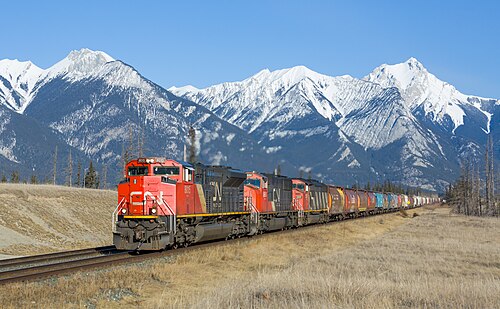
A freight train, also referred to as a goods or cargo train, is a specialized railway system designed to transport cargo rather than passengers. These trains consist of one or more locomotives that provide the necessary propulsion, pulling a series of railroad cars—often called wagons—that hold the freight. Because rail transport inherently features low friction, freight trains are exceptionally efficient at moving bulk and heavy loads across vast distances.
The Evolution of Rail Freight
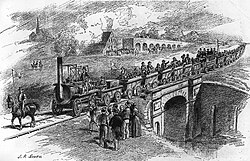
The history of moving goods via rail dates back much further than the industrial era. The earliest recorded instance of rail transport for freight occurred in Babylon around 2200 BCE. In these ancient systems, wagons were pulled along wagonways by humans or horses, long before the invention of the motorized engine.
Locomotives and Propulsion
Locomotives are the powerhouses of the freight train. While steam locomotives were the dominant force for decades, the landscape shifted in the 1920s. Diesel and electric locomotives began to replace steam due to their superior reliability, lower operational costs, and cleaner emissions.
Freight Cars and Cargo Types
Freight cars are unpowered vehicles designed to accommodate a diverse range of goods. Depending on the nature of the cargo, different specialized cars are utilized. As of April 2020, North America alone operated approximately 1.6 million rail cars.
Common types of freight cars include:
- Boxcar: For general merchandise.
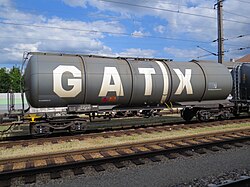
- Tank Car: Used for liquids and gases.
- Hopper Car and Covered Hopper Car: For bulk commodities like grain or ore.
- Flatcar and Centerbeam Car: For oversized or construction materials.
- Intermodal Well Car: Designed for containerized cargo that can be transferred to ships or trucks.
- Gondola Car: Open-top cars for bulk materials.
- Autorack Car: Specifically for transporting vehicles.
Operational Logistics
Freight operations generally fall into two categories: wagonload and unit trains.
Wagonload Freight
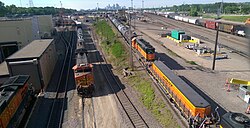
Wagonload (or carload) freight operates through classification yards. These are logistics hubs where incoming trains are received and broken apart. The individual cars are then sorted and reassembled into new trains destined for different locations.
Unit Trains
In contrast, a unit train carries only one type of cargo and typically travels directly from the point of origin to the destination—for example, from a coal mine directly to a power plant. By eliminating the need to reorganize cars at classification yards, unit trains increase car utilization, reduce operating costs, and deliver cargo faster.
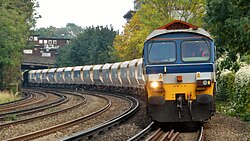
Unlike passenger services, freight trains rarely follow a fixed schedule and are instead run as needed. To avoid disrupting passenger travel, freight trains are often scheduled for specific time windows, particularly to avoid morning and evening rush hours.
Key Facts
- Ancient Origins: Rail freight began in Babylon circa 2200 BCE.
- Efficiency: Low friction makes rail ideal for heavy, bulk loads over long distances.
- Modern Power: Diesel and electric engines replaced steam starting in the 1920s.
- Scale: North America had 1.6 million rail cars as of April 2020.
- Operational Modes: Cargo is moved either via sorted wagonloads or direct unit trains.
| Feature | Wagonload Freight | Unit Trains |
|---|---|---|
| Cargo Variety | Mixed types of goods | Single type of cargo |
| Routing | Via classification yards | Direct origin to destination |
| Speed/Efficiency | Slower due to sorting | Faster delivery |
| Cost | Higher operational overhead | Lower operating costs |
Frequently Asked Questions
What is the difference between a freight train and a passenger train?
Freight trains are designed specifically to carry cargo and goods, whereas passenger trains transport people. Freight trains also typically lack fixed schedules and use different car types, such as hoppers or tank cars.
What is a classification yard?
A classification yard is a railway hub where trains are disassembled and their cars are sorted and reorganized into new trains based on their final destinations.
Why did diesel and electric locomotives replace steam?
Starting in the 1920s, diesel and electric locomotives became the standard because they offered greater reliability, lower costs, and produced cleaner emissions than steam engines.
What is intermodal freight transport?
Intermodal transport involves using containerized cargo that can be seamlessly moved between different modes of transport, such as switching from a freight train to a truck or a ship.
How do unit trains improve efficiency?
Unit trains improve efficiency by carrying a single commodity directly from origin to destination, bypassing the time-consuming process of breaking up and reassembling trains at classification yards.