Urban Forestry: Global Strategies for Sustainable City Canopies
As metropolitan areas expand, the integration of nature into the built environment has evolved from simple ornamentation to a critical component of public health and ecological stability. Urban forestry—the cultivation and management of tree populations in city environments—serves as a vital tool for mitigating climate change, reducing pollution, and enhancing the spiritual and social well-being of urban dwellers.
From the pioneering academic research in Canada to the massive vertical forests of China, cities worldwide are adopting diverse strategies to maintain their green infrastructure. This global effort reflects a shift from managing trees on an individual basis to viewing the urban forest as a complex, interconnected system.
Key Facts
- Systemic Approach: Modern urban forestry treats city trees as a system rather than individual plants to maximize ecological effects.
- Climate Mitigation: Urban canopies are essential for reducing the urban heat island effect (where cities are significantly warmer than surrounding rural areas) and sequestering carbon.
- Legislative Protection: Many countries, including Brazil and the US, use specific laws and ordinances to mandate green spaces in urban development.
- Biodiversity Risks: Invasive species pose a significant threat, with some Amazonian urban forests seeing invasive species outnumbering native ones.
- Social Impact: Research links healthy tree canopies to stronger neighborhood ties and lower rates of violent crime.
The Evolution of Urban Forestry in North America
The Canadian Academic Foundation
The formal discipline of urban forestry gained significant momentum at the University of Toronto during the 1960s. The catalyst was a crisis: Dutch elm disease, which threatened to destroy 90% of the university's elm mono-culture. Professor Erik Jorgensen and media professor Marshall McLuhan shifted the management paradigm from a tree-by-tree approach to a systems-level perspective.
In 1962, Jorgensen established the world's first Shade Tree Research Laboratory. By 1965, the university introduced the first official course in the study of urban forestry, eventually leading to specialized diplomas that inspired similar programs globally. Jorgensen later defined urban forestry as a specialized branch focused on the cultivation and management of city trees.
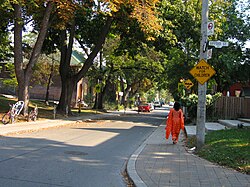
United States: From Ornamentation to Ordinance
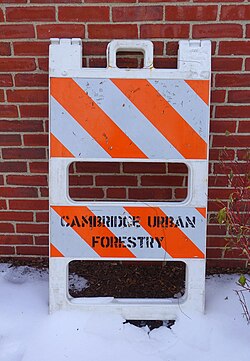
In the U.S., early efforts focused on the ornamentation of public spaces. By the late 19th century, New England states pioneered tree warden laws to protect public greenery, with Massachusetts passing the first such law in 1896. To distinguish public trees from private ones, some states used "Nail laws," where a spike with a state-specific letter (e.g., 'M' for Massachusetts) was driven into the trunk.
Visionaries like Frederick Law Olmsted viewed green space as fundamental metropolitan infrastructure, arguing that the unity between nature and urban dwellers was both physical and spiritual. Today, many U.S. municipalities use tree ordinances to regulate the preservation of the canopy during construction, though challenges remain. An estimated 634 million trees have been lost across U.S. metropolitan areas due to suburban sprawl and a failure to integrate green infrastructure into daily planning.
Asian Innovations in Urban Greening
China's "Forest Cities"
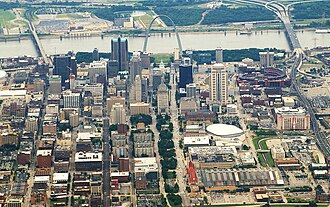
China has adopted the philosophy of "making forests enter cities and making cities embrace forests." The "National Forest City" title, established in 2004, has incentivized 58 cities to expand their green cover. However, studies in cities like Wuhan indicate that while green space may be distributed equally, the access to public parks remains unequal across different social groups.
Innovative architectural projects are also emerging, such as the Nanjing Vertical Forest. This project features two towers (200m and 108m) hosting 600 tall trees, 200 medium trees, and 2,500 shrubs. This "vertical forest" is expected to provide 16.5 tonnes of oxygen and absorb 18 tonnes of CO2 annually.
Japan's Long-term Reforestation
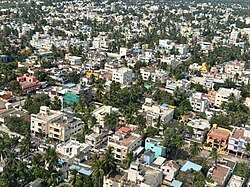
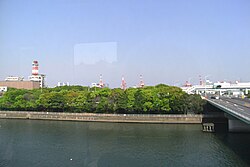
Japan has a deep history of roadside planting dating back to the 3rd century. In Tokyo, the urban forest is now managed by the Japan Greenery Research and Development Center Foundation. By 1997, Tokyo had planted over 420,000 street trees, with species like the ginkgo becoming globally popular due to their resilience in urban settings.
In the late 1960s, Japan began using street trees specifically to combat noise and air pollution, a movement further accelerated by the Tokyo Olympic Games.
Global Perspectives: Brazil, Australia, and Europe
Brazil and the Amazonian Challenge
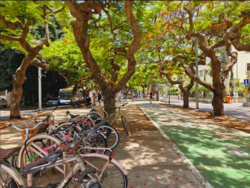
In the Brazilian Amazon, urbanization has degraded forests and depleted vital ecosystem services. A major concern is the prevalence of invasive species; in 29 Amazonian urban forests, 34.7% of identified species are invasive. To combat this, the 2012 Brazilian Forest Code allows city halls to require green areas in residential and commercial allotments.
Curitiba has pioneered the Municipal Private Natural Heritage Reserves (RPPNM). This project allows landowners to preserve native Atlantic Forest in exchange for transferring the "constructive potential" (building height and density limits) to another location, effectively zeroing the urban impact on the forest.
Australia's Climate Struggle
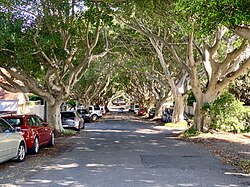
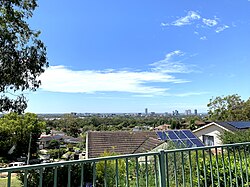
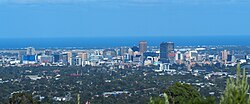
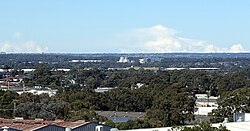
Australia's urban forestry began with a push for recreational space and wildlife protection in the 1970s, often referred to as "BOBITS" (bits of bush in the suburbs). However, climate change now poses a severe threat. A 2019 study found that 53% of tree species in southeastern Australian suburbs are vulnerable to heat or moisture stress, highlighting the need for species better suited to hotter, drier conditions.
United Kingdom and Scandinavia
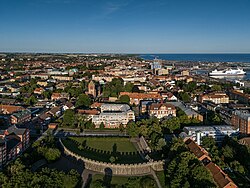
The UK's urban forestry was pioneered by the Midland Reafforesting Association around 1900. The 1990 Community Forests program became the largest environmental regeneration initiative in England, partnering local authorities with national bodies like the Forestry Commission to drive economic and social renewal.
Summary of Global Urban Forestry Approaches
| Region/City | Primary Strategy/Innovation | Key Focus/Challenge |
|---|---|---|
| Canada (Toronto) | Systems-level academic research | Combating Dutch elm disease |
| Brazil (Curitiba) | RPPNM (Transfer of building potential) | Preserving Atlantic Forest |
| China (Nanjing) | Vertical Forests (High-rise greenery) | CO2 absorption and oxygen production |
| Japan (Tokyo) | Resilient species selection (e.g., Ginkgo) | Noise and air pollution reduction |
| USA (New England) | Tree Warden Laws and Ordinances | Public space ornamentation and protection |
| Australia | "BOBITS" (Bush in suburbs) | Heat and moisture stress resilience |
| UK | Community Forests partnerships | Economic and social regeneration |
Frequently Asked Questions
What is the difference between arboriculture and urban forestry?
While arboriculture typically focuses on the care and maintenance of individual trees, urban forestry takes a systems-level approach, managing the entire urban forest population to create broad ecological and social effects.
How do "Vertical Forests" help the environment?
Vertical forests, such as the one in Nanjing, integrate hundreds of trees and thousands of plants into building facades. This helps absorb carbon dioxide (18 tonnes annually in Nanjing's case) and release oxygen while reducing the urban heat island effect.
What are the main threats to urban forests today?
The primary threats include invasive species (particularly in Brazil), climate-induced heat and moisture stress (as seen in Australia), and the loss of canopy due to suburban sprawl and unplanned urban development (common in the US).
How does the RPPNM project in Curitiba work?
The Municipal Private Natural Heritage Reserves (RPPNM) allow private landowners to protect native forests on their property. In return, they receive the right to transfer the building potential of that land to another site, allowing for higher density construction elsewhere while preserving the forest.
Why was Dutch elm disease important to the field of urban forestry?
The disease acted as a catalyst in the 1960s, particularly at the University of Toronto, by demonstrating that managing trees individually was insufficient. It forced experts to view the urban forest as a system where a single disease could devastate an entire mono-culture.