Urban Areas: Global Trends, Definitions, and the World's Largest Agglomerations
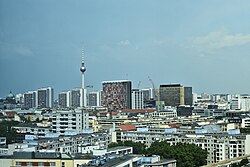
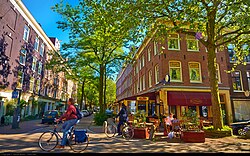
An urban area, often referred to as a built-up area or an urban agglomeration, is a human settlement characterized by a high population density and a developed infrastructure of the built environment. These areas emerge through the process of urbanization—the shift of populations from rural to urban settings. While we often use the terms interchangeably, researchers categorize these settlements into various types, including cities, towns, conurbations, and suburbs.
In the field of urbanism, urban areas are defined in contrast to rural areas, such as villages and hamlets. Meanwhile, in urban sociology and anthropology, the term is frequently used to distinguish human-made environments from the natural environment.
Key Facts
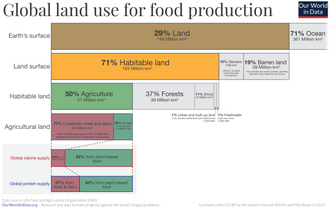
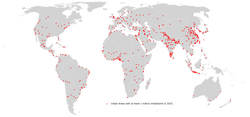
- Global Scale: As of 2019, the total built-up area of Earth's land was estimated at 1.5 million square kilometers.
- Top Population: The Guangzhou-Shenzhen urban area in China is the world's largest, with a population of over 69 million.
- US Urbanization: Approximately 80% of the United States population lives within an urban area as of the 2020 census.
- Economic Hubs: The U.S. Northeast megalopolis is one of the world's most economically productive regions, housing over 50 million residents.
The World's Largest Urban Agglomerations
Urban growth has led to the creation of massive clusters of population. According to 2025 data from Demographia, a significant number of urban areas now exceed 5 million residents. The most populous are concentrated heavily in Asia, particularly in China, India, and Japan.
![A satellite view of the U.S. Northeast megalopolis at night, the world's most economically productive megalopolis[1] with over 50 million residents, centered on New York City](/images/af/14/af14d6da780e72953f4a1c59a5aa052ac57672f7d8f2ea94457b4bb6b0e5d25e.jpg)
The scale of these areas varies from single massive cities to megalopolises—extensive chains of roughly adjacent metropolitan areas. For example, the Guangzhou-Shenzhen area in China and the Tokyo-Yokohama area in Japan represent some of the highest concentrations of human habitation on the planet.
| Rank | Urban Area | Country/Region | Population |
|---|---|---|---|
| 1 | Guangzhou - Shenzhen | China | 69,562,000 |
| 2 | Shanghai - Changzhou | China | 45,115,000 |
| 3 | Tokyo - Yokohama | Japan | 37,325,000 |
| 4 | Jakarta | Indonesia | 36,877,000 |
| 5 | Delhi | India | 33,224,000 |
| 6 | Mumbai | India | 26,237,000 |
| 7 | Manila | Philippines | 25,521,000 |
| 8 | Dhaka | Bangladesh | 25,305,000 |
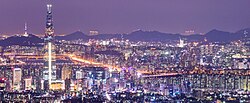
| 9 | Seoul - Incheon | South Korea | 23,825,000 |
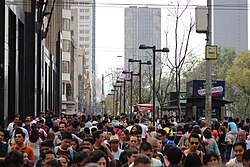
| 10 | Mexico City | Mexico | 23,146,802 |
Regional Urban Characteristics
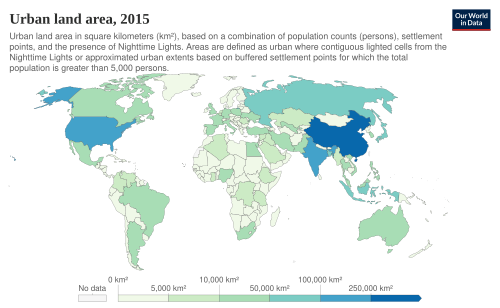
Asia and the Pacific
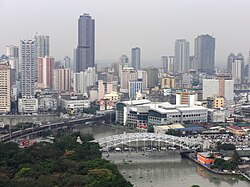
Asia hosts the world's most populous urban centers. In China, cities like Shanghai and Beijing lead in population, while India sees massive agglomerations in Mumbai and Delhi. In the Philippines, Metro Manila is a primary hub, with the greater urban area estimated at over 20 million people as of 2010.
The Americas
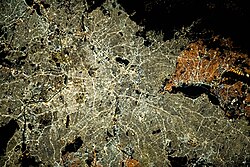
In North America, the New York-Jersey City-Newark area is the largest urban center, with a population of over 19 million. In South America, Brazil's São Paulo and Rio de Janeiro stand as the dominant urban agglomerations, with São Paulo alone exceeding 20 million residents according to the 2022 census.
Europe and Africa
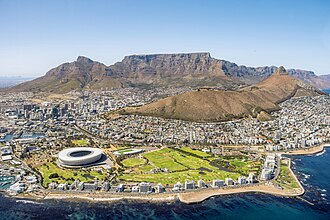
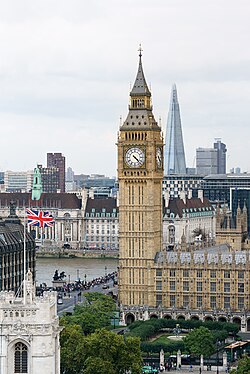
European urban areas often have distinct statistical definitions. In Sweden, tätorter are defined as localities independent of administrative boundaries. In the UK, London remains the primary hub with nearly 10 million residents. In Africa, South Africa's urban landscape is led by the City of Johannesburg and the City of Cape Town.
Frequently Asked Questions
What is the difference between an urban area and a rural area?
An urban area is characterized by high population density and a built-up infrastructure (cities, towns, suburbs), whereas rural areas consist of lower-density settlements like villages and hamlets.
What is an urban agglomeration?
An urban agglomeration is a continuous urban spread that may include a central city and its surrounding suburbs or adjacent towns that have merged over time.
Which is the largest urban area in the world?
According to 2025 Demographia data, the Guangzhou-Shenzhen urban area in China is the largest, with a population of 69,562,000.
How much of the U.S. population lives in urban areas?
As of the 2020 census, 80.0 percent of the United States population resides within the boundaries of an urban area.
What is a megalopolis?
A megalopolis is a large-scale city cluster or a chain of roughly adjacent metropolitan areas that have grown together, such as the U.S. Northeast megalopolis.