Uppsala University: A History of Academic Evolution in Sweden
Uppsala University stands as a testament to the intellectual journey of Sweden, evolving from a medieval ecclesiastical center into a world-renowned seat of learning. Its history is a mirror of the nation's own transformation, reflecting shifts in religious dominance, the rise of a global empire, the enlightenment of the sciences, and the hard-won battle for gender equality in education.
Origins in the 15th Century
The university's roots lie in the religious heart of Sweden. As the seat of the archbishop, Uppsala was already a center of power and trade when the institution was formally chartered via a papal bull (a formal proclamation issued by the Pope) in 1477. Issued by Pope Sixtus IV, this document granted Uppsala the same corporate rights, freedoms, and privileges as the University of Bologna.
Under this charter, the university established the four traditional medieval faculties: theology, law (comprising both Canon and Roman law), medicine, and philosophy. It was authorized to award degrees ranging from bachelor's to doctorates, with the archbishop serving as the chancellor to protect the institution's rights. Official lectures commenced on October 7, 1477.
Turbulence and the Reformation
The 16th century brought instability as King Gustavus Vasa led the Swedish Reformation. Because Uppsala was viewed as a stronghold of Catholicism and potential disloyalty to the Crown, student numbers dwindled, and many Swedes sought education at Protestant universities in Germany, particularly Wittenberg.
Despite this decline, academic activity persisted. In 1566, King Eric XIV appointed Laurentius Petri Gothus as rector, and later, King John III appointed several professors. By the end of the century, the university shifted its alignment, becoming a bastion of Lutheranism. This transition was solidified during the Uppsala Synod of 1593, which established Lutheran orthodoxy in Sweden.
The privileges granted on August 1, 1593, expanded the university's mission to include the education of secular state servants. While theology remained primary, new chairs were created in Astronomy, Physics, and Latin eloquence. By 1599, enrollment had grown to approximately 150 students, and the university seal—still part of the modern logo—was designed by Johannes Bureus in 1600.
17th Century: Expansion and the Great Power Era
As Sweden emerged as a European great power, the demand for skilled civil servants and educators surged. This era saw a massive overhaul of the administrative structure, led by Chancellor Axel Oxenstierna. King Gustavus Adolphus further bolstered the institution, increasing the number of professorial chairs and donating vast personal properties in Uppland and Västmanland to ensure the university's financial stability.
The university's physical presence also expanded. Between 1622 and 1625, the Gustavianum was constructed east of the cathedral.
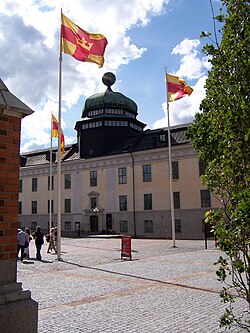
Under the patronage of Queen Christina, the university recruited international scholars and provided scholarships for students to study abroad. A pivotal figure during this time was Olaus Rudbeck, a physician who studied at Leiden University. Rudbeck transformed the campus by planting the first botanical garden and designing the iconic anatomical theatre with its characteristic cupola, added to the Gustavianum in the 1660s.
The Enlightenment and Scientific Advancement
The 18th century marked a shift from classical philology and religious orthodoxy toward practical knowledge and the hard sciences. This period saw the appointment of legendary figures such as physicist Anders Celsius in 1729 and the botanist Carl Linnaeus in 1741.
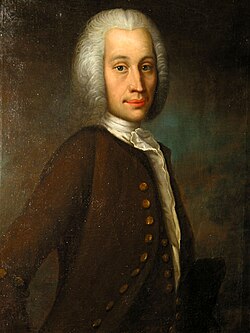
The political influence of the "Hats" party promoted the sciences, leading to the establishment of a chair in economics (Œconomia publica) in 1741—one of the first such positions in Europe. Architectural improvements continued under Carl Hårleman, who restored the cathedral and castle following a devastating fire in 1702 and built the Consistory house.
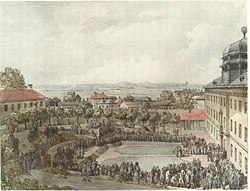
Later, King Gustav III donated the castle's baroque garden to the university to accommodate the growing needs of the botanical collections, with new conservatories designed by Louis Jean Desprez.
The Struggle for Gender Equality
The path to inclusive education was long and contested. The debate over women's right to study began in the estate parliament in 1865. While the clergy often opposed the move, the Girls' School Committee of 1866 argued that women needed education for professional self-sufficiency.
In 1870, women were permitted to take the studentexamen (secondary school examination), granting them entry to medical faculties. By 1873, most degrees were open to women, excluding theology and the licentiate in law.
- Betty Pettersson: The first female student in Sweden, who earned a degree in modern European languages in 1875.
- Ellen Fries: The first woman in Sweden to complete a doctoral degree (PhD in history, 1883).
- Lydia Wahlström: A noted activist who earned a doctorate in history in 1900 and founded the Uppsala Women's Student Association in 1892.
- Elsa Eschelsson: The first Swedish woman to earn a law degree and become a docent, though she was denied a professorship.
It was not until the Behörighetslagen of 1925 that the legal restriction limiting higher civil servant positions to "native Swedish men" was removed. Consequently, Gerd Enequist became the first woman to hold a professorial chair at Uppsala University in 1949, as a professor of human geography.
Key Facts
- Founded: 1477 via a papal bull from Pope Sixtus IV.
- Original Faculties: Theology, Law, Medicine, and Philosophy.
- Key Figures: Olaus Rudbeck (architect/physician), Carl Linnaeus (botany), and Anders Celsius (physics).
- First Female Degree: Betty Pettersson (1875).
- First Female Professor: Gerd Enequist (1949).
- Notable Landmark: The Gustavianum, featuring an anatomical theatre.
| Year/Period | Event/Development | Significance |
|---|---|---|
| 1477 | Papal Bull issued | Official founding and granting of corporate rights. |
| 1593 | Uppsala Synod | Establishment of Lutheran orthodoxy. |
| 1622–1625 | Construction of Gustavianum | Creation of a dedicated university building. |
| 1741 | Economics Chair established | One of the first economics professorships in Europe. |
| 1872 | Betty Pettersson enters | First woman to study at the university. |
| 1949 | Gerd Enequist appointed | First female professor at the university. |
Frequently Asked Questions
How was Uppsala University originally founded?
It was founded in 1477 through a papal bull issued by Pope Sixtus IV, which gave the university the same privileges as the University of Bologna and established four traditional faculties.
What role did the Reformation play in the university's history?
The Reformation initially caused a decline in students as the university was seen as a Catholic center. However, by 1593, it became a bastion of Lutheranism and was repurposed to train secular servants for the Swedish state.
Who was Olaus Rudbeck and why is he important?
Olaus Rudbeck was a dominant 17th-century figure who served as a professor and rector. He is remembered for planting the first botanical garden and designing the anatomical theatre at the Gustavianum.
When were women first allowed to study at Uppsala University?
Women were granted the right to take the secondary school examination in 1870. Betty Pettersson became the first female student in 1872, and most degrees became accessible to women by 1873.
Who was the first woman to become a professor at the university?
Gerd Enequist was appointed as the first female professor at Uppsala University in 1949, holding the chair of human geography.