Upper House Legislatures: Functions, History, and Global Structures
In the architecture of global governance, many nations employ a bicameral legislature—a system where the legislative body is divided into two separate chambers. The chamber formally designated as the upper house is typically smaller than its counterpart, the lower house, and often operates with more restricted powers. When a country opts for a single-chamber system instead, it is described as unicameral.
Across the English-speaking world, the most prevalent name for this body is the Senate, a term used in the United States, Canada, Australia, Nigeria, Kenya, and the Philippines. However, the role and composition of the upper house vary significantly depending on whether a country follows a parliamentary or presidential system.
Key Facts
- Primary Purpose: Often serves as a "house of review" to scrutinize legislation and mitigate the "tyranny of the majority."
- Common Names: While "Senate" is most common, other titles include the House of Lords, Legislative Council, and Council of States.
- Membership: Members may be directly elected, indirectly elected, appointed by a head of state, or historically, hereditary.
- Power Dynamics: In most parliamentary systems, the upper house has limited power over budgets and the executive branch compared to the lower house.
- Global Trends: Many jurisdictions have moved toward unicameralism, abolishing their upper houses to streamline governance.
The Evolution of the Upper House
The concept of an aristocratic assembly counseling a monarch dates back to the ancient Roman kingdom. However, the first formal upper house of a bicameral legislature emerged around 1341 during the reign of King Edward III in England. This created the House of Lords (comprising nobility and high-ranking clergy) and the House of Commons (representing shires and boroughs).
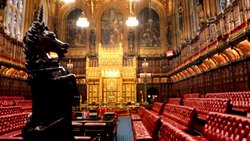
Throughout the 19th century, other nations adopted similar models. Spain established the House of Peers in 1834, which later became the Senate in 1837. Portugal followed with the Chamber of Most Worthy Peers in 1826. In Belgium, a Senate was adopted in 1831 following independence from the Netherlands, featuring a mix of royal appointments and local elections.
The model spread to Asia as well. In 1889, Imperial Japan established a House of Peers based on the Prussian House of Lords. Following the 1947 constitution, Japan transitioned to the House of Councillors, modeled after the United States Senate.
Justification and Political Legitimacy
The existence of an upper house is generally justified by two main political goals:
- Mitigating Majority Tyranny: By requiring a concurrent majority from both houses, the system prevents a slim majority in the lower house from pushing through radical changes.
- Reducing Volatility: The upper house helps stabilize legislation by encouraging convergence toward the median voter, preventing erratic shifts in law.
Upper Houses in Parliamentary vs. Presidential Systems
Parliamentary Systems
In parliamentary democracies, the upper house usually acts as an advisory body or a revising chamber. Its primary role is to scrutinize legislation that may have been drafted too hastily in the lower house. For example, the British House of Lords can debate and propose amendments, though under the Parliament Acts of 1911 and 1949, it can generally only delay most bills for up to one year (and economic bills for one month) rather than block them entirely.
Common restrictions in these systems include:
- Lack of control over the executive branch.
- No absolute veto power over legislation.
- Limited ability to initiate new laws.
- No power to block "supply" (budgetary measures), with the Australian Senate being a rare exception.
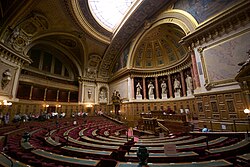
A notable exception is the Italian Senate, which practices perfect bicameralism. In Italy, the upper and lower houses have equal powers; laws must be approved in the same form by both, and the government requires the consent of both to remain in office.
Presidential Systems
In presidential systems, the upper house often wields more significant authority to balance the executive. In the United States, for instance, the Senate has the critical prerogative of confirming the president's nominations for senior offices and Cabinet positions.
Institutional Structure and Membership
The method of selecting members varies widely to ensure a balance of expertise and representation:
- Appointment: Designed to create a house of experts. In Canada, the Governor General appoints Senators on the advice of the Prime Minister.
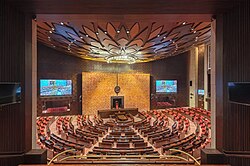
- Indirect Election: In India, members of the Rajya Sabha are nominated by state and union territory governments, with some appointed by the President.
- Direct Election: Some senates, such as those in the U.S., Brazil, and Australia, provide equal representation for each state regardless of population.
- Hereditary: Historically common in the UK and Japan, though largely abolished (the UK retained 92 hereditary peers following the House of Lords Act 1999).
The Trend Toward Abolition
Many regions have transitioned to unicameral systems to increase efficiency. Countries such as Denmark, Sweden, New Zealand, and Turkey have abolished their upper houses. In the United States, Nebraska is the only state with a unicameral legislature, having abolished its lower house in 1934.
The Philippines experienced a fluctuating history, abolishing and restoring its Senate twice between 1935 and 1987. In Ireland, a public referendum narrowly decided to retain the Seanad Éireann despite support for abolition from several major political parties.
Summary of Global Upper House Titles
| Common Title | Examples of Jurisdictions | Unique Titles & Translations | Country |
|---|---|---|---|
| Senate | USA, Canada, Australia, Nigeria | Rajya Sabha (Council of States) | India |
| Legislative Council | Australian States, Isle of Man | Sangiin (House of Councillors) | Japan |
| Federal Council | Germany, Austria | Dom naroda (House of Peoples) | Bosnia and Herzegovina |
| House of Lords | United Kingdom | Dewan Negara (State Council) | Malaysia |
Frequently Asked Questions
What is the main difference between a unicameral and bicameral legislature?
A unicameral legislature consists of a single house or chamber, while a bicameral legislature is divided into two chambers: the lower house and the upper house.
Why do some countries have an upper house if it has less power?
The upper house often serves as a "house of review," providing a second look at legislation to prevent hasty decisions and acting as a check against the potential tyranny of a majority in the lower house.
How are members of an upper house typically chosen?
Depending on the country, members may be directly elected by the people, indirectly elected by local or state officials, appointed by the head of state, or in some historical cases, inherit their seats.
Can an upper house completely block a law?
It depends on the system. In "perfect bicameralism" (like Italy), it can. In many parliamentary systems (like the UK), it can only delay legislation or suggest amendments, which the lower house may eventually override.
Which U.S. state is unique in its legislative structure?
Nebraska is the only U.S. state with a unicameral legislature, as it abolished its lower house in 1934.