University of Michigan: A Legacy of Academic Excellence and Research
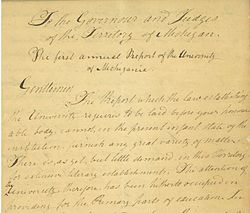
Founded on August 26, 1817, the University of Michigan has evolved from its early roots as the Catholepistemiad into one of the world's premier public research universities. Located in Ann Arbor, Michigan, the institution is defined by its motto, Artes, Scientia, Veritas ("Arts, Knowledge, Truth"), and a commitment to pushing the boundaries of human understanding across a vast array of disciplines.
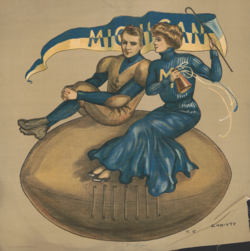
With a sprawling campus of 3,177 acres, the university serves as a global hub for innovation, attracting tens of thousands of students and faculty members. Its identity is inextricably linked to its iconic maize and blue colors and the spirited legacy of the Wolverines.
Key Facts
- Established: August 26, 1817.
- Endowment: $21.2 billion (2025).
- Student Population: 53,488 total students (2025), including 35,358 undergraduates and 18,130 postgraduates.
- Global Standing: Ranked 21st globally by U.S. News Best Global Universities (2025–26).
- Research Power: Consistently ranks among the top universities in the U.S. for total R&D expenditures.
- Campus Size: 3,177 acres located in Ann Arbor, Michigan.
Historical Evolution
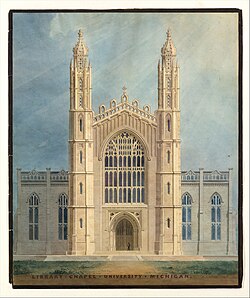
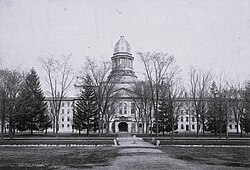
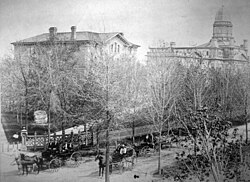
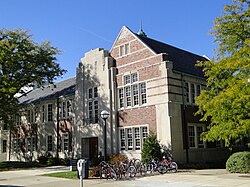
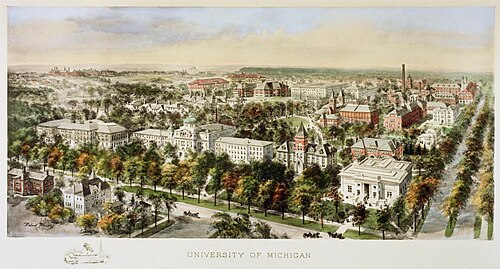
The university's early history is marked by its transition from the Catholepistemiad (1817–1821) to its established presence in Ann Arbor by 1837. The architectural identity of the campus was heavily influenced by Alexander J. Davis, whose Gothic Revival designs helped coin the term Collegiate Gothic, a style that continues to define many of the university's most prestigious buildings.
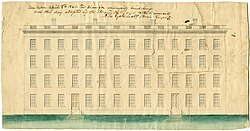
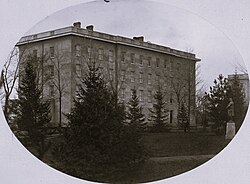
Throughout the 19th and 20th centuries, the campus expanded with landmark structures. Mason Hall, the first instructional building on the Ann Arbor campus, served as an architectural inspiration for other institutions, including North Hall in Madison, Wisconsin.
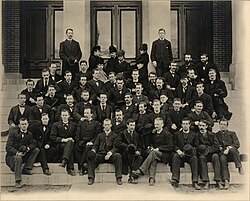
The university's growth is mirrored in its diverse alumni and faculty, from U.S. President Gerald Ford to Nobel laureates and world-renowned scholars. The institution has also been a pioneer in inclusivity, notably graduating Mary Henrietta Graham, the first African American woman graduate of the university, in 1880.
Campus Architecture and Facilities
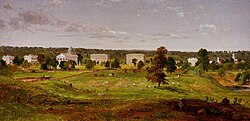
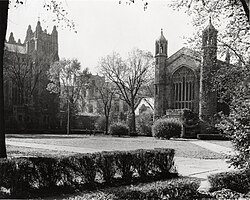
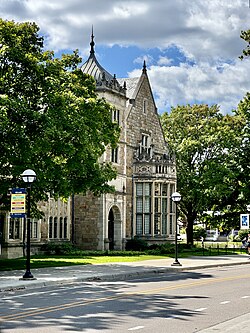
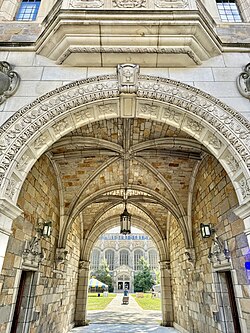
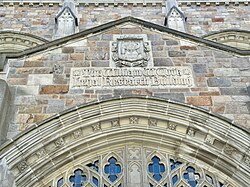
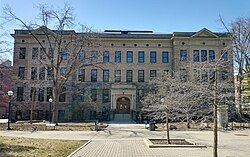
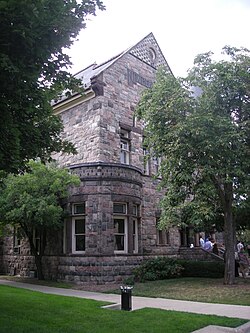
The University of Michigan is divided into several key areas, including the Central Campus Historic District, North Campus, and the Ross Athletic Campus. The Law Quadrangle stands as a testament to the university's architectural grandeur, featuring the Lawyers Club and the William W. Cook Legal Research Building.
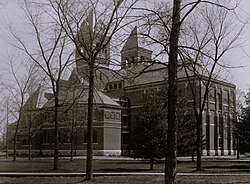
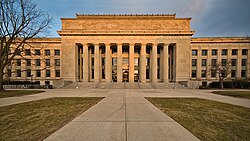
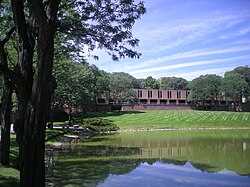
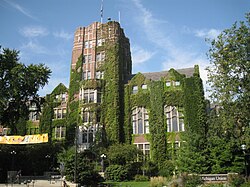
Other notable structures include James Burrill Angell Hall, a cornerstone of the College of Literature, Science, and the Arts, and the Earl V. Moore Building, designed by the renowned architect Eero Saarinen. For student life, the Michigan Union, constructed in 1917, remains a central hub of activity.
Academic Structure and Performance
The university operates a comprehensive system of colleges and professional schools. The College of Literature, Science, and the Arts (LSA) is the largest, while specialized schools like the Stephen M. Ross School of Business and the University of Michigan Law School maintain elite global rankings.
The institution's commitment to research is evident in its massive R&D expenditures, which frequently place it in the top five nationally. This research prowess is supported by a massive endowment and a faculty of over 8,500 members.
Academic Unit Overview (2022–23)
The following table provides a snapshot of the budget and enrollment for key academic units.
| College/School | Year Founded | Enrollment (FA 2023) | General Fund Budget | Budget per Student |
|---|---|---|---|---|
| College of Literature, Science, and the Arts | 1841 | 21,973 | $522,704,411 | $23,788 |
| College of Engineering | 1854 | 11,113 | $276,845,246 | $24,912 |
| Stephen M. Ross School of Business | 1924 | 4,433 | $137,479,144 | $31,013 |
| Medical School | 1850 | 1,677 | $124,714,812 | $74,368 |
| Law School | 1859 | 1,017 | $57,495,856 | $56,535 |
Admissions and Student Life
Admission to the University of Michigan is highly competitive. For the 2025 cycle, the undergraduate admit rate was 16.42% from a pool of 109,112 applicants. The university maintains a diverse student body, with approximately 49% identifying as White, 19% as Asian, and 10% as Hispanic.
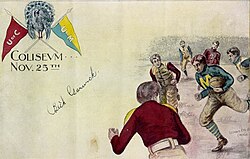
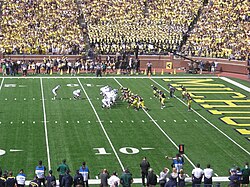
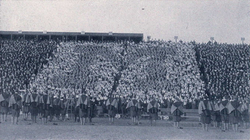
Student life is enriched by a variety of organizations, including the first dental fraternity in the world, Delta Sigma Delta, and the oldest continuous legal organization in the U.S., Phi Delta Phi. Athletics are a cornerstone of the campus experience, with the Wolverines competing in NCAA Division I FBS within the Big Ten Conference.


Global Rankings and Reputation
The University of Michigan consistently ranks as a top-tier institution both nationally and globally. It is frequently cited as one of the best public universities in the United States, holding a #1 rank in some categories by Niche and a #3 rank by U.S. News Top Public Schools (2026).
Specific departments excel on the world stage, with the School of Dentistry ranking #1 globally in Dentistry & Oral Sciences (ShanghaiRanking 2023) and the Marsal Family School of Education ranking #1 in Education (ShanghaiRanking 2023).





Frequently Asked Questions
What was the original name of the University of Michigan?
Between 1817 and 1821, the university was known as the Catholepistemiad, or the University of Michigania.
What is the university's current endowment?
As of 2025, the University of Michigan has an endowment of $21.2 billion.
How competitive is undergraduate admission?
Admission is very competitive; for the 2025 intake, the admit rate for first-time fall freshmen was 16.42%.
Which architectural style is prominent on campus?
The campus is well-known for its Collegiate Gothic style, a term credited to Alexander J. Davis, who created the original designs for the university.
What are the university's official colors and nickname?
The official colors are maize and blue, and the university's athletic teams are known as the Wolverines.