University of Mannheim: A History of Academic Excellence
The University of Mannheim stands today as a premier institution for business and social sciences, though its origins are not tied to a single founding date. Instead, its legacy is a tapestry of several predecessor institutions, beginning with the 18th-century intellectual ambitions of the Palatine Academy of Sciences and evolving through the challenges of the 20th century to become a globally recognized university.
Foundations and Early Predecessors
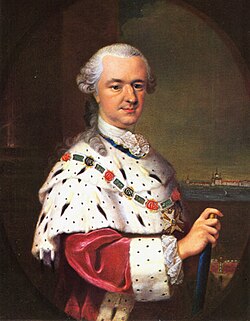
The university's intellectual roots trace back to 1763 with the establishment of the Kurpfälzische Akademie der Wissenschaften (Palatine Academy of Sciences). Founded by Elector Carl Theodor and housed within the Mannheim Palace, this academy laid the groundwork for scholarly pursuit in the region.
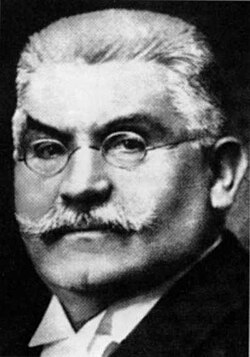
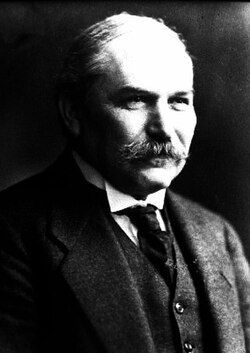
Fast forward to the early 20th century, the institution's modern trajectory began with the Städtische Handelshochschule Mannheim (Municipal Commercial College). Founded in 1907, this college was the result of a joint initiative by Mannheim's senior mayor, Otto Beck, and economics professor Eberhard Gothein. Designed to train future merchants, the college offered a multidisciplinary curriculum covering business administration, economics, pedagogy, psychology, law, languages, and the humanities.
Notably, the Municipal Commercial College was a pioneer in gender equality within German higher education. By 1908, it became the first college of higher education in Germany to employ a female professor, and women comprised one-quarter of the student population.
The Dark Era: 1933–1945
The rise of the Nazi regime brought a period of systemic destruction. In 1933, the municipal administration forced a merger between the Handelshochschule and the University of Heidelberg. This transition was marked by the Badischen Judenerlass, a decree administered by NSDAP politician Robert Heinrich Wagner to purge Jewish academics from universities.
One of the most prominent victims was Otto Selz, a philosopher and psychologist who had served as the college's rector in 1929/30. Discharged on April 6, 1933, Selz was eventually executed in the Auschwitz concentration camp in 1943. The tragedy extended across the faculty, with only 3 of the 14 Jewish docents surviving the Holocaust. The merger concluded with the transfer of all staff and inventory to Heidelberg, effectively closing the Handelshochschule.
Reconstruction and the Path to University Status
World War II left Mannheim in ruins. Between 1940 and 1945, the city endured over 150 air raids, the most devastating occurring on September 5–6, 1943. By May 1945, only 30 percent of the city's buildings remained; the Mannheim Palace was almost entirely destroyed, with only one room out of 500 remaining undamaged.
Despite the devastation, the institution was reborn in 1946 as the Staatliche Wirtschaftshochschule Mannheim (State College for Economics), opening its doors to 586 students. In 1955, the college moved into the rebuilt East Wing of the Mannheim Palace and adopted its current seal. The seal features the palace and the city's square-based layout, accompanied by the Latin phrase "In Omnibus Veritas" (Truth in everything), a shortened version of the Palatine Academy's original motto: "In Omnibus Veritas Suprema Lex Esto" (Truth in everything should be the supreme law).
The institution continued to expand its academic scope, adding faculties for Philosophy-Philological Sciences and Law by 1963. On July 4, 1967, it officially gained university status, starting with approximately 3,000 students. By 1969, the university had expanded to eight faculties, including Economics, Geography, and Political Sciences.
Modern Evolution and Global Standing
In the 21st century, the University of Mannheim has refined its focus on its core strengths: business and economics. In 2000, its Business School earned accreditation from the Association to Advance Collegiate Schools of Business (AACSB).
The university underwent a significant structural reform starting in 2002 to strengthen the economic and social sciences. Although the process faced protests—including a demonstration of 1,000 students and professors in 2006—a compromise was reached in 2008, resulting in a streamlined structure of five schools.
The establishment of the Mannheim Business School (MBS) in 2005 further elevated the institution's profile. Specializing in executive education and MBA programs, the MBS was ranked #1 in Germany in 2018 by major publications including the Financial Times, Forbes, The Economist, and Businessweek, placing it among the top 20 business schools in Europe and top 60 worldwide.
Additionally, from 2007 to 2017, the university benefited from the "Excellence Initiative" funded by the German Research Foundation and the Federal Ministry of Education and Research. This led to the creation of the Graduate School of Economic and Social Sciences (GESS), which focuses on interdisciplinary Ph.D. programs utilizing empirical and quantitative methods.
Key Facts
- Earliest Root: Palatine Academy of Sciences, founded in 1763.
- Gender Pioneer: First German college of higher education to employ a female professor (1908).
- University Status: Officially achieved on July 4, 1967.
- Motto: In Omnibus Veritas (Truth in everything).
- Global Ranking: Mannheim Business School ranked #1 in Germany (2018).
- Core Focus: Economic and Social Sciences.
| Period/Year | Institution Name | Key Milestone |
|---|---|---|
| 1763 | Palatine Academy of Sciences | Founded by Elector Carl Theodor |
| 1907–1933 | Municipal Commercial College | Founded for merchant training; female professor hired (1908) |
| 1933–1945 | Merged with University of Heidelberg | Closure due to Nazi regime and Holocaust purges |
| 1946–1967 | State College for Economics | Post-war reopening and move to Mannheim Palace (1955) |
| 1967–Present | University of Mannheim | Attained university status; focus on business and social sciences |
Frequently Asked Questions
When was the University of Mannheim founded?
The university does not have a single foundation date, but its history traces back to the Palatine Academy of Sciences (1763) and the Municipal Commercial College (1907). It officially became a university on July 4, 1967.
What is the significance of the university's motto?
The motto "In Omnibus Veritas" (Truth in everything) is a shortened version of the Palatine Academy's original constitution: "In Omnibus Veritas Suprema Lex Esto", meaning "Truth in everything should be the supreme law."
How did the university contribute to gender equality in education?
In 1908, as the Municipal Commercial College, it became the first institution of higher education in Germany to employ a female professor, and women made up 25% of its student body at the time.
What is the Mannheim Business School (MBS)?
Founded in 2005, the MBS provides executive education and MBA programs. In 2018, it was ranked as the top business school in Germany by several international publications, including the Financial Times and Forbes.
What happened to the university during the Nazi era?
The Municipal Commercial College was merged into the University of Heidelberg in 1933. This period was marked by the expulsion and persecution of Jewish academics, including rector Otto Selz, who was murdered in Auschwitz.