Science: The Systematic Pursuit of Knowledge and Truth
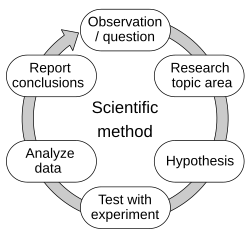
Science is much more than a collection of facts; it is a systematic discipline designed to build and organize knowledge through testable explanations about both the natural world and human society. At its core, science is driven by the scientific method—an empirical cycle that involves making careful observations, formulating hypotheses, testing those ideas with evidence, and drawing rigorous conclusions.
This continuous process allows the scientific community to challenge, validate, and organize a growing body of knowledge, ensuring that our understanding of the universe remains accurate and evolving.
Key Facts

- Science relies on the scientific method to produce testable explanations.
- The discipline is broadly divided into natural sciences and social sciences.
- Formal sciences, such as logic and mathematics, use deductive reasoning rather than empirical testing.
- The roots of modern science can be traced back to the Bronze Age in Egypt and Mesopotamia.
- Applied sciences, including medicine and engineering, use scientific knowledge for practical applications.
The Major Branches of Science

To better understand the vast scope of scientific inquiry, researchers typically categorize the field into several distinct branches based on their subject matter and methodology.
Natural and Social Sciences
The natural sciences focus on studying the physical world, ranging from the smallest subatomic particles to the vastness of outer space. In contrast, the social sciences examine individuals and the complex structures of societies.
Formal and Applied Sciences
While often grouped with other disciplines, the formal sciences—which include logic, mathematics, and theoretical computer science—are unique. Instead of relying primarily on the scientific method, they utilize deductive reasoning to establish truths. Meanwhile, applied sciences take the theoretical knowledge gained from basic research and use it for practical purposes, such as in the fields of medicine and engineering.
| Branch Type | Primary Focus | Core Methodology |
|---|---|---|
| Natural Sciences | The physical world | Empirical observation and testing |
| Social Sciences | Individuals and societies | Empirical observation and testing |
| Formal Sciences | Logic and mathematics | Deductive reasoning |
| Applied Sciences | Practical applications | Utilization of scientific knowledge |
A Brief History of Scientific Thought

The history of science spans much of the recorded human experience. Its earliest identifiable predecessors emerged during the Bronze Age (c. 3000–1200 BCE) in Mesopotamia and Egypt, where early advancements in astronomy, mathematics, and medicine began to take shape.
![Megaliths from Nabta Playa, constructed by Neolithic populations to coordinate astronomical observations located in Aswan, Upper Egypt.[31]](/images/17/31/17311965bd46c65a85b33e8aa26b95b9af3340d4250bd0118d7f8ba14369ac38.jpg)
Classical Antiquity and the Middle Ages
The foundations laid in the Bronze Age heavily influenced the Greek natural philosophy of classical antiquity. During this era, scholars made formal attempts to explain physical events through natural causes rather than supernatural ones. This tradition was later expanded during the Golden Age of India and the Islamic Golden Age, which saw significant advancements, including the introduction of the Hindu–Arabic numeral system.

The Evolution of Modern Science
From the Renaissance through the Scientific Revolution and the Age of Enlightenment, science underwent profound transformations. These eras moved humanity toward a more rigorous, evidence-based understanding of the cosmos and the natural world, setting the stage for the rapid technological and theoretical expansions of the 19th and 20th centuries.

Frequently Asked Questions




What is the difference between natural and social sciences?
Natural sciences study the physical world and its phenomena, while social sciences focus on the study of human behavior, individuals, and social structures.
How does the scientific method work?
The scientific method is an empirical cycle that involves making observations, creating a hypothesis (a testable explanation), testing that hypothesis with evidence, and drawing conclusions based on the results.
Why is mathematics considered a formal science?
Mathematics is categorized as a formal science because it relies primarily on deductive reasoning—deriving conclusions from established premises—rather than the empirical observation and testing used in the natural sciences.
What are applied sciences?
Applied sciences are disciplines that take scientific knowledge and apply it to solve real-world problems, such as engineering or medical practices.
Is science a static body of knowledge?
No. Science is a dynamic process where the scientific community continuously challenges, validates, and reorganizes knowledge as new evidence becomes available.