Nature Magazine: A Legacy of Scientific Breakthroughs and Evolution
Since its inception in the 19th century, Nature has stood as a cornerstone of the global scientific community. As a premier weekly journal dedicated to the natural sciences, it has served as the primary stage for some of the most transformative discoveries in human history. From the structure of DNA to the mechanics of the universe, the pages of Nature have documented the evolution of scientific thought.
Key Facts
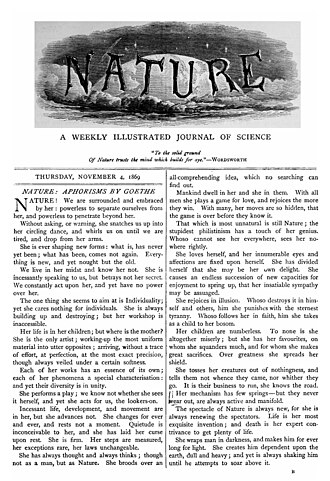
- First Published: 4 November 1869
- Publisher: Nature Portfolio (a subsidiary of Springer Nature)
- Frequency: Weekly
- 2025 Impact Factor: 56.1
- Primary Discipline: Natural sciences
- Access Model: Hybrid open access
A History of Resilience and Growth
The landscape of scientific publishing in the late 1800s was highly competitive. Many contemporary journals, such as Scientific Opinion, The Reader, and The Quarterly Journal, eventually ceased publication. In contrast, Nature has maintained continuous publication for over 150 years.
In May 2015, the journal entered a new era following the merger of Springer Science+Business Media and the Holtzbrinck Publishing Group's Nature Publishing Group, Palgrave Macmillan, and Macmillan Education. This merger formed the current Springer Nature umbrella, strengthening its position in the global academic market.
Landmark Scientific Discoveries
Nature has been the venue for papers that fundamentally altered our understanding of reality. These landmark publications include:
- The Wave Nature of Particles: The Davisson–Germer experiment (1927).
- The Neutron: Proposed by J. Chadwick (1932).
- Nuclear Fission: Detailed by L. Meitner and O. R. Frisch (1939).
- The Structure of DNA: The seminal work by J. D. Watson and F. H. C. Crick (1953).
- Molecular Protein Structure: The first 3D model of myoglobin (1958).
- Plate Tectonics: Proposed by J. Tuzo Wilson (1966).
- Pulsars: The observation of rapidly pulsating radio sources (1968).
- The Ozone Hole: Discovery of seasonal ozone loss in Antarctica (1985).
- Mammalian Cloning: The birth of Dolly the sheep (1997).
- The Human Genome: The initial sequencing and analysis (2001).

Scientific Integrity and Challenges
Maintaining the highest standards of peer review—the process where experts evaluate research before publication—is central to Nature's mission. However, the journal has faced challenges. In 2003, Nature retracted a series of five fraudulent papers by Jan Hendrik Schön regarding semiconductors, which were found to contain falsified data.
The journal also acknowledges the complexities of the editorial process, including historical missteps in handling peer rejection. These instances serve as critical learning points for maintaining scientific rigor and transparency.
Expanding the Nature Portfolio
To meet the diverse needs of the scientific community, the Nature Portfolio has expanded into various specialized communications journals. These include:
- Communications Biology
- Communications Chemistry
- Communications Earth & Environment
- Communications Engineering
- Communications Materials
- Communications Medicine
- Communications Physics
- Communications Psychology
Summary of Publication Details
| Feature | Details |
|---|---|
| ISSN (Print) | 0028-0836 |
| ISSN (Web) | 1476-4687 |
| Language | English |
| Editor | Magdalena Skipper |
| Indexing | CODEN: NATUAS |
Frequently Asked Questions
What is the impact factor of Nature?
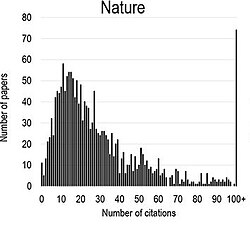
As of 2025, Nature has an impact factor of 56.1, reflecting its significant influence and the frequency with which its articles are cited by other researchers.
Does Nature publish science fiction?
Yes. Since 1999, Nature has published a series of science fiction vignettes titled "Futures." This series has been recognized by the European Science Fiction Society.
What does "hybrid" open access mean for Nature?
Hybrid open access means that the journal offers a choice: authors can publish traditional subscription-based articles or pay a fee to make their research freely available to the public immediately upon publication.
Who publishes Nature?
Nature is published by Nature Portfolio, which is a subsidiary of Springer Nature.
Has Nature ever retracted papers?
Yes. Like many major scientific journals, Nature has retracted papers in instances where scientific fraud or data falsification was discovered, such as the Jan Hendrik Schön case in 2003.