Science: The Systematic Pursuit of Knowledge and the Scientific Method
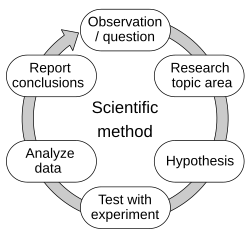
Science is a systematic discipline dedicated to building and organizing knowledge through testable explanations of the natural world and human society. Rather than relying on intuition or anecdote, science is driven by the scientific method—an empirical cycle that involves making careful observations, formulating hypotheses, testing those hypotheses with evidence, and drawing evidence-based conclusions.
This process creates a body of knowledge that is never static; the scientific community continuously challenges, validates, and reorganizes information to ensure accuracy and reliability.
Key Facts

- Core Methodology: Science relies on an empirical cycle of observation, hypothesis, testing, and conclusion.
- Major Branches: Divided primarily into natural sciences (physical world) and social sciences (individuals and societies).
- Formal Sciences: Logic, mathematics, and theoretical computer science use deductive reasoning rather than the empirical scientific method.
- Historical Roots: Early predecessors date back to the Bronze Age in Egypt and Mesopotamia (c. 3000–1200 BCE).
- Applied Science: Practical applications of scientific knowledge, such as medicine and engineering.
The Branches of Science

Modern science is categorized based on the subject of study and the methodology used to uncover truths.
Natural and Social Sciences
The natural sciences focus on the physical world, encompassing fields like physics, chemistry, and biology. In contrast, the social sciences examine the complexities of human behavior, individuals, and the structures of societies.
Formal and Applied Sciences
The formal sciences—including mathematics, logic, and theoretical computer science—are distinct because they rely on deductive reasoning (deriving specific conclusions from general premises) rather than empirical observation. Meanwhile, applied sciences take the theoretical knowledge gained from these disciplines and use it for practical purposes, most notably in engineering and medicine.
| Branch | Focus | Primary Methodology | Examples |
|---|---|---|---|
| Natural Sciences | Physical World | Empirical/Scientific Method | Biology, Physics |
| Social Sciences | Society & Individuals | Empirical/Scientific Method | Sociology, Psychology |
| Formal Sciences | Abstract Systems | Deductive Reasoning | Mathematics, Logic |
| Applied Sciences | Practical Application | Implementation of Theory | Engineering, Medicine |
A Journey Through Scientific History

The history of science is nearly as old as the historical record itself. The earliest identifiable precursors emerged during the Bronze Age in Mesopotamia and Egypt (c. 3000–1200 BCE), where early populations made significant strides in medicine, astronomy, and mathematics.
![Megaliths from Nabta Playa, constructed by Neolithic populations to coordinate astronomical observations located in Aswan, Upper Egypt.[31]](/images/17/31/17311965bd46c65a85b33e8aa26b95b9af3340d4250bd0118d7f8ba14369ac38.jpg)
These early contributions laid the groundwork for Greek natural philosophy during classical antiquity. Greek scholars sought to explain physical events through natural causes rather than supernatural ones. This intellectual tradition was further enriched during the Golden Age of India and the Islamic Golden Age, which introduced critical advancements such as the Hindu–Arabic numeral system.

The transition from natural philosophy to modern science accelerated during the Renaissance and the Scientific Revolution. This era saw a shift toward rigorous experimentation and the publication of foundational works, such as Isaac Newton's Philosophiæ Naturalis Principia Mathematica in 1687, which redefined our understanding of physics.
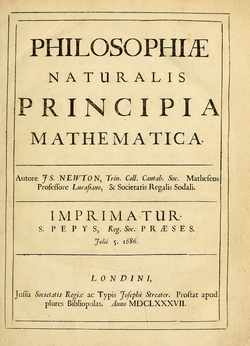
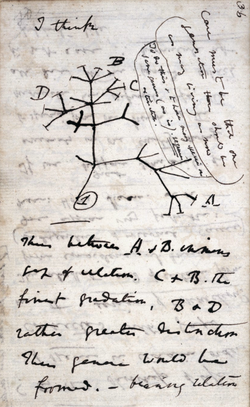
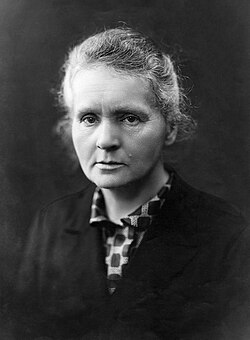
By the 19th and 20th centuries, science became highly specialized. Charles Darwin's 1837 evolutionary tree revolutionized biology, while the 20th century brought about breakthroughs in quantum physics, chemistry—highlighted by Marie Curie's dual Nobel Prizes—and the birth of computational science.
The Scientific Method and its Philosophy
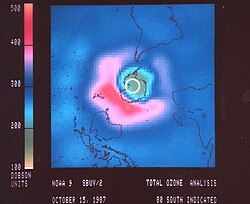
At the heart of all scientific inquiry is the scientific method. This is not a rigid checklist but a flexible process of refinement. It involves the constant interplay between theory and evidence.
Philosophically, science is often viewed through the lens of paradigms—conceptual frameworks that define how scientists view a field. A "paradigm shift" occurs when the existing framework can no longer explain observed phenomena, leading to a scientific revolution (such as the shift from Ptolemaic to Copernican astronomy).

Frequently Asked Questions

What is the difference between the natural sciences and formal sciences?
Natural sciences study the physical world using the empirical scientific method (observation and testing), while formal sciences, such as mathematics and logic, rely on deductive reasoning and abstract systems.
How does applied science differ from basic science?
Basic science seeks to expand fundamental knowledge without a specific immediate application, whereas applied science uses that existing knowledge to develop practical solutions, such as creating new medical treatments or engineering bridges.
What is an empirical cycle?
An empirical cycle is the core of the scientific method, consisting of a repeating loop of making observations, forming a hypothesis to explain those observations, testing the hypothesis with evidence, and drawing conclusions to refine the theory.
Who were the earliest practitioners of science?
The earliest predecessors to modern science were found in the Bronze Age civilizations of Egypt and Mesopotamia, who contributed early knowledge in astronomy, mathematics, and medicine.
What is a paradigm shift in science?
A paradigm shift is a fundamental change in the basic concepts and experimental practices of a scientific discipline, occurring when the current model can no longer explain new evidence.