University of Hohenheim: A Legacy of Agricultural and Economic Excellence
Located in the southern district of Plieningen in Stuttgart, Germany, the University of Hohenheim stands as a premier public institution blending historic charm with cutting-edge research. Founded in 1818, it holds the distinction of being Stuttgart's oldest university. While its roots are deeply embedded in agricultural and natural sciences, it has evolved into a multidisciplinary powerhouse, particularly renowned for its faculty of business, economics, and social sciences.
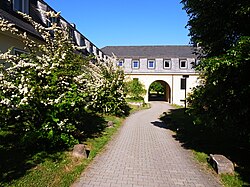
The university is celebrated not only for its academic rigor but also for its stunning environment. In 2009, it was named the most beautiful campus university in Baden-Württemberg and ranked 7th overall in a national survey of German campuses.
Key Facts
- Established: 1818 (208 years ago).
- Location: Stuttgart, Baden-Württemberg, Germany.
- Student Population: 8,768 (2024).
- Budget: €197.9 million (2024).
- Current Rector: Christoph Schneider.
- Specializations: Agricultural sciences, natural sciences, and business, economics, and social sciences.
A History of Innovation and Resilience
The origins of the university are tied to a global crisis. Following the 1815 eruption of Mount Tambora in Indonesia, which caused severe climate change and famine in the Kingdom of Württemberg, King William I established an Agricultural Academy in 1818. The goal was to radically improve nutrition through teaching and experimentation. The academy began modestly with just 18 students and three professors, headquartered in the baroque Hohenheim Palace.
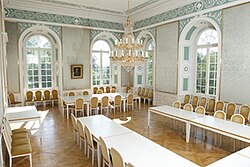
Over the decades, the institution grew in stature. It became an "Academy of Agriculture and Forestry" in 1847 and an "Agricultural College" in 1904. A landmark moment occurred in 1923 when Margarete von Wrangell was appointed to the chair for plant nutrition, making her the first female full professor at a German university. Despite being forced to close in 1945 during the National Socialist era, the university reopened in 1946, having survived World War II with relatively little architectural damage.
The institution officially achieved university status in 1967. While it maintains a collaborative relationship with the University of Stuttgart, it remains a separate and independent entity.
Campus and Facilities
The campus is centered around the baroque Hohenheim Palace, which serves as the university's emblem and main building. The grounds feature the historic Landesarboretum Baden-Württemberg and the botanical Hohenheim Gardens. Its strategic location provides easy access to the Stuttgart Stadtbahn (U3 line), the Stuttgart airport, and the city's Exhibition Center.

Beyond the classrooms, the university hosts several public museums. The German Agricultural Museum offers 5,700 square meters of exhibition space, while the Zoological and Veterinary Museum and the Hohenheim History Museum (located in the Spielhaus) preserve the region's scientific and municipal heritage.
Academic and Research Excellence
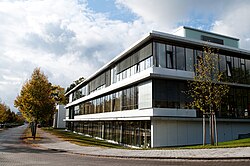
Today, the University of Hohenheim is a leader in life sciences and economics. Its research focuses on critical global challenges, including health, nutrition, consumer protection, and environmental sustainability.
Primary Research Areas
- Agricultural and Nutritional Sciences: Focusing on the entire food chain.
- Bioenergy: Developing biobased products and energy from agriculture.
- Biological Signals: Including specialized Bioeffector research.
- Economics: Innovation, services, and communication.
Specialized Scientific Centers
To drive innovation, the university operates several dedicated centers, such as the Life Science Center, the Food Security Center, the Center for Agriculture in the Tropics and Subtropics, and the Competence Center for Plant Breeding.
Global Networks and Rankings
The university extends its influence through strategic international alliances. It was a co-founder of the Euroleague for Life Sciences (ELLS) in 2001, a network that promotes student mobility and joint curriculum development across Europe. Additionally, it is a member of the HERMES network, a strategic alliance of 18 European universities offering dual degree programs in Management.
These efforts are reflected in global rankings. In 2024, the Times Higher Education (THE) World University Rankings placed the institution between 251 and 300 globally, and between 25 and 31 within Germany. The QS World University Rankings 2024 placed it in the 651–660 range globally and 37th nationally.
| Category | Detail |
|---|---|
| Total Students | 8,768 |
| Administrative Staff | 2,083 |
| Academic Staff | 126 |
| Annual Budget | €197.9 million |
| National Rank (THE) | 25–31 |
Frequently Asked Questions
What is the University of Hohenheim most famous for?
The university is traditionally renowned for its agricultural and natural sciences, though its faculty of business, economics, and social sciences is now one of the most highly ranked in Germany.
Who was the first female full professor in Germany?
Margarete von Wrangell became the first female full professor at a German university when she was appointed to the chair for plant nutrition at Hohenheim in 1923.
What are the ELLS and HERMES networks?
ELLS (Euroleague for Life Sciences) is a network focused on life sciences cooperation, while HERMES is a strategic alliance of 18 European universities providing dual degree programs in Management.
Is the University of Hohenheim affiliated with the University of Stuttgart?
No, it is not connected to or affiliated with the University of Stuttgart, although the two institutions do collaborate on various initiatives.
What makes the Hohenheim campus unique?
The campus is widely considered one of the most picturesque in Germany, featuring a baroque palace, botanical gardens, and the Landesarboretum Baden-Württemberg.