University of Buenos Aires: A Legacy of Academic Excellence and Reform
The University of Buenos Aires (UBA) stands as a cornerstone of higher education in Latin America. Established in 1821, this public research university has spent over two centuries shaping the intellectual, political, and scientific landscape of Argentina. With a motto that translates to "Argentine virtue is strength and study," UBA is renowned for its commitment to accessibility, research, and academic rigor.
Operating as an urban campus in the heart of Buenos Aires, the university serves a massive student body, blending traditional academic disciplines with cutting-edge research. Its influence extends far beyond the classroom, having produced numerous presidents, Nobel laureates, and global leaders in science and the arts.

Key Facts
- Established: 1821
- Type: Public Research University
- Student Population: Approximately 350,000 (2024)
- Academic Staff: 30,850 (2024)
- Annual Budget: AR$ 541,780 million (approx. US$451 million, 2024)
- Global Ranking: Ranked =95 by QS World University Rankings (2024)
Historical Evolution
Early Years and 19th Century Growth
Founded in 1821, the university's early years were marked by the effort to establish a formal academic structure in the young republic. By the mid-19th century, UBA underwent significant developments, expanding its curriculum to meet the needs of a growing nation. This era saw the rise of professional degrees in law and medicine, creating a new class of Argentine intellectuals.
The University Reform of 1918
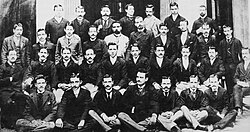
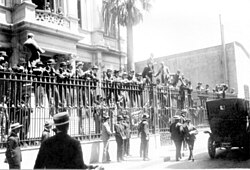
One of the most pivotal moments in the institution's history was the University Reform of 1918. This movement sought to modernize the university, advocating for academic freedom, student participation in governance, and the democratization of education. The reform sparked a wave of student activism that redefined the relationship between students and faculty across Latin America.
Turbulence and Resilience (1940s–1980s)
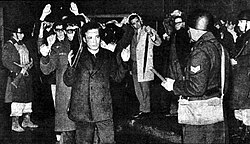
The mid-20th century was a period of intense political volatility. The university faced significant challenges during the 1960s and 70s, most notably during the "Night of the Long Batons" on July 29, 1966, when police violently evicted professors and students from the campus, leading to a massive exodus of intellectual talent.
Despite these hardships, the university remained a center for critical thought and resistance, eventually stabilizing in the 1980s as Argentina returned to democratic rule, reinforcing its role as a public institution dedicated to the common good.
Academic Organization
UBA is organized into several specialized faculties, ensuring a comprehensive approach to higher education. These include:
- Health Sciences: Medical Sciences (FMED), Pharmacy and Biochemistry (FFyB), Dentistry (FOUBA), and Psychology (PSI).
- STEM: Exact and Natural Sciences (FCEN), Engineering (FIUBA), and Agronomy (FAUBA).
- Social Sciences & Humanities: Law (FDUBA), Economic Sciences (FCE), Social Sciences (FSoc), and Philosophy and Letters (FFyL).
- Arts & Design: Architecture, Design and Urbanism (FADU) and Veterinary Sciences (FVET).
Global Reputation and Rankings
UBA is consistently recognized as one of the top universities in the world and the premier institution in Argentina. Its reputation is bolstered by high research output and a diverse alumni network.
| Ranking Body | Global Rank | Regional Rank (Latin America) | Year |
|---|---|---|---|
| QS World | =95 | 9 | 2023/2024 |
| US News & World Report | =426 | 7 | 2022–23 |
| ARWU World | 201-300 | N/A | 2022 |
| CWUR World | 382 | N/A | 2023 |
Notable Alumni and Contributions
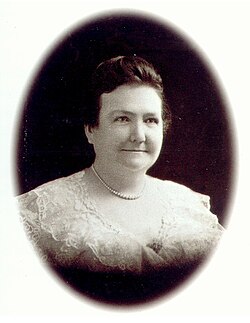
The university has been a breeding ground for pioneers across various fields. In medicine, Cecilia Grierson became the first woman to receive a medical degree in Argentina in 1889. In the realm of technology, computer scientist Cecilia Berdichevsky created Clementina, one of the region's early computing milestones.

UBA's influence also extends to the arts and literature, with alumni such as the renowned novelist Julio Cortázar contributing to the global literary canon.

Frequently Asked Questions
Who currently leads the University of Buenos Aires?
As of 2024, the university is led by Rector Ricardo Gelpi and Vice Rector Emiliano Yacobitti.
How many students are enrolled at UBA?
The university has a very large student population, with approximately 350,000 students enrolled as of 2024.
What was the significance of the 1918 University Reform?
The 1918 Reform was a landmark movement that pushed for the democratization of the university, academic freedom, and the inclusion of students in the administration of the institution.
Is the University of Buenos Aires a public or private institution?
UBA is a public research university, meaning it is funded by the state and provides accessible education to the public.
Which faculty is most associated with Argentine political leadership?
The Faculty of Law (FDUBA) has a strong historical connection to politics; notably, fifteen Argentine presidents studied law at UBA.