University of Bern: A Legacy of Research and Academic Excellence
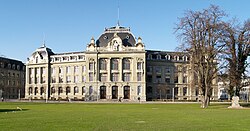
The University of Bern (Latin: Universitas Bernensis) is a prestigious public research university located in the Swiss capital. Established in 1834, it has evolved from a small theological college into one of Switzerland's most influential academic institutions. Today, it stands as the third-largest university in the country, renowned for its comprehensive approach to education and its commitment to cutting-edge scientific discovery.
Regulated and financed by the canton of Bern, the university serves as a hub for intellectual growth, offering a vast array of programs across eight faculties and approximately 150 institutes. With an urban campus and a diverse student body, it continues to bridge the gap between traditional academic rigor and modern interdisciplinary research.
Key Facts
- Founded: 1834
- Student Population: 19,608 (as of 2024)
- Academic Staff: 529 professors
- Budget: CHF 939 million (including CHF 367 million in third-party funds)
- Global Standing: Ranked among the top 150 universities worldwide
- Gender Ratio: Women account for 60% of the student body (2024)
Historical Evolution
Early Roots and the 19th Century
The university's origins date back to the 16th century with a collegiate school designed to train pastors following the Reformation. By 1805, the government of Bern transformed this theological college into an academy, expanding its scope to include law and medicine. In 1834, amid a period of liberal political shifts in the Canton of Bern, the academy officially became a university.
The late 19th century marked a period of explosive growth. Between 1885 and 1900, enrollment doubled to 1,000 students, making it the largest university in Switzerland at the time. This growth was fueled largely by international students, particularly from Germany and Russia. Notably, Russian female students were instrumental in securing the right for women to study at the institution during the 1870s.
Consolidation and Modernization
The early 20th century saw the inauguration of the Main Building in 1903 and the arrival of world-renowned intellectuals. In 1908, Albert Einstein taught theoretical physics for three semesters. The university also broke barriers in 1909 when Anna Tumarkin became the first female professor at a European university authorized to examine doctoral and post-doctoral theses. That same year, Bernese surgeon Theodor Kocher received the Nobel Prize in Medicine.
Following World War II, the university expanded rapidly to meet the growing demand for tertiary education. A pivotal shift occurred with the University Act of 1996, which granted the institution autonomy as a legal entity, separating its administration from the Cantonal Department of Education.

Academic Structure and Research
Faculties and Specializations
The University of Bern is organized into eight distinct faculties, ensuring a comprehensive academic offering:
- Theology
- Law
- Business, Economics and Social Sciences
- Medicine (partnered with the University of Basel in specialized surgical and microbiological fields)
- Veterinary Medicine (Vetsuisse): A joint faculty created in 2006 with the University of Zurich
- Humanities: Covering art, culture, archaeology, history, languages, and literature
- Science: Focused on natural and life sciences
- Human Sciences: Established in 2005, focusing on psychology, sports, and education
Interdisciplinary Centers and Innovation
The university emphasizes interdisciplinary collaboration through various strategic centers. These include the Albert Einstein Center for Fundamental Physics and the Oeschger Centre for Climate Change Research (OCCR), which focuses on climate reconstruction and environmental science.
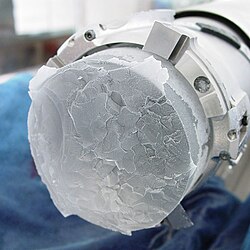
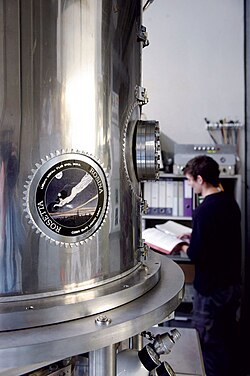
The Physics Institute maintains a strong international presence, contributing to the first Moon flight and providing critical apparatus for NASA and ESA space missions.
Academic Programs and Publishing
The university offers a robust curriculum consisting of 39 bachelor's, 71 master's, and 69 advanced study programs. To support the global dissemination of knowledge, the university library launched Bern Open Publishing in 2013, an open-access peer-reviewed platform hosting journals in musicology, educational research, and sociocultural anthropology.
University Overview
The following table provides a snapshot of the university's current standing and organizational scale.
| Category | Details |
|---|---|
| Type | Public (Cantonal) |
| Location | Bern, Switzerland |
| Total Students | 19,608 |
| Administrative Staff | 1,874 |
| Rector | Christian Leumann |
| Affiliations | Guild of European Research-Intensive Universities, swissuniversities |
Notable Figures
The University of Bern has been home to numerous luminaries. Faculty members have included Albert Einstein and Max Weber. Among its distinguished alumni are theologian Karl Barth, philosopher Walter Benjamin, writer John le Carré, and Nobel laureate Kurt Wüthrich. The institution also counts astrophysicist Thomas Zurbuchen, a key figure at NASA, among its graduates.
Frequently Asked Questions
What is the current size of the student body at the University of Bern?
As of 2024, the university has 19,608 students, with 41% enrolled in bachelor's programs and 25% in master's programs.
How does the university handle veterinary medicine?
Veterinary medicine is managed through the Vetsuisse Faculty, which was formed in 2006 as a merger between the veterinary faculties of the Universities of Bern and Zurich.
What are the university's global rankings?
The University of Bern is consistently ranked among the top 150 universities globally, with notable positions in the THE World Rankings (=116 in 2024) and USNWR Global (111 in 2024-25).
What is the significance of the Bologna Reform for the university?
The Bologna Declaration led to the adoption of the ECTS (European Credit Transfer and Accumulation System) and the standardization of the bachelor's and master's degree structure.
Does the university contribute to space exploration?
Yes, the Physics Institute regularly provides apparatus and conducts experiments for both NASA and the European Space Agency (ESA), including contributions to the first Moon flight.