Universal Declaration of Human Rights
The Universal Declaration of Human Rights (UDHR) is a landmark document adopted by the United Nations General Assembly that codifies the fundamental rights and freedoms inherent to all human beings. Established in the wake of global conflict, it serves as a common standard of achievement for all peoples and all nations, ensuring that dignity and justice are recognized globally.
The document was drafted by a United Nations (UN) committee and officially accepted as Resolution 217 during the General Assembly's third session on December 10, 1948, at the Palais de Chaillot in Paris, France.
![Freedom from Fear (Saturday, March 13, 1943)–from the Four Freedoms series by Norman Rockwell. The freedom from fear is mentioned in the preamble of the Declaration.[18]](/images/e1/19/e119deccfe8d05d3a882d8e8c4938706fe124d802efd4065e0aa85c50d11ccc1.jpg)
Key Facts
- Adopted: December 10, 1948.
- Location: Palais de Chaillot, Paris, France.
- Chairperson: Eleanor Roosevelt.
- Vote Count: 48 in favor, 0 against, 8 abstentions, and 2 non-votes.
- Purpose: To codify universal human rights and freedoms.
- Annual Observance: International Human Rights Day (December 10).
The Path to Creation
The Drafting Committee
The journey toward the UDHR began in June 1946, when the Economic and Social Council (ECOSOC)—the UN organ responsible for promoting human rights—created the Commission on Human Rights (CHR). This standing body was tasked with preparing an International Bill of Rights.
To ensure the document was representative of all humanity, the CHR consisted of 18 members from diverse national, religious, and political backgrounds. In February 1947, a special Drafting Committee was established, chaired by Eleanor Roosevelt of the United States. Roosevelt played a pivotal role in coordinating the effort and encouraging the General Assembly to adopt the declaration.
Refining the Text
By May 21, 1948, the Committee submitted a redrafted text consisting of the "International Declaration of Human Rights" and the "International Covenant of Human Rights." This "Geneva text" underwent rigorous examination and amendment. One notable contribution came from Hansa Mehta of India, who advocated for gender-neutral language, suggesting that the text assert "all human beings are created equal" rather than "all men are created equal."
Approval and Adoption
The UN Commission on Human Rights approved the proposed Declaration on June 18, 1948, with a vote of twelve in favor, zero opposed, and four abstaining. Following a review by the Economic and Social Council in August 1948, the draft was transmitted to the General Assembly.
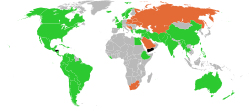
On December 10, 1948, the General Assembly officially adopted the UDHR as Resolution A/RES/217(III). Out of the 58 UN member states at the time, 48 voted in favor. Honduras and Yemen were the two nations that failed to vote or abstain.
Global Legacy and Impact
International Human Rights Day
The anniversary of the adoption, December 10, is celebrated annually as World Human Rights Day. This day is observed by governments, parliaments, religious groups, and human rights organizations worldwide. Major milestones, such as the 60th anniversary in 2008 ("Dignity and justice for all of us") and the 70th anniversary in 2018 (#StandUpForHumanRights), have used the date to launch global awareness campaigns.

Summary of the UDHR Adoption
| Category | Details |
|---|---|
| Date of Adoption | December 10, 1948 |
| Venue | Palais de Chaillot, Paris |
| Key Figure | Eleanor Roosevelt |
| Total UN Members (1948) | 58 |
| Votes in Favor | 48 |
| Abstentions | 8 |
| Non-voting Members | 2 (Honduras, Yemen) |
Frequently Asked Questions
Who chaired the drafting committee of the UDHR?
The drafting committee was chaired by Eleanor Roosevelt, who was instrumental in the U.S. effort to ensure the General Assembly adopted the declaration.
When is International Human Rights Day celebrated?
International Human Rights Day is celebrated every year on December 10, marking the anniversary of the UDHR's adoption in 1948.
Did any countries vote against the UDHR?
No countries voted against the declaration. Of the 58 member states, 48 voted in favor, eight abstained, and two did not vote.
How was gender equality addressed during the drafting process?
Hansa Mehta of India suggested changing the phrase "all men are created equal" to "all human beings are created equal" to better reflect gender equality.
What was the original intended scope of the International Bill of Rights?
The International Bill of Rights was originally conceived to consist of two parts: the International Declaration of Human Rights and the International Covenant of Human Rights.