United States House of Representatives
The United States House of Representatives serves as the lower house of the U.S. Congress, acting as a primary legislative body designed to represent the people of the United States. Operating from the House of Representatives Chamber in the United States Capitol in Washington, D.C., the House is central to the American system of checks and balances.
The current session, the 119th United States Congress, began on January 3, 2025. The House is characterized by its frequent election cycles and a membership structure that fluctuates based on the population of the states it represents.
Key Facts
- Total Voting Seats: 435 members.
- Term Length: 2 years.
- Majority Requirement: 218 seats.
- Current Speaker: Mike Johnson (Republican).
- Voting Systems: Plurality voting in 46 states, with variations in Alaska, Maine, Georgia, and Louisiana.
- Non-Voting Members: 6 delegates/resident commissioners.
Leadership and Political Composition
The House is led by the Speaker, who holds the highest position of authority. As of the current session, the leadership is divided between the Republican majority and the Democratic minority.
Current Leadership
- Speaker: Mike Johnson (R)
- Majority Leader: Steve Scalise (R)
- Minority Leader: Hakeem Jeffries (D)
- Majority Whip: Tom Emmer (R)
- Minority Whip: Katherine Clark (D)
The balance of power is determined by the number of seats held by each party. In the current standing, the Republican Conference holds a majority with 219 members (including one Independent), while the Democratic Caucus holds 212 seats. There are currently 4 vacant seats.
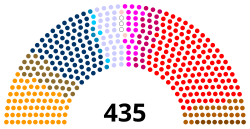
Historically, the composition of the House has shifted between parties over the centuries, reflecting the changing political landscape of the nation.
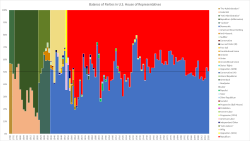
![A historical graph of party control of the House, the U.S. Senate, and presidency, 1855 to 2025.[11]](/images/38/20/38201ce7364247d4568b73b0ecdc568999ee71036bd6534643a3f17dd1f3e973.png)
Membership and Apportionment
The House is designed to be proportional to the population. Apportionment is the process of dividing the 435 seats among the 50 states based on census data. This ensures that states with larger populations have more representatives.
![Population per U.S. representative allocated to each of the 50 states and D.C., ranked by population. Since D.C. (ranked 49th) receives no voting seats in the House,[52] its bar is absent.](/images/c1/12/c112f460efb99868032c46146ad7be3cdef02dbd953f26ff18ac96e104b18998.webp)
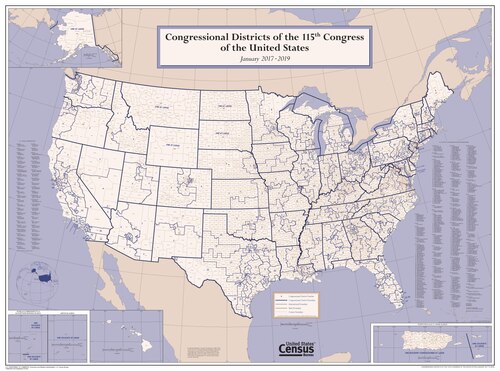
Once seats are allocated to a state, redistricting occurs to draw the boundaries of congressional districts. This process is handled by state legislatures or independent redistricting commissions, depending on the state's laws.
Qualifications and Terms
Members of the House are elected every two years, meaning there are no term limits. To maintain a close connection with their constituents, representatives must face frequent elections. While most members are voting representatives, there are also six non-voting members who represent territories or the District of Columbia.
Legislative Functions and Procedure
The House operates under the Rules of the House of Representatives, which govern daily procedures and the passage of legislation. Most bills can be introduced in either the House or the Senate, though specific constitutional requirements apply to certain types of legislation.
The legislative process involves several stages, including review by committees and caucuses before reaching the House floor for a vote. The Speaker and the Rules Committee play significant roles in determining which bills are debated and how they are amended.
Historically, influential figures like Thomas Brackett Reed, who served as Speaker from 1895 to 1899, helped shape the procedural rules that define how the House functions today.
![Thomas Brackett Reed, Republican House Speaker from 1895 to 1899.[17]](/images/0c/1c/0c1cf4d704cabf80f00a460cf66bcda88eab33f9c51f42cc1f3c65ad780b6cd7.jpg)
Compensation and Benefits
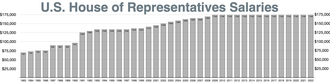
Members of the House receive a salary, along with various benefits to support their official duties. These include pensions, Social Security, health benefits, and tax deductions.
In addition to their base salary, representatives are provided with a travel allowance and funds for personnel, mail, and office expenses to ensure they can effectively serve their districts.
Summary of House Structure
| Feature | Details |
|---|---|
| Total Voting Members | 435 |
| Non-Voting Members | 6 |
| Term Length | 2 Years |
| Majority Threshold | 218 Seats |
| Election Cycle | Every 2 years (Next: Nov 2026) |
| Meeting Place | U.S. Capitol, Washington, D.C. |
Frequently Asked Questions
How many members are in the House of Representatives?
There are 435 voting members, apportioned among the states based on population. Additionally, there are 6 non-voting members representing territories and the District of Columbia.
How long is a term for a U.S. Representative?
Representatives serve a term of two years, and there are no term limits on how many times they can be re-elected.
What is the role of the Speaker of the House?
The Speaker is the presiding officer of the House, the leader of the majority party, and holds significant power over the legislative agenda and House procedures.
How are congressional districts determined?
Congressional districts are created through redistricting, a process managed by state legislatures or redistricting commissions following the decennial census to ensure proportional representation.
What voting systems are used in House elections?
While 46 states use plurality voting, some states use different systems: Alaska and Maine use instant-runoff voting, while Georgia and Louisiana use a two-round system.