New Jersey Redistricting Commission: Shaping Congressional Districts
Every ten years, following the United States census, the boundaries of congressional districts must be redrawn to reflect population shifts. In New Jersey, this critical task is handled by the New Jersey Redistricting Commission, a constitutional body designed to ensure a balanced and bipartisan approach to electoral geography. Unlike states where the legislature controls the process, New Jersey utilizes an independent commission to determine the districts for the U.S. House of Representatives.
It is important to distinguish this body from the New Jersey Apportionment Commission, which is specifically tasked with redrawing districts for the New Jersey State Legislature. The Redistricting Commission focuses exclusively on federal representation.
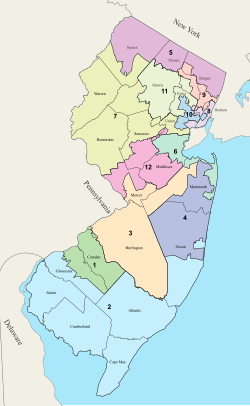
How the Commission is Structured
The commission consists of 13 members, with a structure carefully balanced between the executive and legislative branches to prevent any single party from dominating the process. The membership is allocated as follows:
- Two members named by the President of the Senate.
- Two members named by the Assembly Speaker.
- Two members named by the minority leader of the Senate.
- Two members named by the minority leader of the Assembly.
- Two members named by the state's Democratic chairperson.
- Two members named by the state's Republican chairperson.
These 12 members then select a 13th member to serve as the tie-breaker and chair of the commission. If the 12 members cannot reach an agreement, each party submits a name to the New Jersey Supreme Court, which makes the final selection. While the commission must hold three public meetings, it is permitted to conduct other business in private until the final map is released.
Key Facts
- Purpose: Redraws U.S. House of Representatives districts every decade after the census.
- Composition: 13 members (12 appointed by party leaders, 1 tie-breaker).
- Independence: Operates as a bipartisan, independent commission.
- Recent Change: New Jersey's House seats were reduced from 13 to 12 in 2011.
- Current Map: The 2023-2033 map was passed via a 7-6 vote in December 2021.
Historical Redistricting Cycles
The 2013 to 2023 Cycle
Following the 2010 Census, New Jersey lost one congressional seat, reducing its total from 13 to 12. On December 23, 2011, the commission—led by Republican tie-breaker John Farmer, Jr.—approved a map by a 7-6 vote. This map significantly altered the political landscape of the state.
The approved plan eliminated the Democratic-held 13th district and created a new 5th district. It shifted several large Democratic municipalities out of the 9th district and moved Passaic County cities into it. This forced incumbent Democrats Bill Pascrell and Steve Rothman to run against each other in the 2012 Democratic primary for the redrawn 9th district, which Pascrell won.
The immediate result of the 2012 election was a split delegation of six Democrats and six Republicans. However, by 2018, a shift in the electoral environment led to Democrats winning 11 of the 12 seats. By the end of the decade, the split stood at 10-2 in favor of Democrats.
The 2023 to 2033 Cycle
On December 22, 2021, the commission adopted a new map based on the 2020 census. In this cycle, Democratic tie-breaker John E. Wallace Jr. provided the deciding vote in a 7-6 decision to pass the Democratic proposal.
This map shifted the 3rd, 5th, and 11th districts to be more reliably Democratic, while making the 7th district more Republican. The map's impact was evident in the 2022 elections, where Democrats secured a 9-3 advantage. Analysis suggests this map is more Democratic than the previous one; for example, Joe Biden would have carried 10 of the 12 districts under this map, compared to 9 under the previous version.
Summary of Redistricting Impact
| Cycle | Tie-Breaker | Deciding Vote | Key Outcome |
|---|---|---|---|
| 2013-2023 | John Farmer, Jr. (R) | 7-6 (Republican Map) | Seats reduced from 13 to 12; initial 6-6 party split. |
| 2023-2033 | John E. Wallace Jr. (D) | 7-6 (Democratic Map) | Strengthened Democratic hold; 9-3 result in 2022. |
Frequently Asked Questions
What is the difference between the Redistricting Commission and the Apportionment Commission?
The Redistricting Commission is responsible for redrawing the boundaries for the U.S. House of Representatives (federal), while the Apportionment Commission handles the districts for the New Jersey State Legislature (state).
How is the 13th member of the commission chosen?
The first 12 members attempt to agree on a 13th member to serve as the tie-breaker. If they cannot agree, the state's Supreme Court chooses one person from a list of names submitted by the two parties.
Why did New Jersey lose a congressional seat in 2011?
The loss of a seat was a result of the 2010 US Census, which determines how many representatives each state receives based on its population relative to other states.
How many public meetings must the commission hold?
According to the state Constitution, the commission is required to hold three public meetings, though it may meet in private for other deliberations until the map is released.
What was the result of the 2022 elections under the newest map?
The 2022 elections resulted in a 9-3 advantage for Democrats, aligning with predictions made after the 2021 map adoption.