United Kingdom Parliamentary Constituencies
The structure of the United Kingdom's parliamentary representation is defined by its constituencies—the specific geographic areas represented by a Member of Parliament (MP) in the House of Commons. Following the 2023 Periodic Review, the UK maintains a total of 650 constituencies, ensuring that democratic representation evolves alongside population shifts.
The process of reviewing boundaries is essential to maintain electoral parity, ensuring that each vote carries roughly the same weight regardless of where a citizen lives. This involves balancing the number of electors—people registered to vote—across different regions.
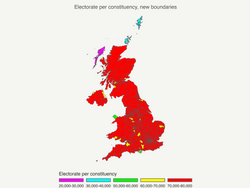
Key Facts
- Total Constituencies: 650 as of the 2023 review.
- Total Electorate Trend: The total electorate has grown from approximately 44.3 million in 2000 to over 47.5 million by 2019.
- Largest Constituency by Area: Caithness, Sutherland and Easter Ross (11,636 sq km).
- Smallest Constituency by Area: Bethnal Green and Stepney (6.13 sq km).
- 2024 Boundary Changes: England gained 10 seats as part of the main boundary adjustments.
Electorate Trends and Demographics
Over the last two decades, the UK has seen a steady increase in the total number of eligible voters. Between 2000 and 2019, the electorate grew from 44,319,529 to 47,567,752. This growth is reflected in the average size of constituencies, which has generally trended upward to accommodate the expanding population.
Regional Variations in Electorate Size
The size of the electorate varies significantly across the four nations. For instance, in the 2020 data, many English constituencies, such as those in the South East and West Midlands, hovered around the 70,000 to 77,000 range. In contrast, some constituencies in Northern Ireland and Scotland show different distribution patterns based on their specific boundary requirements.
Geographic Extremes
There is a stark contrast between urban and rural constituencies in terms of physical landmass. While urban seats like Bethnal Green and Stepney cover just 6.13 square kilometres, vast rural seats like Caithness, Sutherland and Easter Ross cover 11,636 square kilometres, illustrating the challenge of representing diverse geographic needs within a single seat.
Constituency Data Summary
The following table provides a snapshot of the geographic and electoral diversity across the UK's nations.
| Constituency | Region/Nation | Area (sq km) |
|---|---|---|
| Caithness, Sutherland and Easter Ross | Scotland | 11,636 |
| Brecon, Radnor and Cwm Tawe | Wales | 3,095 |
| Hexham | England | 2,774 |
| Fermanagh and South Tyrone | Northern Ireland | 2,561 |
| Belfast North | Northern Ireland | 38.34 |
| Bethnal Green and Stepney | England | 6.13 |
Frequently Asked Questions
How many constituencies are there in the UK?
As of the 2023 Periodic Review, there are 650 parliamentary constituencies.
What was the main change for the 2024 election?
The primary boundary change for the 2024 election resulted in England gaining 10 additional seats.
Which constituency is the largest by land area?
The largest constituency by area is Caithness, Sutherland and Easter Ross, covering 11,636 square kilometres.
Which constituency is the smallest by land area?
The smallest constituency by area is Bethnal Green and Stepney, covering only 6.13 square kilometres.
How has the total electorate changed since 2000?
The total electorate increased from 44,319,529 in 2000 to 47,567,752 in 2019.