John Anstis: The Political Rise of the Garter King of Arms
John Anstis was a formidable figure in 18th-century England, blending the worlds of law, politics, and heraldry—the study and regulation of armorial bearings. A man of immense ambition and scholarly rigor, Anstis navigated the treacherous waters of Georgian politics to ascend to the highest heraldic office in the land: the Garter King of Arms.
His life was defined by a relentless pursuit of status and a deep passion for antiquities, leaving behind a legacy that helped shape the modern understanding of English chivalric orders.
Key Facts
- Highest Office: Served as Garter King of Arms from 1718 until his death in 1744.
- Political Career: Member of Parliament for St Germans, St Mawes, and Launceston between 1702 and 1722.
- Major Work: Edited and published the Register of the Most Noble Order of the Garter (the "Black Book").
- Institutional Impact: Instrumental in the revival of the Order of the Bath.
- Scholarly Legacy: Left over 8,000 pages of notes on English history and jurisprudence.
Early Life and Education
Born on 29 August 1669 in St Neot, Cornwall, John Anstis was the eldest son of John and Mary Anstis. He pursued a rigorous academic path, matriculating at Exeter College, Oxford, in 1685, and later entering the Middle Temple in 1690. He was called to the bar on 19 May 1699, providing him with the legal foundation necessary for his future disputes over heraldic jurisdiction.
In 1695, he married Elizabeth Cudlipp, the daughter and heir of Richard Cudlipp of Tavistock, Devon. The couple had a large family consisting of eight sons and six daughters.
The Path to Power: Politics and Heraldry
Anstis's entry into the world of heraldry began in 1701, when the Earl Marshal, Henry Howard, 7th Duke of Norfolk, granted him access to the College of Arms library. Anstis used this opportunity to gather materials to defend the Earl Marshal's jurisdiction, which was then under threat.
His political ascent began in 1702 when he was elected to Parliament for St Germans. He quickly became a strategic advisor to the Howard family, helping protect their rights against royal nominations for the office of Garter King of Arms. However, his path to the top was not linear. Despite nominations as Norfolk Herald and Carlisle Herald of Arms Extraordinary in 1707, he was never formally appointed to those posts, largely due to the influence of his rival, John Vanbrugh.
Anstis shifted his strategy, maintaining loyalty to the Tory ministry and securing various public record offices. His persistence paid off on 2 April 1714, when he finally obtained a promise of appointment to the Gartership.
Conflict, Controversy, and Triumph
The transition to power was fraught with tension. Following the death of Sir Henry St George in 1715, the political tide shifted. John Vanbrugh was nominated for the office, and Anstis found himself in a precarious position, even facing arrest on 30 September 1715 on suspicion of involvement in a Jacobite uprising in Cornwall.
A protracted legal battle ensued between Anstis and Vanbrugh, both claiming the title of Garter. Anstis eventually emerged victorious in May 1718, officially securing the most prestigious heraldic position in England.
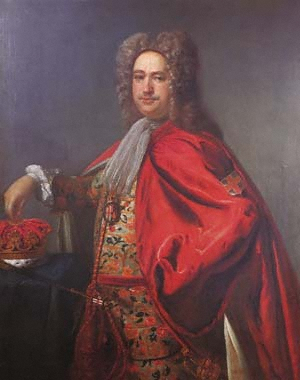
The Black Book and the Order of the Bath
As Garter King of Arms, Anstis focused on the preservation of history. In 1724, he published the Register of the Most Noble Order of the Garter, based on a 1535 Latin manuscript known as the "Black Book." He funded the publication himself, viewing it as a way to save a "great treasure" from the "shipwreck" of time.
His research also led to the rediscovery of a forgotten royal honor. Through his connection with the Duke of Montagu, Anstis helped revive the Order of the Bath, drafting the statutes for the new order and publishing his historical essays on the subject in 1725.
Later Years and Legacy
Anstis continued to use his influence to benefit his family. He presided over the coronation of George II in 1727 and worked tirelessly to prove a familial link to Archbishop Henry Chichele to secure a fellowship for his son at All Souls College, Oxford. While the fellowship was blocked, he successfully saw his son appointed as Blanc Coursier Herald in 1727 and eventually secured the succession of the Garter office to his son in 1737.
John Anstis died on 4 March 1744 in Mortlake, Surrey, and was buried in Duloe, Cornwall. He is remembered as an indefatigable antiquarian whose vast collection of notes—spanning chronology, military affairs, and ecclesiastical history—now resides in the British Library, the Bodleian Library, and All Souls, Oxford.
| Category | Details |
|---|---|
| Lifespan | 1669 – 1744 |
| Primary Office | Garter King of Arms (from 1718) |
| Parliamentary Seats | St Germans, St Mawes, Launceston |
| Key Publication | Register of the Most Noble Order of the Garter (1724) |
| Major Contribution | Revival of the Order of the Bath |
| Family Motto | Arma Nobilitant Genus ("Arms make a family noble") |
Frequently Asked Questions
What was the "Black Book of the Garter"?
The Black Book is the earliest surviving register of the Order of the Garter, written around 1535. John Anstis edited and published a transcript of this Latin manuscript in 1724 to preserve the order's history for the public.
How did John Anstis become Garter King of Arms?
His ascent was a result of years of political maneuvering, loyalty to the Tory ministry, and a lengthy legal battle against his rival, John Vanbrugh, which Anstis finally won in May 1718.
What role did Anstis play in the Order of the Bath?
Anstis rediscovered the forgotten royal honor and, through his friendship with the Duke of Montagu, helped revive the Order of the Bath by drafting its statutes and writing historical essays on the knighthood.
Was John Anstis involved in any political scandals?
Yes, in September 1715, Anstis was arrested on suspicion of plotting a Jacobite uprising in Cornwall, which added to the volatility of his professional struggle for the Gartership.
What happened to Anstis's research after his death?
He left behind over 8,000 pages of notes on English history, heraldry, and jurisprudence. These papers were sold in 1768 and 1774 and are now preserved in the British Library, the Bodleian Library, and All Souls, Oxford.