Union of African States: The Vision and Struggle for Continental Integration
In the wake of mid-century independence movements, the dream of a unified Africa took a tangible, though fragile, form through the creation of the Union of African States. Driven by the ambition of leaders like Kwame Nkrumah and Ahmed Sékou Touré, this political experiment sought to transcend colonial borders and establish a foundation for a broader continental federation.
The Seeds of Cooperation: Ghana and Guinea
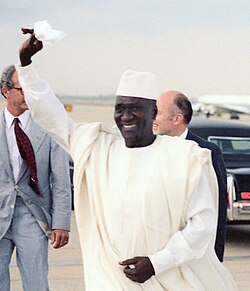
The journey toward unification began in November 1958. Following the sudden cessation of French aid and personnel in Guinea, Ghana stepped in to provide an emergency loan. This act of mutual assistance led Kwame Nkrumah and Ahmed Sékou Touré to meet in Conakry, Guinea, where they envisioned a deeper integration of their two nations.
On May 1, 1959, this collaboration culminated in the declaration of the Union of Independent African States (UIAS). While the agreement was pragmatic rather than ambitious, it established a framework for members to coordinate relations with other African countries. The leaders expressed intentions to develop shared citizenship and a common currency, including plans for a union bank and an economic council.
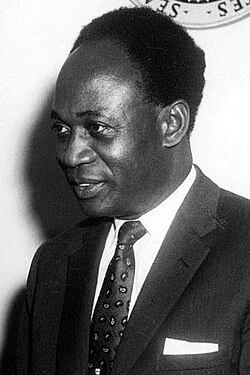
Despite these goals, the UIAS remained a loose arrangement. No unified defense or foreign policies for non-African nations were established, and the promised shared currency and citizenship never materialized. The most significant outcome of this period was the £10 million loan (approximately £204 million in today's value) from Ghana to Guinea, though Guinea utilized less than half of these funds despite ongoing economic struggles.
Expansion and the Union of African States
The vision expanded in November 1960 after the collapse of the Mali Federation. Negotiations between Ghana, Guinea, and Mali led to the official publication of the charter for the newly renamed Union of African States (UAS) on July 1, 1961.
The UAS charter introduced more robust provisions, including collective security—the principle that an attack on one member was an attack on all. The union aimed to synchronize diplomatic, economic, educational, and cultural activities. Nkrumah viewed this union as a "nucleus of a United States of Africa," intending it to be the starting point for a massive continental federation.
Diplomatic and Political Alignment
The UAS became a central pillar of the Casablanca group, with the three member states pushing for aligned policies within that forum. Politically, the leaders mirrored each other's approach to the Cold War, promoting pro-Soviet involvement while participating in the Non-Aligned Movement (a group of states not formally aligned with or against any major power bloc).
However, the union lacked a formal administration. While there were discussions regarding a shared parliament, a single flag, and a common constitution, these details were never finalized. Governance was limited to periodic meetings between the three heads of state.
Key Facts
- Founding Members: Ghana, Guinea, and later Mali.
- Key Leaders: Kwame Nkrumah (Ghana) and Ahmed Sékou Touré (Guinea).
- Major Financial Aid: A £10 million loan from Ghana to Guinea in 1958.
- Core Principle: Collective security, where an attack on one member was viewed as an attack on all.
- Political Leanings: Pro-Soviet influence within the Non-Aligned Movement and the Casablanca group.
- Dissolution: The union was dissolved in May 1963.
Obstacles to Integration
The Union of African States faced systemic challenges that hindered its growth. Geography played a major role; Ghana was physically separated from Guinea by Sierra Leone and the Ivory Coast, and from Mali by Upper Volta. Despite Nkrumah's efforts to recruit Upper Volta—including a symbolic ceremony where he and President Maurice Yaméogo knocked down a wall to signal unity—the country did not join.
Further complications included:
- Infrastructure: A lack of transportation links between Mali and Guinea, as both had been more closely tied to Senegal during colonial rule.
- Colonial Legacies: Differing linguistic and colonial infrastructures made policy unification difficult.
- Diplomatic Friction: Disagreements over the United Nations Operation in the Congo (1960–1961).
- Regional Rivalries: Suspicion of Nkrumah and political tensions with Félix Houphouët-Boigny of the Ivory Coast limited the union's expansion.
The Decline and Dissolution
The UAS eventually succumbed to internal friction and external pressures. The planned economic council never launched, and leadership meetings became infrequent. Tensions peaked in 1963 following a coup d'état in Togo, for which Nkrumah was accused of providing support.
Additionally, Ahmed Sékou Touré grew frustrated with Nkrumah for pursuing independent agendas without consulting other members during the preparations for the Addis Ababa summit, which established the Organization of African Unity. Consequently, the Union of African States was dissolved in May 1963.
Historians suggest the failure stemmed from competing nationalisms and flaws in the federal model Nkrumah admired. Scholar Adom Getachew notes that the collapse was driven by deep disagreements over the balance between a strong federal state, which Nkrumah desired for economic development, and the independence of individual member states.
| Feature | Details |
|---|---|
| Timeline | 1959 (as UIAS) to May 1963 |
| Member States | Ghana, Guinea, Mali |
| Primary Goal | Creation of a "United States of Africa" |
| Key Achievements | Collective security agreement; £10 million loan to Guinea |
| Primary Failures | Lack of administration, shared currency, or common constitution |
| Reason for Collapse | Geographic barriers, colonial differences, and leadership disputes |
Frequently Asked Questions
What was the original purpose of the loan from Ghana to Guinea?
The loan was an emergency measure provided by Ghana in November 1958 following the sudden cessation of French aid and personnel in Guinea.
What did "collective security" mean within the UAS?
Collective security was a charter provision stating that an attack on any one of the three member countries (Ghana, Guinea, or Mali) would be treated as an attack on all of them.
Why did geography hinder the Union of African States?
The member states were not all contiguous. Ghana was separated from Guinea and Mali by other nations, such as the Ivory Coast and Upper Volta, making physical and political integration difficult.
How did the UAS relate to the Cold War?
The leaders of the UAS promoted pro-Soviet involvement while operating within the Non-Aligned Movement, seeking a path that avoided total subservience to any single superpower.
Why was the union eventually dissolved in 1963?
The dissolution was caused by a combination of factors, including accusations regarding the Togolese coup, disagreements over leadership consultation, and fundamental disputes over the balance between federal power and national sovereignty.